Drlogy
Healthcare organization
How EMR/EHR Reports Feature Boosts Practice Management Software
Electronic Medical Records (EMR) and Electronic Health Records (EHR) reports are vital tools in modern healthcare.
Check:
Best Practice Management Software For General Practice (GP) Clinics & Hospitals
They not only digitize patient records but also generate insights that improve patient care, streamline workflows, and strengthen decision-making.
10 Ways EMR/EHR Reports Support Practice Management Software
Here are 10 Ways EMR/EHR Reports Support Practice Management Software.
1. Centralizes Patient Information
- Consolidates medical history, prescriptions, lab results, and imaging in one place.
- Provides quick access for doctors during consultations.
- Reduces reliance on paper files.
- Improves accuracy of clinical decisions.
- Enhances continuity of care.
Summary: Centralized records simplify access and improve clinical efficiency.
2. Improves Clinical Decision-Making
- Provides structured reports on patient progress.
- Highlights risk factors and chronic conditions.
- Supports evidence-based treatment planning.
- Helpsentify gaps in care or missed follow-ups.
- Increases diagnostic accuracy.
Summary: EHR reports provide actionable insights for better patient outcomes.
3. Enhances Care Coordination
- Allows multiple doctors to access shared patient reports.
- Supports referrals across specialties.
- Improves communication between care teams.
- Reduces duplication of tests and procedures.
- Streamlines multi-doctor treatment planning.
Summary: Shared records ensure seamless collaboration across care providers.
4. Tracks Patient Progress Over Time
- Monitors long-term health trends.
- Provides visual charts for easier interpretation.
- Identifies early warning signs of complications.
- Supports preventive healthcare measures.
- Encourages patients to stay engaged with their health.
Summary: Long-term tracking improves proactive and preventive care.
5. Supports Regulatory Compliance
- Maintains accurate and complete digital records.
- Meets healthcare data protection and audit standards.
- Simplifies accreditation and licensing processes.
- Reduces compliance risks for clinics.
- Ensures transparency and accountability.
Summary: EHR reports help clinics stay compliant with healthcare regulations.
6. Increases Practice Efficiency
- Reduces time spent searching for old patient files.
- Minimizes repetitive documentation tasks.
- Enables faster consultations with structured reports.
- Cuts administrative workload for staff.
- Improves overall clinic productivity.
Summary: EMR/EHR automation saves time for both staff and doctors.
7. Integrates With Billing & Insurance
- Links treatments and procedures to billing codes.
- Generates accurate insurance-ready documents.
- Reduces errors in claim submissions.
- Speeds up reimbursement processes.
- Improves financial health of the clinic.
Summary: Integration with billing ensures smoother financial workflows.
8. Provides Customizable Reports
- Generates reports tailored to specialties.
- Custom filters for age, condition, or treatment type.
- Helpsentify patterns in patient demographics.
- Provides insights into frequently used services.
- Supports clinic-specific requirements.
Summary: Customizable reports adapt to the unique needs of every practice.
9. Enhances Patient Engagement
- Provides patients with digital health summaries.
- Increases transparency in treatment planning.
- Builds trust with clear progress updates.
- Encourages active patient participation in care.
- Improves satisfaction and loyalty.
Summary: Patient access to records fosters trust and involvement.
10. Drives Growth
- Provides insights into patient flow and service demand.
- Identifies areas of underutilization in the clinic.
- Supports strategic planning and resource allocation.
- Helps forecast growth opportunities.
- Guides decisions for expansion.
Summary: EMR/EHR reports transform clinical data into growth strategies
Drlogy Practice Management Software Features
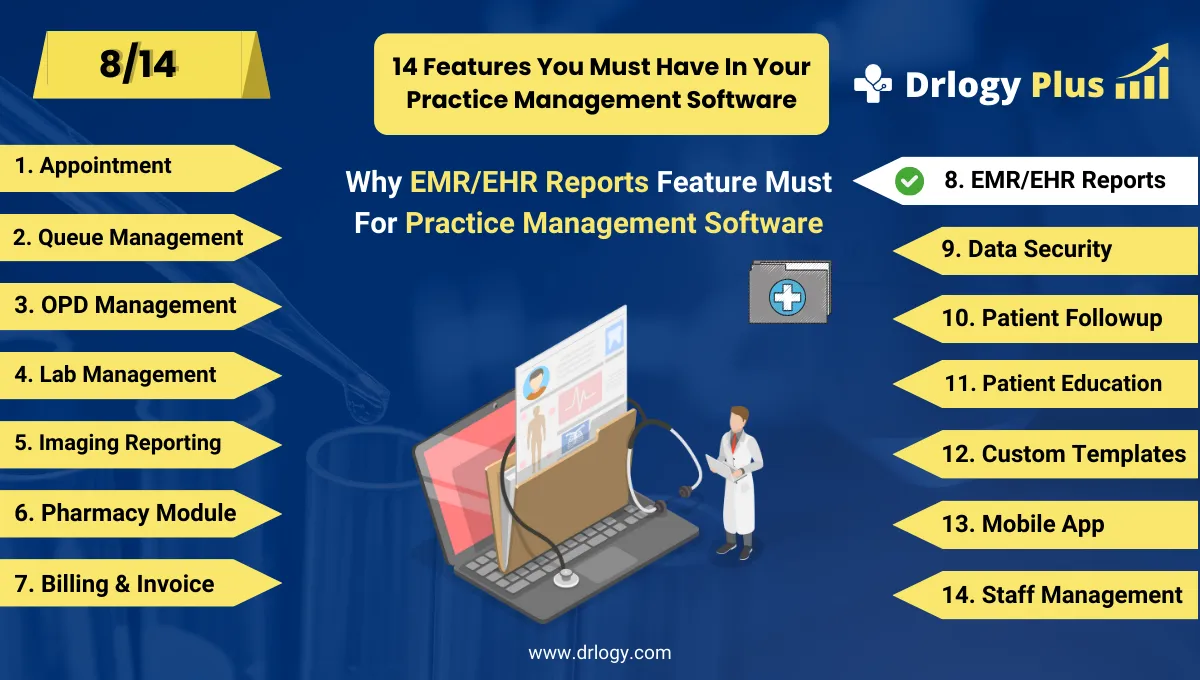
Here are 14 basic features for Drlogy Practice Management Software.
Summary
Overall, EMR/EHR Reports in practice management software are more than digital records, they centralize patient data, support better care decisions, streamline workflows, and provide strategic insights for growth while ensuring compliance and patient trust.
Check Drlogy Practice Management Software Features Guide helps to support for General Practice (GP) clinics & hospitals to manage patient care with precision, from consultation to follow-up.