Drlogy
Healthcare organization
USG Diagnostic Centers: Grow Faster, Smarter & More Profitably
Introduction
Ultrasound (USG) reporting is a core operational and medico-legal function of every radiology and diagnostic center. For radiologists and reporting staff, the quality of a USG report is not defined by imaging alone, but by how accurately, consistently, and clearly findings are documented.
In high‑volume radiology centers, inconsistent report formats, manual reporting workflows, and non‑standard terminology create risks related to:
- Diagnostic miscommunication
- Referring doctor dissatisfaction
- Legal and audit vulnerability
- Operational inefficiency
Check:
Best AI-Based Ultrasound Reporting Software for Radiologists
This pillar guide is designed exclusively for radiology centers, radiologists, and USG staff to explain how standardized USG report formats and reporting software improve quality, compliance, and scalability.
Why Standardized USG Reporting Matters in Radiology Centers
Standardization in USG reporting is no longer optional. It is a clinical, operational, and business necessity.
Key Reasons
- Consistency across radiologists in multi‑doctor centers
- Reduced reporting errors and missed observations
- Clear communication with referring clinicians
- Medico‑legal defensibility of reports
- Faster report turnaround time (TAT)
Without standard formats, reports depend heavily on individual radiologist, increasing variability and risk.
Core Components of a Standard USG Report Format
Every professional USG report—regardless of organ or indication—should follow a fixed structural framework.
Mandatory Sections
- Patient & Study Details –entification, date, modality
- Clinical Indication – Brief, referral‑oriented
- Technique – Probe, approach, limitations
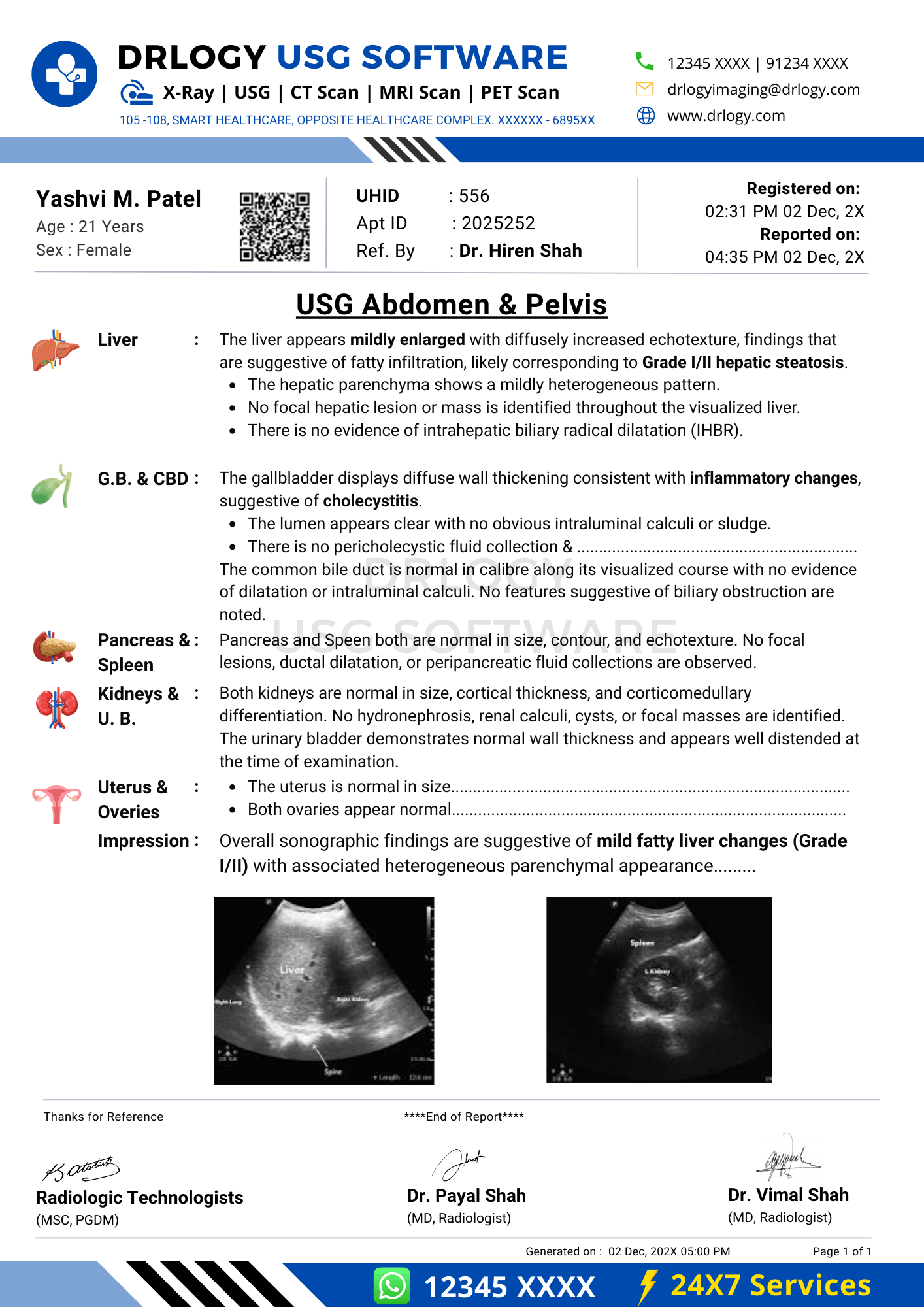
- Findings – Objective, organ‑wise observations
- Impression – Concise, clinically relevant summary
- Limitations / Disclaimer – Medico‑legal safety
This structure ensures uniformity, readability, and audit readiness.
USG Report Formats Radiology Centers Commonly Use
Radiology practices typically require multiple standardized formats, customized per examination type.
Common USG Report Formats
- USG Abdomen Report Format
- Lower Abdomen Ultrasound Report Format
- USG Abdomen And Pelvis Report Format
- USG Whole Abdomen Report Format
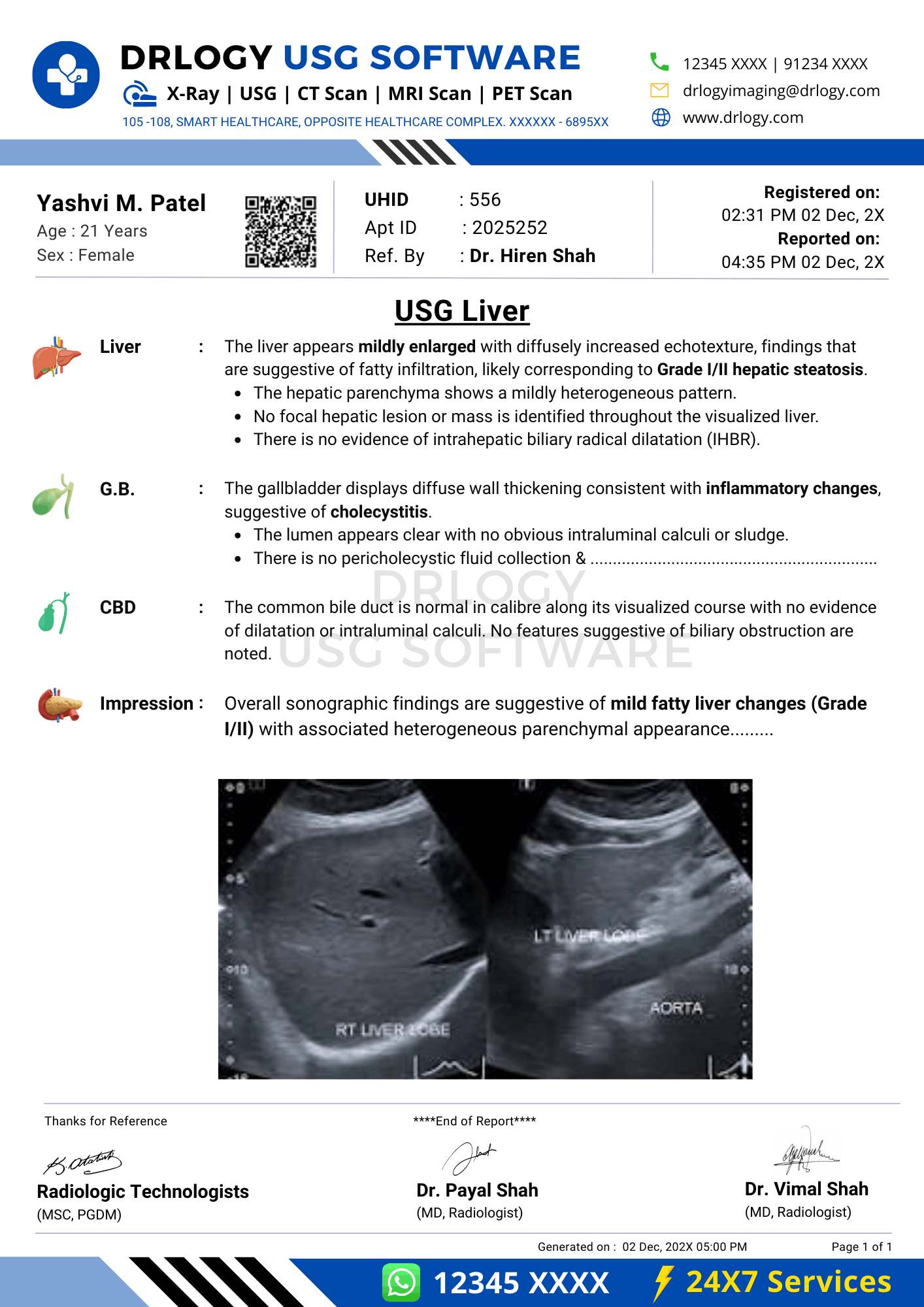
- Liver USG Report Format
- Kidney Ultrasound Report Format
- Spleen USG Report Format
- USG Scrotum Report Format
- Pelvis Ultrasound Report Format
- Pregnancy USG Report Format
- NT Scan Report Format
- PCOS Ultrasound Report Format
- Obstetric Ultrasound Report Format
- USG Breast Report Format
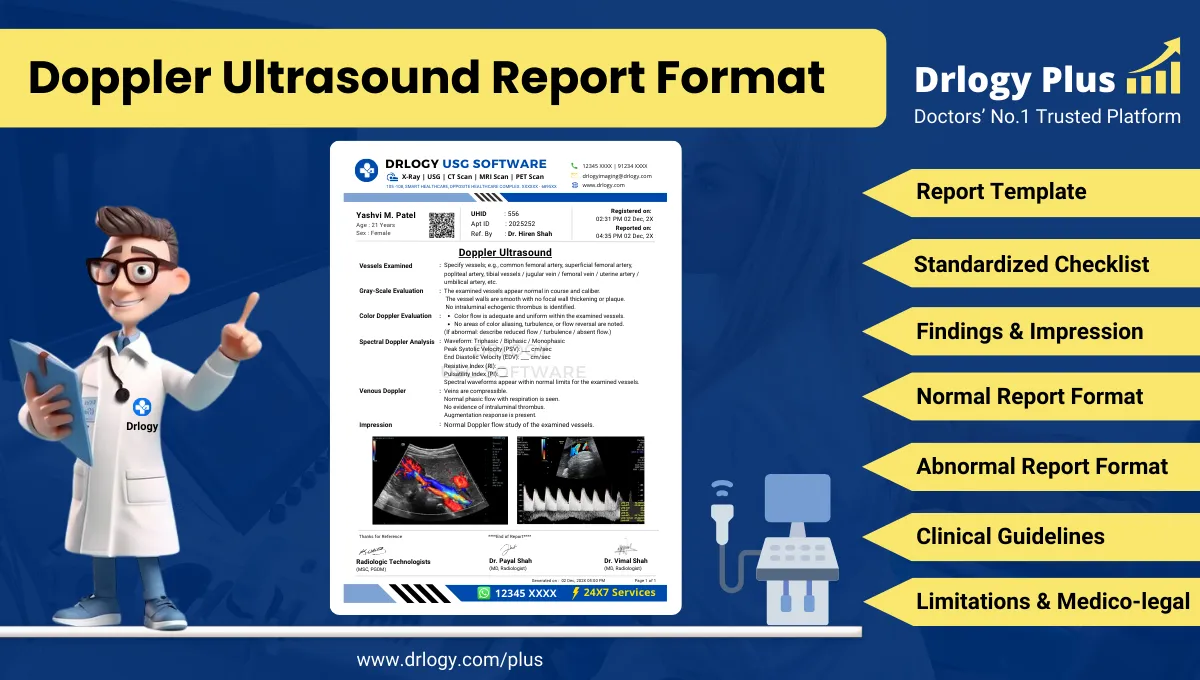
- Doppler Ultrasound Report Format
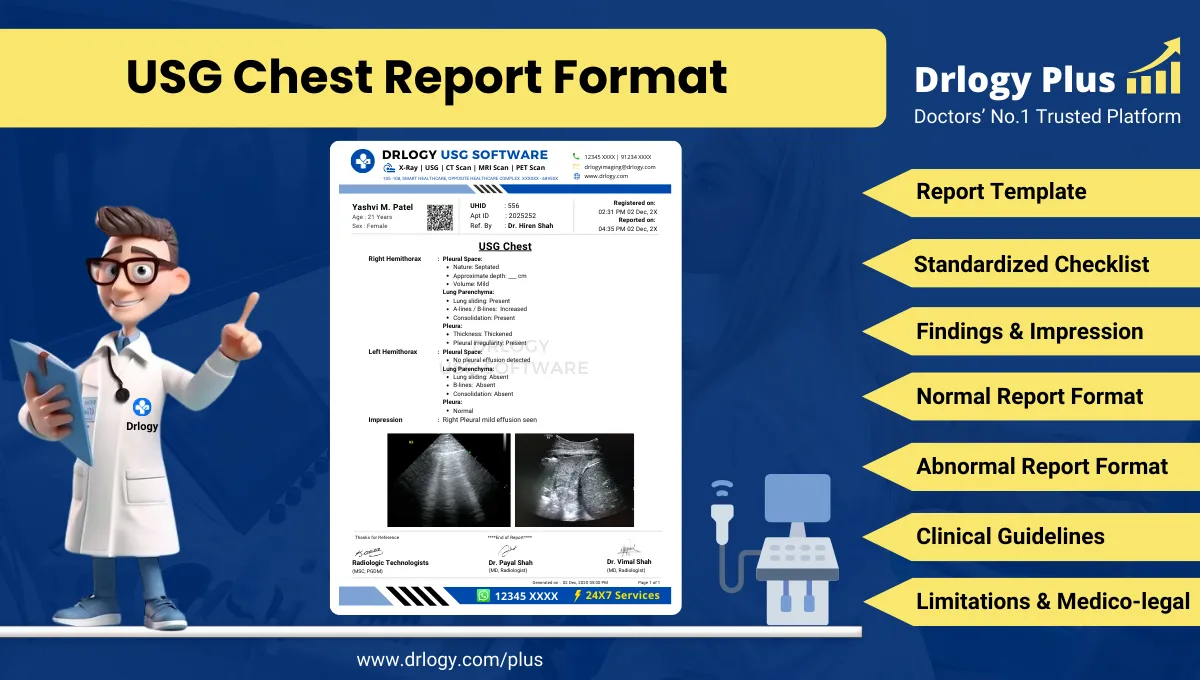
- USG Chest Report Format
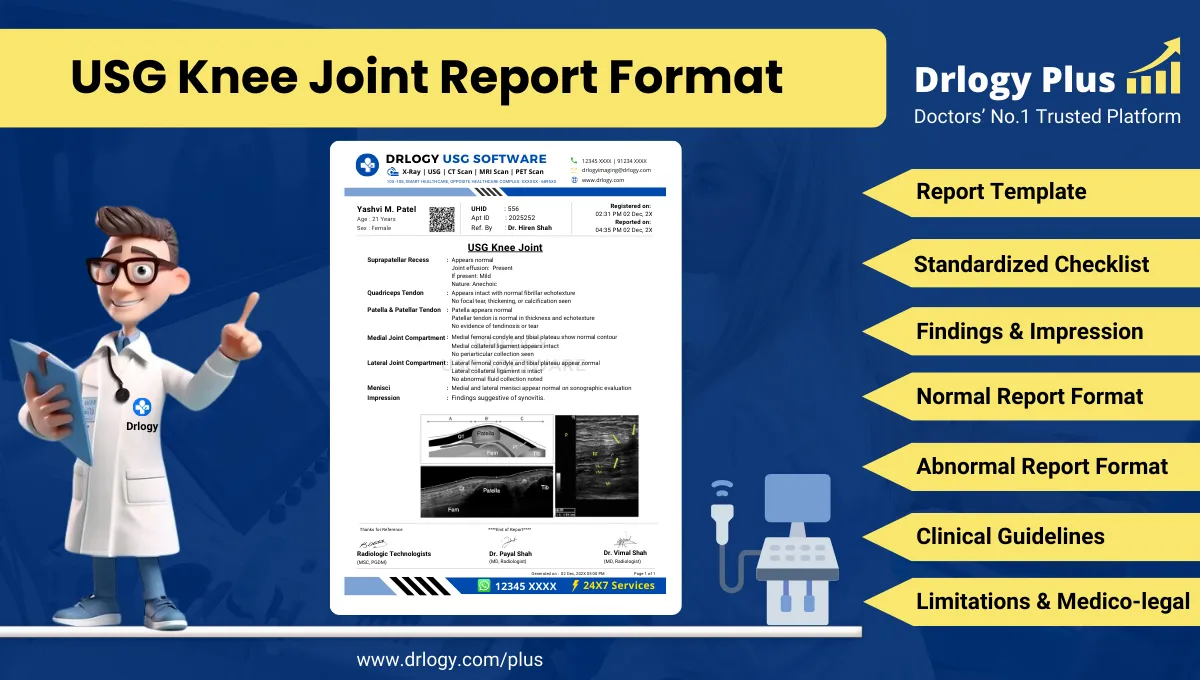
- USG Knee Joint Report Format
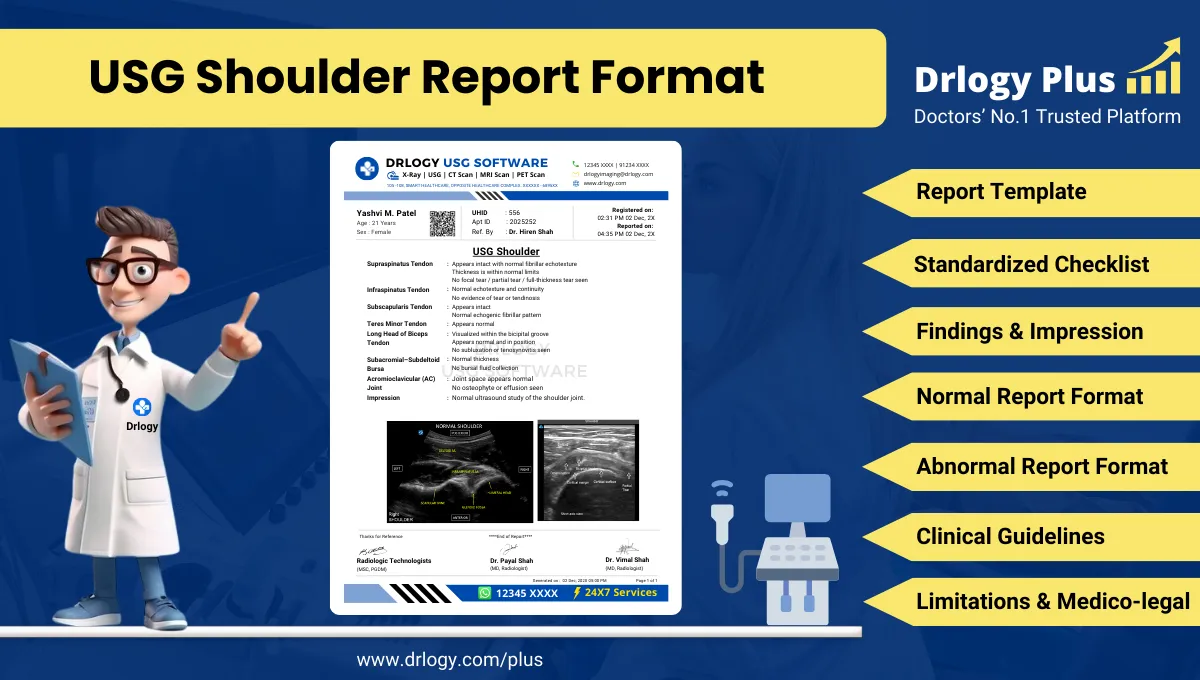
- USG Shoulder Report Format
Each format must balance clinical depth with reporting efficiency.
USG Abdomen and Pelvis Report Format
Liver USG Report Format
Normal vs Abnormal USG Report Structuring
A common reporting challenge is inconsistency between normal and abnormal studies.
Best Practice Approach
- Use identical structure for both
- Populate abnormal findings selectively
- Avoid free‑text narrative where structured fields exist
- Maintain consistent terminology
This approach simplifies review, comparison, and follow‑up.
Challenges of Manual USG Reporting in Busy Centers
Despite experience, manual USG reporting introduces avoidable limitations.
Operational Issues
- Time‑consuming typing or dictation
- Missed checklist points
- Variable language across radiologists
- Difficulty onboarding new staff
- Limited data reuse and analytics
As patient volumes increase, these issues compound.
Role of USG Reporting Software in Modern Radiology Practice
USG reporting software transforms reporting from a manual task into a controlled clinical workflow.
Key Capabilities
- Pre‑defined, editable USG report templates
- Organ‑wise structured input
- Consistent terminology enforcement
- Auto‑formatted impressions
- Customization per radiologist or center
Software‑based reporting ensures that quality is not dependent on memory or individual habit.
Workflow Automation in USG Reporting
Modern radiology centers require end‑to‑end workflow visibility.
Typical Software‑Enabled Workflow
- Study assignment
- Structured findings entry
- Quality check
- Final sign‑off
- Secure report delivery
Automation reduces delays, rework, and internal dependency.
Medico‑Legal & Compliance Advantages of Structured USG Reports
USG reports are legal medical documents.
Compliance Benefits
- Documented technique & limitations
- Objective, reproducible findings
- Reduced ambiguity in impressions
- Audit‑friendly structure
Structured reporting protects both radiologist and center reputation.
Using USG Reporting Quality as a Branding Tool
Beyond diagnostics, reports reflect a center’s professionalism.
Branding Benefits
- Uniform report appearance
- Consistent language across branches
- Embedded centerentity
- Increased referring doctor trust
High‑quality reports act as silent marketing assets.
How Drlogy Supports USG Reporting Standardization
Drlogy’s USG reporting solutions are designed specifically for radiology workflows, not generic documentation.
Platform Strengths
- Radiologist‑approved report formats
- Customizable without complexity
- Suitable for single and multi‑center practices
- Built for scale, compliance, and speed
The focus is on report quality, workflow efficiency, and operational control.
Who Should Implement Structured USG Reporting
- Independent radiology clinics
- Multi‑modal diagnostic centers
- Chain labs and franchises
- Teleradiology providers
- Teaching & training institutes
Any center aiming for consistency, safety, and growth benefits from standardization.
Conclusion: Standardize First, Scale Faster
USG reporting excellence is built on clear formats, controlled workflows, and the right technology.
Radiology centers that standardize reporting today are better positioned to:
- Reduce errors
- Improve efficiency
- Strengthen credibility
- Scale operations confidently
Structured USG reporting is no longer a luxury—it is a strategic necessity.