Drlogy
Healthcare organization
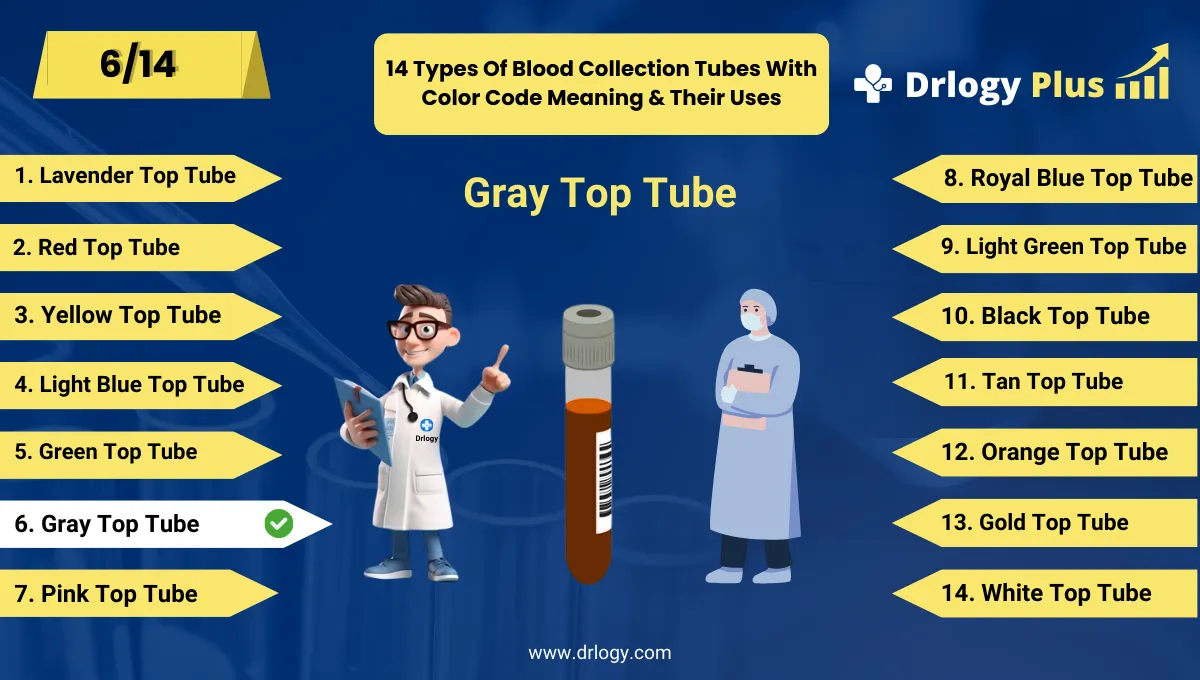
Gray Top Tube – Fluoride Tube for Glucose & Lactate Testing
In modern clinical laboratories, the Gray Top Tube holds a pivotal in blood collection, facilitating crucial diagnostic tests with precision and reliability.
Check
Understanding its composition, purpose, and proper usage is essential for ensuring accurate results and patient well-being. This comprehensive guide explores the fundamentals of Gray Top Tubes, delves into their scientific mechanisms, and highlights their significance in laboratory diagnostics.
What is a Gray Top Tube and How is it Used in Blood Collection?
A Gray Top Tube is a blood collection tube containing potassium oxalate and sodium fluoride. These additives prevent glycolysis, making the tubeeal for preserving glucose and lactate levels in blood samples. Its gray color distinguishes it from other tubes, ensuring properentification and usage in clinical laboratories.
In blood collection, the Gray Top Tube is primarily used for glucose tolerance tests, blood alcohol levels, and lactate assays. After collection, the blood is mixed with the additives by gentle inversion, which helps maintain sample stability and accuracy for laboratory analysis. Proper handling and storage are crucial to preserve the sample's integrity.
Science Behind the Green Top Tube: Understanding Its Additive and Function
Science Behind the Gray Top Tube
The Gray Top Tube contains potassium oxalate as an anticoagulant and sodium fluoride as a glycolysis inhibitor, preserving glucose and lactate levels for accurate laboratory analysis.
Understanding Its Additive and Function:
- Blood Collection: Blood is drawn into the Gray Top Tube using a standard phlebotomy technique.
- Anticoagulation: Potassium oxalate prevents blood clotting by binding to calcium, a crucial factor in the coagulation process.
- Glycolysis Inhibition: Sodium fluoride inhibits enzymes involved in glycolysis, preventing the breakdown of glucose in the sample.
- Mixing: The tube is gently inverted 8-10 times immediately after collection to ensure thorough mixing of blood with the additives.
- Sample Stability: The additives maintain the stability of glucose and lactate levels, ensuring accurate test results during laboratory analysis.
Importance key features of a Gray Top Tube
| Feature | Description |
|---|---|
| Additives | Contains potassium oxalate as an anticoagulant and sodium fluoride as a glycolysis inhibitor to preserve glucose and lactate levels in the sample. |
| Primary Uses | Ideal for glucose tolerance tests, blood alcohol levels, and lactate assays, ensuring accurate and reliable diagnostic results. |
| Colorentification | The gray color of the tube allows for easyentification and differentiation from other blood collection tubes. |
| Anticoagulation Mechanism | Potassium oxalate prevents blood clotting by binding with calcium, an essential element in the coagulation process. |
| Glycolysis Inhibition | Sodium fluoride inhibits glycolytic enzymes, preventing the breakdown of glucose and maintaining sample stability. |
| Sample Mixing | Requires gentle inversion 8-10 times after collection to ensure proper mixing of blood with the additives. |
| Sample Stability | Maintains the integrity of glucose and lactate levels in the sample, crucial for accurate laboratory analysis. |
| Volume Requirements | Available in various sizes to accommodate different blood volume requirements, ensuring flexibility in sample collection. |
| Storage and Handling | Requires specific storage conditions to preserve sample quality, typically involving refrigeration if not analyzed promptly. |
| Labeling and Documentation | Often includes a label or space for important patient and test information, aiding in accurate sample tracking andentification. |
Top 10 Laboratory Tests That Use Gray Top Tube
Glucose Tolerance Test (GTT)
- Measures the body's ability to metabolize glucose, commonly used to diagnose diabetes.
Fasting Blood Glucose
- Assesses blood glucose levels after a period of fasting to monitor diabetes and prediabetes.
Postprandial Blood Glucose
- Measures blood glucose levels after a meal to evaluate the effectiveness of diabetes treatment.
Lactate
- Determines lactate levels in the blood, useful in diagnosing lactic acidosis and monitoring critically ill patients.
Blood Alcohol Level
- Measures the concentration of alcohol in the blood for legal and medical purposes.
Glycolysis Inhibition Studies
- Analyzes how effectively sodium fluoride in the tube inhibits glycolysis, important in research settings.
Glucose Challenge Test
- Screens for gestational diabetes by measuring blood glucose levels after consuming a glucose drink.
Insulin Tolerance Test
- Assesses insulin sensitivity and glucose metabolism by measuring glucose levels after insulin administration.
Galactose Tolerance Test
- Evaluates the body's ability to metabolize galactose, used to diagnose galactosemia.
Ethanol Level
- Measures the ethanol concentration in the blood, important in toxicology and forensic investigations.
Best Practices for Using Gray Top Tube in Phlebotomy
Properentification:
- Always verify the patient'sentity and label the Gray Top Tube correctly before blood collection.
Correct Blood Draw Technique:
- Use standard phlebotomy techniques to collect blood, ensuring minimal discomfort for the patient.
Immediate Mixing:
- Gently invert the tube 8-10 times immediately after collection to mix the blood with the additives thoroughly.
Avoid Hemolysis:
- Ensure a smooth blood flow and avoid excessive force to prevent hemolysis, which can affect test results.
Proper Storage:
- Store the Gray Top Tube at the recommended temperature, usually refrigerated if not analyzed promptly.
Timely Transport:
- Transport the samples to the laboratory as soon as possible to maintain sample integrity.
Documentation:
- Accurately document the collection time, patient information, and any other relevant details to ensure proper sample tracking and analysis.
7 Step-by-Step Guide to Proper Gray Top Tube Usage
Patient Preparation:
- Verify the patient’sentity using twoentifiers (e.g., name and date of birth). Explain the procedure and obtain consent. Ensure the patient is seated or lying comfortably.
Equipment Preparation:
- Gather all necessary supplies, including the Gray Top Tube, needle, tourniquet, alcohol swab, gauze, and adhesive bandage. Check the tube for expiration date and any damages.
Site Selection and Cleaning:
- Select an appropriate venipuncture site, usually the median cubital vein. Clean the area with an alcohol swab in a circular motion, starting from the center and moving outward. Allow the area to dry.
Applying the Tourniquet:
- Apply the tourniquet 3-4 inches above the selected venipuncture site. Do not leave the tourniquet on for more than 1 minute to avoid hemoconcentration.
Blood Collection:
- Insert the needle into the vein with the bevel up at a 15-30 degree angle. Once blood flow is established, insert the Gray Top Tube into the holder to allow the tube to fill with blood. Ensure the tube is filled to the proper volume.
Mixing the Sample:
- After removing the tube from the holder, gently invert it 8-10 times to mix the blood with the potassium oxalate and sodium fluoride additives. Do not shake the tube, as this can cause hemolysis.
Post-Collection Care:
- Remove the needle and immediately apply gauze to the puncture site with gentle pressure. Once bleeding has stopped, apply an adhesive bandage. Label the tube with patient information, the date, and the time of collection, and promptly send it to the laboratory for analysis. Dispose of the needle and other materials in appropriate sharps and biohazard containers.
7 Common Mistakes to Avoid When Using Gray Top Tube
Incorrect Labeling:
- Failing to properly label the Gray Top Tube with the patient's information can lead to misidentification and erroneous test results. Always double-check labels before and after blood collection.
Insufficient Mixing:
- Not inverting the tube 8-10 times immediately after collection can result in inadequate mixing of the blood with the additives, leading to inaccurate test results.
Excessive Tourniquet Time:
- Leaving the tourniquet on for too long (more than 1 minute) can cause hemoconcentration and affect the accuracy of glucose and lactate levels.
Improper Storage:
- Storing the Gray Top Tube at incorrect temperatures can compromise sample integrity. Ensure the tube is refrigerated if not analyzed immediately.
Rough Handling:
- Shaking the tube vigorously can cause hemolysis, which can interfere with test results. Always handle the tube gently and avoid unnecessary agitation.
Delayed Transport:
- Delaying the transport of the collected sample to the laboratory can lead to degradation of glucose and lactate levels. Ensure timely delivery to maintain sample stability.
Using Expired Tubes:
- Using expired or damaged Gray Top Tubes can compromise the effectiveness of the additives, leading to unreliable test results. Always check the expiration date before use.
Role of Gray Top Tubes in Glucose Testing: Understanding Its Diagnostic Utility
- Preserves Glucose Levels: Gray Top Tubes contain sodium fluoride, which inhibits glycolysis and stabilizes glucose levels in collected blood samples.
- Reliable Diabetes Diagnosis: They are essential for accurate fasting blood glucose and glucose tolerance tests, crucial for diagnosing diabetes and prediabetes.
- Prevents Glycolysis: The additives prevent glycolysis, ensuring that glucose measurements reflect true blood sugar levels at the time of collection.
- Supports Long-Term Monitoring: They provide reliable results for monitoring glucose levels over time, aiding in the management of diabetes.
- Essential for Research: Widely used in clinical research to study glucose metabolism and the effectiveness of diabetes treatments.
5 Future Perspectives: Evolution of Gray Top Tubes in Laboratory Medicine
Enhanced Additive Formulations:
- Future Gray Top Tubes may feature advanced additives that improve the stability and preservation of glucose and lactate levels for longer periods, ensuring even more accurate and reliable test results.
Improved Material Quality:
- The development of more robust and biocompatible materials for Gray Top Tubes will reduce the risk of hemolysis and contamination, enhancing overall sample integrity and patient safety.
Automation Compatibility:
- Innovations will likely focus on making Gray Top Tubes more compatible with automated blood collection and processing systems, streamlining workflows in clinical laboratories and reducing human error.
Integrated Smart Technology:
- Future iterations may include smart labels with embedded RFID or QR codes that facilitate real-time tracking, data logging, and improved sample management from collection to analysis.
Sustainability and Eco-Friendly Designs:
- The push towards sustainable practices in healthcare will drive the creation of Gray Top Tubes made from eco-friendly materials, reducing environmental impact while maintaining high standards of performance and reliability.
FAQS: Gray Top Tube
What is a Gray Top Tube used for in blood collection?
- A Gray Top Tube, also known as a fluoride/oxalate tube, is primarily used to collect blood samples for glucose and lactate testing. The additives in the tube prevent glycolysis, preserving glucose levels for accurate analysis.
How does a Gray Top Tube work?
- The Gray Top Tube contains sodium fluoride, which inhibits glycolysis, and potassium oxalate, which acts as an anticoagulant. These additives stabilize glucose levels by preventing the breakdown of glucose in the collected blood sample.
What tests are performed using a Gray Top Tube?
- Gray Top Tubes are used for various glucose-related tests, including fasting blood glucose, glucose tolerance tests, and lactate assays. They are essential for diagnosing diabetes, monitoring glucose levels, and assessing metabolic disorders.
How do you collect blood using a Gray Top Tube?
- Blood is collected using standard phlebotomy techniques, and the Gray Top Tube is inserted into the holder to allow the tube to fill with blood. After collection, the tube is gently inverted to mix the blood with the additives.
Can Gray Top Tubes be used for other tests besides glucose testing?
- While Gray Top Tubes are primarily used for glucose and lactate testing, they may also be used for certain research studies or specialized tests requiring stable glucose levels. However, their main utility lies in glucose testing.
What precautions should be taken when using Gray Top Tubes?
- It's crucial to ensure proper labeling, mixing, and storage of Gray Top Tubes to maintain sample integrity. Additionally, avoiding excessive tourniquet time and rough handling can help prevent errors and ensure accurate test results.
How long can blood samples in Gray Top Tubes be stored before analysis?
- Blood samples in Gray Top Tubes should be analyzed promptly to ensure accurate results. If immediate analysis is not possible, samples can be stored at recommended temperatures, usually refrigerated, for a limited time to maintain sample stability.
Drlogy Blood Cllection Tube Guide
Here are 14 types of blood colelction tubes with color.
Conclusion
As laboratory medicine continues to evolve, the Gray Top Tube remains an indispensable tool in blood collection and diagnostic practices.
Check Complete Guide on Drlogy Blood Collection Tubes with Color Codes & Uses to master phlebotomy techniques, improve sample handling, and reduce pre-analytical errors