Drlogy
Healthcare organization
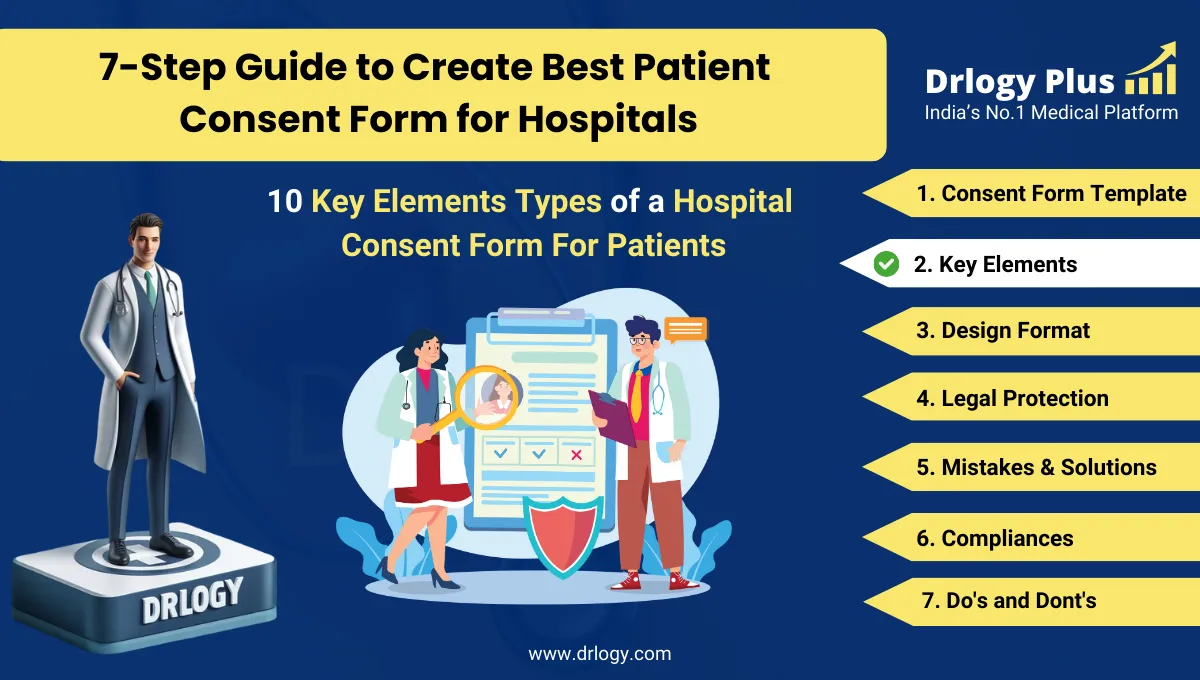
10 Key Elements Types of a Hospital Consent Form For Patients
A hospital consent form is more than just a signature—it's a critical legal and ethical document that ensures patient understanding and agreement before any treatment or procedure.
Check:
Knowing the key elements helps hospitals ensure compliance and enhances patient trust.
10 Key Elements Types of a Hospital Consent Form For Patients
Here are 10 Key Elements Types of a Hospital Consent Form For Patients.
1. Patiententification Details
- Full name, age, gender, and unique patient are mandatory.
- Prevents errors and ensures the form corresponds to the correct patient.
- Helps maintain accurate and traceable medical records.
- Acts as the primaryentifier for any procedure-related queries.
- Should match the patient’s official documents.
Accurate patient info ensures correctentification and recordkeeping.
2. Procedure or Treatment Description
- Clearly outlines the medical procedure being performed.
- Must include scope, intent, and expected outcome.
- Helps eliminate confusion regarding treatment.
- Must be written in simple and understandableuage.
- Ensures patient awareness of what they are consenting to.
Clarity in procedure description promotes informed patient decisions.
3. Risk and Complication Disclosure
- Lists potential risks, side effects, and complications.
- Ensures transparency and ethical compliance.
- Helps patients weigh benefits versus risks.
- Builds trust between patient and healthcare provider.
- Should not hide even rare or minor risks.
Informing risks helps patients make conscious health choices.
4. Benefits and Alternatives
- Describes the benefits of the proposed treatment.
- Includes alternative procedures or non-treatment outcomes.
- Encourages shared decision-making.
- Assists patients in choosing the best option for them.
- Reflects a patient-centered approach to care.
Transparency in benefits and options empowers patients.
5. Consent Voluntariness Statement
- Declares that the patient is giving consent freely.
- Ensures there's no coercion or external pressure.
- Must highlight the patient's right to refuse or withdraw consent.
- Protects both patient autonomy and hospital legally.
- Promotes ethical practice in medical care.
Voluntary consent safeguards patient rights and dignity.
6. Confidentiality Assurance
- Assures patient information will be kept private.
- Highlights compliance with data protection laws like HIPAA.
- Reassures patients about data safety.
- Helps avoid legal issues related to privacy breaches.
- Builds institutional credibility and trust.
Confidentiality commitments reinforce patient trust.
7. Signature and Date Section
- Includes patient’s or guardian’s signature and date.
- Healthcare provider or witness signature is also required.
- Legally validates the consent document.
- Must be signed before the procedure is carried out.
- Digital or e-signature options are also accepted in many facilities.
Signatures make the consent form legally binding and enforceable.
8. Witness/Attendant Section
- Signature of a witness who observes the consent process.
- Adds an extra layer of legal credibility.
- Should be someone impartial if possible.
- Especially important for high-risk or complex procedures.
- Validates the voluntary nature of the consent.
A witness confirms that consent was given knowingly and freely.
9. Emergency Clause (If Applicable)
- Allows predefined consent in case of life-threatening emergencies.
- Applicable for patients under anesthesia or unconscious.
- Must be clearly outlined and agreed upon beforehand.
- Saves time and protects legal rights during emergencies.
- Should comply with hospital and state legal guidelines.
Emergency clauses protect patient rights during critical situations.
10.uage and Comprehension Section
- Verifies that the patient understands the form’suage.
- Interpreter ord version should be offered if needed.
- Avoids miscommunication due touage barriers.
- Ensures ethical and inclusive patient care.
- Acknowledgement of understanding is critical for legal validity
Language clarity ensures true understanding and valid consent.
Drlogy Hospital Consent Form Guide
Here are 7 steps guide for Drlogy Hospital Consent Form Guide.
| 1. Hospital Consent Form Templates |
| 2. Types of Consent Forms |
| 3. Consent Form Design Format |
| 4. Consent Form Legality |
| 5. Consent Form Mistakes |
| 6. Consent Form Compliance |
| 7. Consent Form Do's & Don'ts |
Summary
Overall, Including all 10 key elements in a hospital consent form ensures legal protection, informed decision-making, and trustful communication, ultimately leading to better patient care and institutional credibility.
Check Drlogy Hospital Consent Form Guide to providing a comprehensive overview of essential consent forms, ensuring your hospital remains compliant, transparent, and patient-friendly.