Drlogy
Healthcare organization
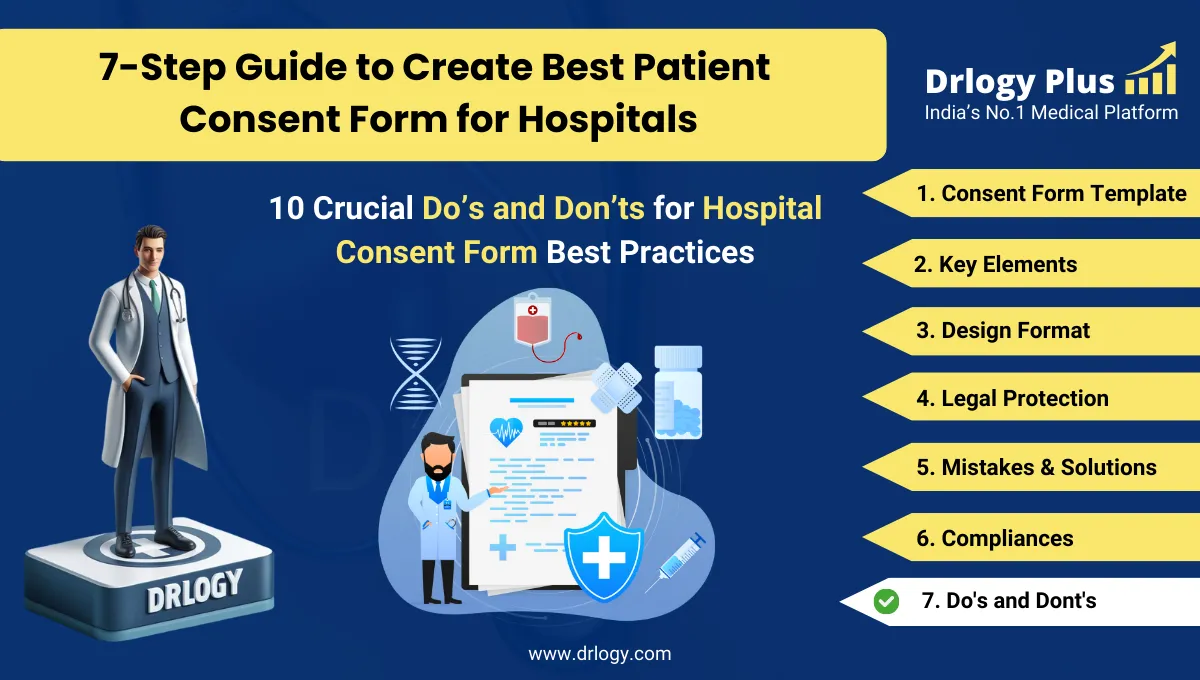
10 Crucial Do’s and Don’ts for Hospital Consent Form Best Practices
Creating and managing hospital consent forms is essential for legal compliance, ethical standards, and patient-centered care.
Check:
These do’s and don’ts will help hospitals maintain accuracy, clarity, and patient trust throughout the consent process.
10 Crucial Do’s and Don’ts for Hospital Consent Form Best Practices
Here are 10 Crucial Do’s and Don’ts for Hospital Consent Form Best Practices
1. Do: Use Clear and Simpleuage
- Use layman-friendly terms, avoiding medical jargon.
- Patients should understand the content without confusion.
- Simpleruage promotes transparency.
- Enhances patient engagement and compliance.
- Reduces the risk of legal disputes from misunderstandings.
Clarity inuage ensures informed consent and minimizes risk.
2. Don’t: Leave Out Potential Risks
- Always list possible risks and complications.
- Omitting risks can lead to legal issues and broken trust.
- Be honest—even rare risks must be disclosed.
- Transparency helps patients make informed decisions.
- Encourages shared responsibility in c
Disclosing all risks upholds legal and ethical obligations.
3. Do: Obtain Consent Voluntarily
- Ensure patients are not coerced or pressured.
- Voluntary consent reflects respect for patient autonomy.
- Give time for reflection and questions.
- Emphasize the right to decline or withdraw consent.
- Must be a conscious and free decision.
Voluntary participation builds trust and protects patient rights.
4. Don’t: Forget Signatures and Dates
- Signature from patient and witness is legally required.
- Include date of signing to validate the form.
- A missing signature can invalidate the entire document.
- Use e-signatures if allowed for convenience.
- Always double-check before proceeding with treatment.
Proper signatures make the consent form legally enforceable.
5. Do: Offerd Versions When Needed
- Provide consent forms in the patient’s nativeuage.
- Offer interpreters if required for full understanding.
- Reduces miscommunication and legal risk.
- Promotes inclusivity and fair treatment.
- Essential in multicultural or diverse regions.
Language accessibility ensures real understanding and equality.
6. Don’t: Overlook the Patient’s Right to Refuse
- Patients must know they can say “no” at any time.
- Respect their decision, even during treatment.
- Discuss alternative options clearly.
- Keep documentation if a patient refuses consent.
- Helps manage liability while respecting autonomy.
Recognizing refusal maintains ethical standards and transparency.
7. Do: Include a Clear Procedure Description
- Mention the nature, purpose, and steps of the procedure.
- Avoid ambiguity or technical overload.
- Explain the procedure’s goals and expectations.
- Include approximate timelines if possible.
- Makes the document more useful and clear.
Clear procedure info reduces confusion and ensures informed choices.
8. Don’t: Use Generic or Outdated Templates
- Customize forms to the procedure and patient.
- Update forms regularly as medical protocols evolve.
- Old templates may lack legal relevance.
- Generic templates miss key information.
- Always review forms with legal and medical teams.
Customized, updated forms ensure accuracy and legal alignment.
9. Do: Keep Consent Records Securely
- Store signed forms in the patient’s medical file.
- Follow data privacy regulations (e.g., HIPAA).
- Maintain both digital and physical copies if possible.
- Ensure access is limited to authorized staff.
- Essential for audits, legal matters, and internal reviews.
Secure recordkeeping supports compliance and protects privacy.
10. Don’t: Proceed Without Confirming Comprehension
- Ask patients if they fully understand the form.
- Encourage questions and repeat important points.
- Don't assume silence equals understanding.
- Use a “teach-back” method if needed.
- Improves quality of consent and communication.
Valid consent only exists if the patient truly understands it.
Drlogy Hospital Consent Form Guide
Here are 7 steps guide for Drlogy Hospital Consent Form Guide.
| 1. Hospital Consent Form Templates |
| 2. Types of Consent Forms |
| 3. Consent Form Design Format |
| 4. Consent Form Legality |
| 5. Consent Form Mistakes |
| 6. Consent Form Compliance |
| 7. Consent Form Do's & Don'ts |
Summary
Overall, Following these 10 do’s and don’ts ensures that hospital consent forms are legally sound, ethically correct, and centered on patient safety, communication, and understanding.
Check Drlogy Hospital Consent Form Guide to providing a comprehensive overview of essential consent forms, ensuring your hospital remains compliant, transparent, and patient-friendly.