Drlogy
Healthcare organization
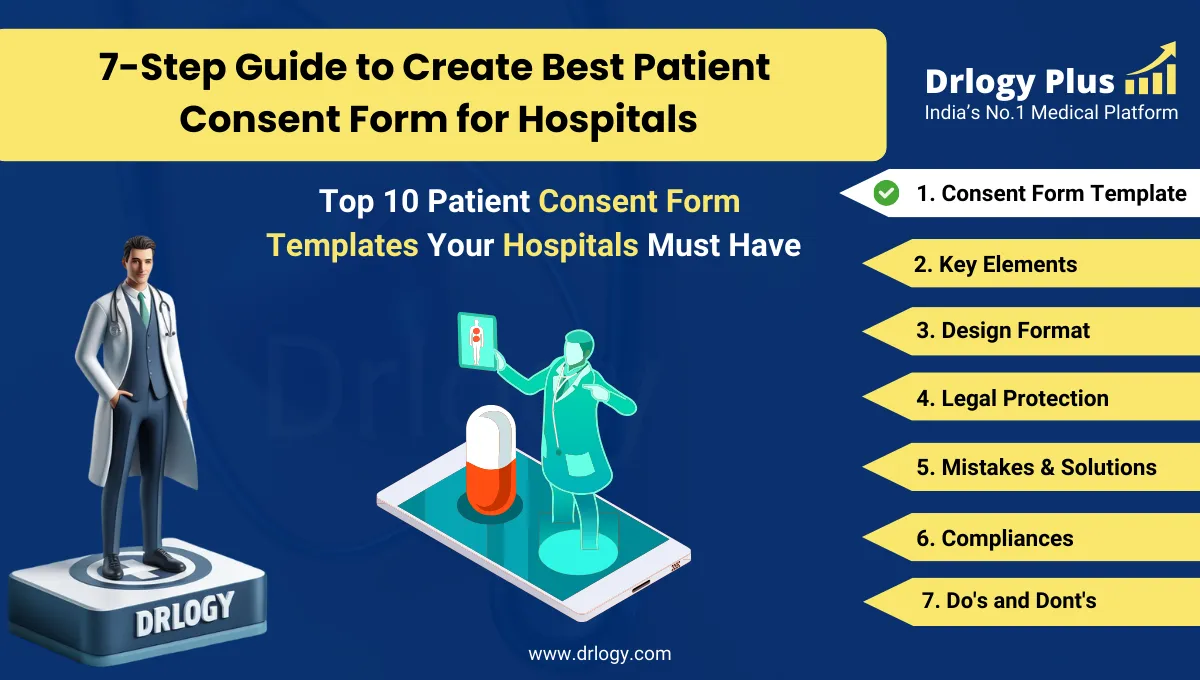
Top 10 Patinet Consent Form Templates Your Hospitals Must Have
Consent forms are crucial in hospitals to ensure that patients understand medical procedures, associated risks, and their rights.
Check:
These documents enhance transparency, build trust, and provide legal protection for both patients and healthcare providers.
Top 10 Hospital Consent Form Templates for Better Patient Experience
Here are Top 10 Hospital Consent Form Templates for Better Patient Experience.
1. General Consent Form Template
- Covers overall hospital admission and permission for basic treatments.
- Used during initial admission to authorize routine procedures.
- Clarifies the scope of standard hospital services and patient rights.
- Ensures patient awareness and agreement to general care terms.
- Suitable for all inpatients and outpatient services.
A foundational form used at admission for basic care authorization.
2. Informed Consent for Special Procedures
- Required before any major procedure or treatment.
- Provides full details of diagnosis, treatment plan, and potential outcomes.
- Emphasizes voluntary patient agreement after understanding all risks.
- Ensures patient’s autonomy in medical decision-making.
- Crucial for medical ethics and legal compliance.
Ensures the patient agrees to a procedure with complete understanding.
3. Surgical Consent Form
- Mandatory for any minor or major surgical procedure.
- Describes the procedure, risks, complications, and outcomes.
- Includes consent for anesthesia and blood transfusion if needed.
- Signed by both surgeon and patient (or legal guardian).
- Legally binds the agreement to perform surgery.
Provides informed approval for surgical intervention.
4. Anesthesia Consent Form
- Required before administering anesthesia during any procedure.
- Explains the types, risks, and effects of anesthesia used.
- Offers information on post-anesthesia recovery and monitoring.
- Involves signatures from patient and anesthesiologist.
- Assures patient understanding of sedation options.
Helps patients understand anesthesia-related risks and choices.
5. Therapy Consent Form
- Needed for physical, occupational, or mental health therapies.
- Covers therapy plans, expected duration, and goals.
- Discloses any potential pain, stress, or limitations involved.
- Encourages active participation and informed decisions.
- Provides clarity for both therapist and patient.
Authorizes long-term therapies with patient consent and clarity.
6. Pediatric Consent Form
- Used when minors require treatment or hospitalization.
- Signed by parent or legal guardian on behalf of the child.
- Describes procedures in simple, understandable terms.
- Often includes consent for emergency care if needed.
- Legally validates medical actions for underage patients.
Allows legal guardians to consent for minor’s treatment.
7. Intensive Care Consent Form For ICU
- Applied in ICU or emergency care scenarios.
- Informs about life-saving measures, resuscitation, and monitoring.
- Covers high-risk decisions like ventilator use and sedation.
- May include Do Not Resuscitate (DNR) preferences.
- Ensures clarity during urgent or unpredictable conditions.
Prepares families and doctors for critical care decisions.
8. Dialysis or Blood-Related Consent Form
- Required for dialysis sessions, blood transfusions, or plasma therapy.
- Lists frequency, process, and potential side effects.
- Informs about infection risks, allergic reactions, and long-term use.
- Patient consent is mandatory for ongoing treatments.
- Useful for chronic patients requiring repeated sessions.
Authorizes life-sustaining treatments like dialysis or transfusions.
9. Chemotherapy Consent Form
- Used before beginning chemotherapy cycles for cancer patients.
- Lists drug protocols, treatment durations, and adverse effects.
- Informs about fertility risks, hair loss, fatigue, and more.
- Encourages discussion and clarifies doubts with oncologist.
- Forms part of the cancer care consent bundle.
Helps cancer patients make informed chemotherapy decisions.
10. Specific Consent Forms
- Tailored for procedures like organ transplant, fertility, or trials.
- Contains customized content per procedure or patient need.
- Often reviewed by ethics and legal teams before use.
- Ensures higher standards of communication for complex treatments.
- Vital for niche and high-risk procedures.
Used for rare or advanced medical interventions requiring extra clarity.
Drlogy Hospital Consent Form Guide
Here are 7 steps guide for Drlogy Hospital Consent Form Guide.
| 1. Hospital Consent Form Templates |
| 2. Types of Consent Forms |
| 3. Consent Form Design Format |
| 4. Consent Form Legality |
| 5. Consent Form Mistakes |
| 6. Consent Form Compliance |
| 7. Consent Form Do's & Don'ts |
Summary
Overall, Customized hospital consent forms ensure clear communication, patient satisfaction, and legal protection while building a foundation of trust and compliance in all medical procedures.
Check Drlogy Hospital Consent Form Guide to providing a comprehensive overview of essential consent forms, ensuring your hospital remains compliant, transparent, and patient-friendly.