Drlogy
Healthcare organization
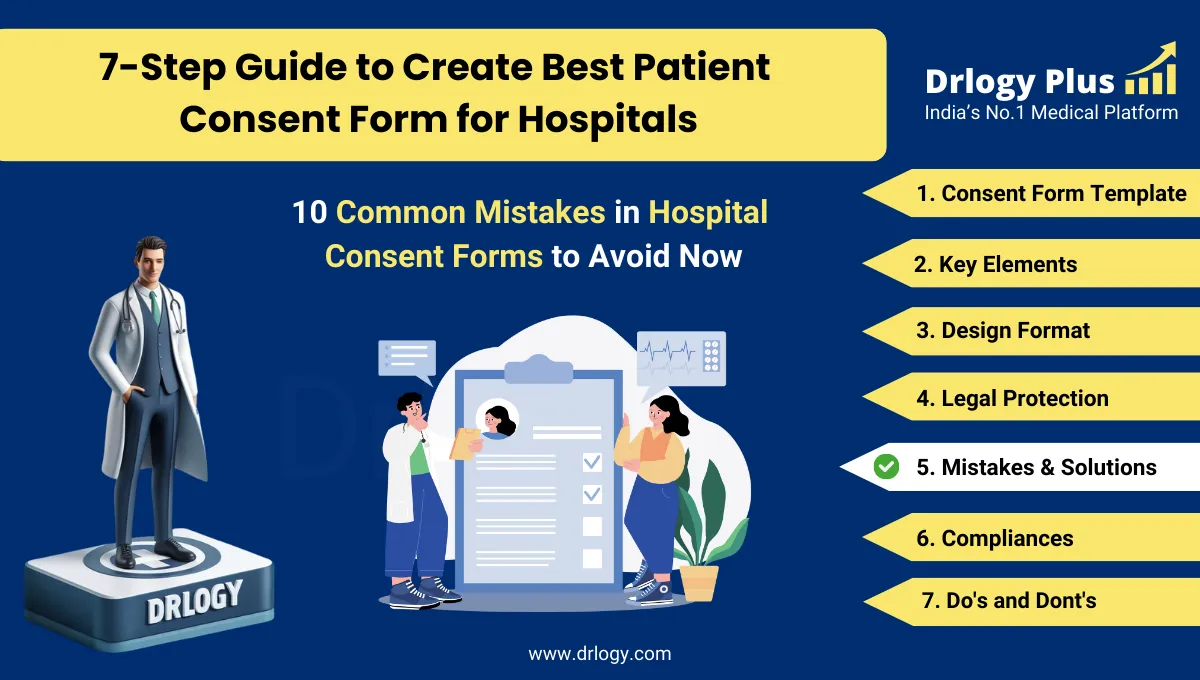
10 Common Mistakes in Hospital Consent Forms to Avoid Now
Hospital consent forms are essential documents that protect both patient rights and healthcare providers.
Check:
Avoiding common mistakes in these forms is crucial to ensure legal compliance, ethical integrity, and clear communication with patients.
10 Common Mistakes in Hospital Consent Forms to Avoid Now
Here are 10 Common Mistakes in Hospital Consent Forms to Avoid Now.
1. Missing Patiententification Details
- Forms without patient name,, or DOB can cause misidentification.
- Essential for verifying the correct patient before treatment.
- Improves accuracy and patient safety across departments.
- Required for maintaining complete and traceable records.
- Prevents legal and administrative confusion.
Accurate patient info is foundational for valid consent.
2. Vague or Incomplete Procedure Description
- Unclear wording leaves patients confused about what they’re consenting to.
- Details should include procedure name, nature, and scope.
- Reduces the chance of misunderstanding or disputes.
- Informed consent requires specific, understandable content.
- Improves transparency and trust between staff and patients.
Clarity ensures patients truly understand the medical procedure.
3. Not Listing Risks or Alternatives
- Failure to disclose potential risks violates ethical and legal standards.
- Patients must be aware of alternatives, even if minimal.
- Essential for truly informed decision-making.
- Helps manage expectations and consent validity.
- Supports patient autonomy and rights.
Listing risks and options empowers patient choice and safety.
4. Lack of Interpreter or Translation Support
- Language barriers lead to uninformed consent and possible legal issues.
- Hospitals must provided forms or qualified interpreters.
- Improves inclusivity for non-native speakers or the hearing impaired.
- Shows respect for cultural and linguistic diversity.
- Meets regulatory and accreditation standards.
Accessibleuage ensures all patients can consent confidently.
5. Missing Witness or Physician Signatures
- Consent is incomplete without proper authentication by staff.
- Witness signatures confirm voluntary participation.
- Physician sign-off confirms discussion and patient understanding.
- Signature timing should align with consent delivery.
- Protects hospital in legal disputes or audits.
Complete signatures validate the form legally and ethically.
6. Using Outdated Consent Form Versions
- Old forms may omit new legal, procedural, or safety requirements.
- Creates risk of non-compliance with updated guidelines.
- Misleads patients if processes or medications have changed.
- Leads to invalid or challenged consents in court.
- Reduces administrative credibility and consistency.
Updated forms reflect current standards and ensure compliance.
7. No Clear Opt-Out or Refusal Clause
- Patients must know they can refuse or withdraw consent anytime.
- Consent is not valid if refusal isn’t presented as an option.
- Legal obligation under patient rights policies.
- Encourages open dialogue and reduces coercion.
- Improves overall ethical standards in patient care.
Consent should never feel forced—choice must be clear.
8. Overuse of Medical Jargon
- Highly technical terms confuse patients and reduce understanding.
- Use plain, layman-friendlyuage for clarity.
- Encourages patient engagement and questions.
- Improves the quality of informed consent.
- Reduces the risk of litigation from “uninformed” signatures.
Simplicity inuage strengthens patient comprehension.
9. Not Providing a Copy to the Patient
- Patients must retain a copy of what they agreed to.
- Essential for transparency and legal backup.
- Increases patient confidence and recall.
- Builds trust and satisfaction with hospital processes.
- May be requested later in case of dispute or treatment follow-up.
Sharing a copy demonstrates responsibility and respect.
10. Poor Form Design & Layout
- Cluttered, confusing layouts reduce readability and completion.
- Important sections may be missed or skipped.
- Design should support easy understanding and flow.
- Clear sectioning, spacing, and font matter greatly.
- Increases form completion rate and legal validity.
Good design improves accuracy, speed, and compliance.
Drlogy Hospital Consent Form Guide
Here are 7 steps guide for Drlogy Hospital Consent Form Guide.
| 1. Hospital Consent Form Templates |
| 2. Types of Consent Forms |
| 3. Consent Form Design Format |
| 4. Consent Form Legality |
| 5. Consent Form Mistakes |
| 6. Consent Form Compliance |
| 7. Consent Form Do's & Don'ts |
Summary
Overall, Avoiding these 10 common mistakes ensures that your hospital consent forms are legally sound, ethically strong, and patient-centered.
Check Drlogy Hospital Consent Form Guide to providing a comprehensive overview of essential consent forms, ensuring your hospital remains compliant, transparent, and patient-friendly.