Drlogy
Healthcare organization
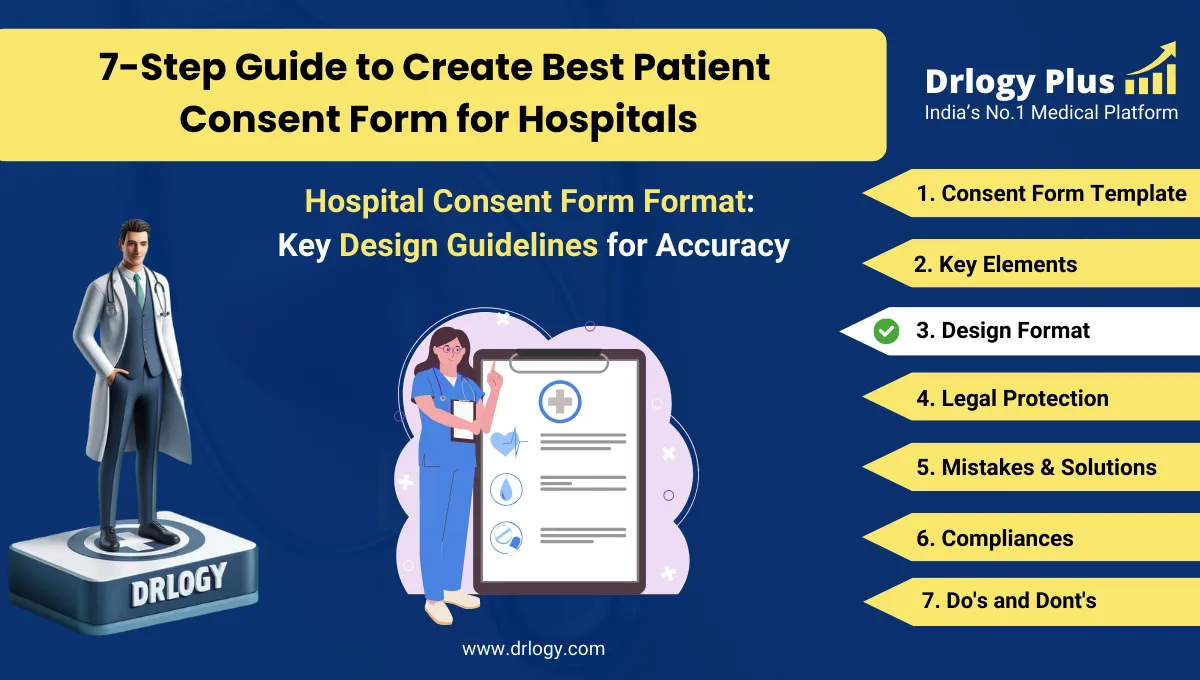
Hospital Consent Form Format: Key Design Guidelines for Accuracy
Hospital consent forms design format are critical in ensuring clear communication between healthcare providers and patients.
Check:
They help protect both parties legally, enhance patient trust, and ensure informed decision-making throughout medical procedures.
10 Key Design Guidelines For Hospital Consent Form Design Format
Here are 10 Key Design Guidelines For Hospital Consent Form Design Format.
1. Use Clear and Conciseuage
- Write in plainuage that’s easy for patients to understand.
- Avoid medical jargon, abbreviations, or technical terms.
- Ensure readability for all literacy levels.
- Use short sentences and active voice.
- Include translations for non-nativeuage speakers if needed.
Simplifieduage ensures all patients can understand what they're consenting to.
2. Organize Information in Logical Sections
- Structure the form into clear sections (e.g., procedure details, risks, alternatives).
- Use headings and subheadings for easy navigation.
- Maintain a consistent format across all forms.
- Separate consent and declaration areas distinctly.
- Make it easy to scan and fill.
Well-structured forms help patients absorb key details more effectively.
3. Include Patiententification Details
- Capture patient’s full name, age, gender, and hospital.
- Include space for contact details if required.
- Ensure all information fields are clearly labeled.
- Link the form to the correct medical record number.
- Include space for a barcode or QR code if digitized.
Accurate patient info ensures proper documentation and traceability.
4. Mention Specific Procedure or Treatment
- Clearly state the exact procedure or treatment for which consent is being given.
- Avoid vague or generic terms like “medical procedure.”
- Use consistent terminology as per hospital protocol.
- Highlight any associated medications or devices.
- Mention date and department performing the procedure.
Specificity prevents ambiguity and protects both patients and doctors legally.
5. Outline Benefits, Risks, and Alternatives
- List the potential benefits of the procedure.
- Mention possible risks and side effects clearly.
- Provide alternative treatment options if any.
- Ensure this section is explained by the healthcare provider before signing.
- Leave space for additional notes if needed.
Informing patients of risks and options is a cornerstone of ethical practice.
6. Design for Signature Fields
- Include designated spaces for patient, doctor, and witness signatures.
- Mention the date and time near each signature field.
- Use checkboxes to confirm verbal explanation provided.
- Ensure digital forms have secure e-signature capabilities.
- Add space for guardian or legal representative if needed.
Proper signatures make the consent form legally binding and verifiable.
7. Include Right to Refuse or Withdraw Consent
- Clearly mention that the patient has the right to refuse or withdraw consent.
- Explain how withdrawal can be done.
- Include checkbox or declaration confirming patient was informed of this right.
- Ensure this section is visibly placed—not in fine print.
- Document any refusal or modifications clearly.
Patients must know they’re in control—even after giving consent.
8. Use Consistent Fonts and Readable Layout
- Use standard, easy-to-read fonts like Arial or Calibri.
- Keep font size at least 11 or 12 points for readability.
- Maintain consistent spacing and margins.
- Avoid cramming too much information on one page.
- Use bullet points and whitespace effectively.
A clean, readable form reduces confusion and improves understanding.
9. Include Hospital Branding and Legal Statement
- Include the hospital logo and header information.
- Add a statement about legal validity and confidentiality.
- Ensure legal disclaimers are present at the bottom.
- Include department or unit issuing the form.
- Mention revision/version number for tracking updates.
Branding and legal text reflect professionalism and institutional accountability.
10. Make It Digitally Compatible
- Ensure the form can be filled and signed electronically.
- Design with compatibility for mobile and tablets.
- Enable secure storage in hospital software systems.
- Integrate QR codes or digitals for tracking.
- Use interactive fields for dynamic updates.
Digital-ready forms streamline documentation and enhance patient experience.
Drlogy Hospital Consent Form Guide
Here are 7 steps guide for Drlogy Hospital Consent Form Guide.
| 1. Hospital Consent Form Templates |
| 2. Types of Consent Forms |
| 3. Consent Form Design Format |
| 4. Consent Form Legality |
| 5. Consent Form Mistakes |
| 6. Consent Form Compliance |
| 7. Consent Form Do's & Don'ts |
Summary
Overall, A well-designed hospital consent form ensures clarity, legal protection, and better patient understanding across every treatment stage.
Check Drlogy Hospital Consent Form Guide to providing a comprehensive overview of essential consent forms, ensuring your hospital remains compliant, transparent, and patient-friendly.