Drlogy
Healthcare organization
How Patient Followup Feature Enhances Cardiologist Software
Cardiology care doesn’t end after diagnosis or procedure—it continues with lifelong management of heart health.
Check:
A dedicated Patient Follow-Up feature in Cardiologist Software ensures consistent monitoring, timely interventions, and improved outcomes for cardiac patients.
10 Reasons Why Patient Follow-Up Feature Must For Cardiologist Software
Here are 10 Reasons Why Patient Follow-Up Feature Must For Cardiologist Software.
1. Supports Long-Term Cardiac Care
- Enables scheduled reviews for hypertension, heart failure, arrhythmia, and post-angioplasty patients.
- Tracks patient progress over months or years.
- Ensures adherence to secondary prevention strategies.
- Helps manage chronic cardiac conditions proactively.
- Enhances patient trust and retention.
Long-term follow-up is vital for preventing recurrence and managing heart disease effectively.
2. Automates Follow-Up Reminders
- Sends automated SMS, email, or app notifications to patients.
- Reminds patients of upcoming checkups, tests, or medication reviews.
- Reduces no-shows and improves clinic efficiency.
- Helps patients feel cared for and connected.
- Saves time for clinic staff through automation.
Reminder systems boost compliance and reduce follow-up dropouts.
3. Tracks Lab, Echo & Test Repeats
- Flags due dates for routine investigations like lipid profile, ECG, or echocardiogram.
- Ensures timely test repeats for high-risk patients.
- Links previous results for quick trend comparison.
- Helps in earlyentification of complications or deterioration.
- Strengthens evidence-based monitoring.
Regular tracking of diagnostics helps prevent emergencies before they arise.
4. Enhances Medication Adherence Monitoring
- Notes medication changes and compliance at each follow-up.
- Alerts if patients miss critical medications (e.g., antiplatelets, beta-blockers).
- Enables real-time discussion and correction of errors or side effects.
- Tracks prescription refill history and patient feedback.
- Improves treatment effectiveness.
Medication tracking at follow-up leads to better clinical outcomes and fewer relapses.
5. Enables Personalized Care Plans
- Records patient lifestyle changes, exercise logs, or weight changes.
- Adjusts care based on individual progress or setbacks.
- Supports customization of cardiac rehab plans.
- Tracks patient goals like BP control or cholesterol reduction.
- Builds stronger doctor-patient relationships.
Personalized follow-up fosters long-term success and higher patient satisfaction.
6. Improves Post-Procedural Monitoring
- Tracks recovery after angioplasty, pacemaker insertion, bypass surgery, etc.
- Allows monitoring of wound healing, symptoms, and test results.
- Ensures smooth transition from hospital to home care.
- Supports staged recovery plans and timely escalation if needed.
- Prevents readmission and complications.
Structured follow-up ensures smooth recovery from critical cardiac interventions.
7. Provides Continuity in Emergency Cases
- Links emergency visits with planned follow-ups.
- Notes symptoms, treatments given, and post-event counseling.
- Enables timely review of post-MI or stroke patients.
- Prevents care gaps between emergency and regular visits.
- Encourages faster stabilization and rehab.
Follow-up closes the loop after cardiac emergencies and supports full recovery.
8. Integrates with EMR and Appointment Scheduler
- Auto-updates follow-up notes in patient EMR.
- Schedules next visit from the current consultation.
- Supports structured documentation for insurance and audits.
- Reduces paperwork and ensures seamless handover to staff.
- Optimizes daily appointment planning.
Integration saves time and maintains clear clinical records.
9. Offers Insightful Follow-Up Reports
- Tracks follow-up completion rates, outcomes, and delays.
- Identifies patients lost to follow-up or at high risk of relapse.
- Helps improve protocols for chronic disease management.
- Offers data for performance reviews or audits.
- Aids in planning preventive health programs.
Analytics from follow-up data help improve care quality and patient retention.
10. Strengthens Patient Relationships
- Regular follow-up improves communication and builds trust.
- Patients feel more engaged, heard, and supported.
- Boosts patient loyalty and likelihood of referrals.
- Improves reputation through consistent, reliable care.
- Builds a patient-centric culture in your clinic or hospital.
Consistent follow-up keeps patients connected, compliant, and confident in your care.
Drlogy Cardiologist Software Features
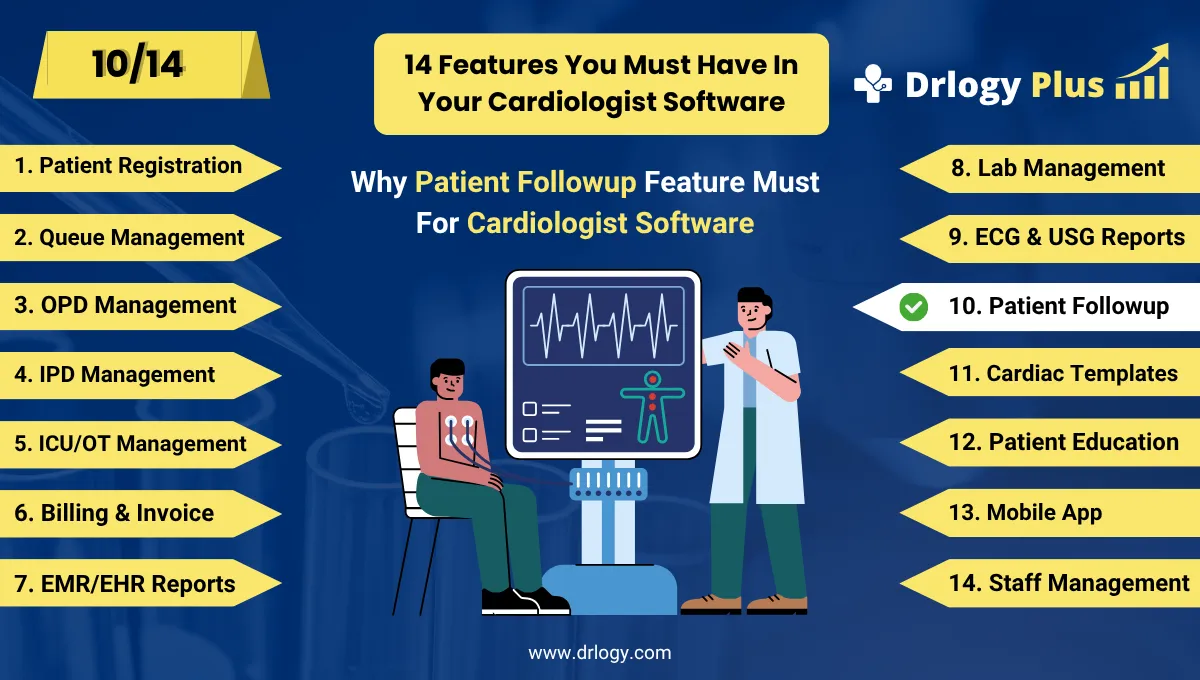
Here are 14 basic features for Drlogy Cardiologist Software.
Summary
Overall, The Patient Follow-Up feature in Cardiologist Software is critical for delivering continuous, personalized, and high-quality heart care.
Check Drlogy Cardiologist Software Features Guide streamline cardiology clinic management, improve patient flow for cardiac related conditions, and enhance overall efficiency in cardiology practice for heart surgons and cardiologist.