Drlogy
Healthcare organization
How Echocardiogram & USG Report Feature Boosts Cardiologist Software
Echocardiograms and ultrasonography (USG) are core diagnostic tools in cardiology. Whether evaluating heart structure, function, or vascular flow, these tests provide crucial insights.
Check:
An integrated Echocardiogram & USG Report feature in Cardiologist Software ensures streamlined reporting, faster diagnosis, and superior patient management.
10 Reasons Why Echocardiogram & USG Report Feature Must For Cardiologist Software
Here are 10 Reasons Why Echocardiogram & USG Report Feature Must For Cardiologist Software.
1. Streamlines Report Creation
- Allows cardiologists to enter and finalize reportsectly in the system.
- Offers structured templates for 2D Echo, Doppler, Carotid USG, etc.
- Reduces reliance on paper reports or third-party software.
- Auto-fills standard findings to save time.
- Ensures consistency inuage and format.
Faster report creation allows quicker decision-making and patient communication.
2. Improves Diagnostic Accuracy
- Templates ensure all key cardiac parameters (EF, LV size, valve status, etc.) are covered.
- Reduces chances of missing crucial observations.
- Supports graphical data capture or image linking from USG machines.
- Enables standardized terminology across cases.
- Enhances reliability of reports for second opinions or surgical decisions.
Accurate Echo & USG reports support life-saving cardiac interventions.
3. Integrates with Patient EMR
- Syncs all reports with the patient’s medical history automatically.
- Enables cardiologists to compare current vs. previous echocardiogram results.
- Tracks progression of heart conditions over time.
- Enhances continuity of care during follow-ups.
- Reduces duplication and scattered patient data.
Integrated imaging reports give a complete view of cardiac health.
4. Enables Digital Sharing and Printing
- Reports can be instantly emailed, downloaded, or printed for the patient.
- Supports high-resolution printing for diagnostic clarity.
- No dependency on handwritten or scanned copies.
- Helps in timely communication with patients and referring doctors.
- Enhances clinic efficiency and patient satisfaction.
Digital delivery ensures speed, professionalism, and convenience.
5. Supports Image Embedding or Linking
- Allows integration of echo images or loops with the report (where supported).
- Facilitates better documentation for medico-legal or academic needs.
- Enables visual comparisons in complex or recurring cases.
- Builds transparency for patients reviewing their reports.
- Increases report utility for surgical planning or referrals.
Visual documentation adds depth and clarity to cardiac diagnostics.
6. Offers Standardized Measurement Tools
- Calculates EF%, chamber dimensions, gradients, and valve area automatically.
- Reduces manual calculation time and potential errors.
- Ensures consistency with guidelines like ASE or ESC.
- Improves comparability across technicians or doctors.
- Enhances credibility of the cardiac imaging unit.
Standardized measurements build trust in your diagnostic quality.
7. Enables Time-Saving for High-Volume Clinics
- Auto-populates common findings in routine normal or follow-up studies.
- Minimizes redundant typing or formatting.
- Allows batch printing or bulk export for insurance claims.
- Speeds up documentation for multiple studies in a day.
- Reduces reporting bottlenecks in busy cardiology OPDs.
Faster workflows let doctors spend more time on treatment, less on paperwork.
8. Improves Reporting for Special Cardiac Conditions
- Customizable templates for congenital defects, prosthetic valves, heart failure, etc.
- Structured reporting improves communication with cardiac surgeons.
- Makes tracking of rare or complex anomalies easier.
- Helps standardize documentation in multi-doctor practices.
- Supports quality care for all patient types.
Tailored echo reports improve outcomes in complex heart cases.
9. Assists in Compliance and Medico-Legal Safety
- Time-stamped and digitally signed reports improve legal traceability.
- Ensures each study has a report linked to patient and clinician.
- Provides secure backup for audits, insurance, or disputes.
- Helps meet hospital accreditation (NABH/JCI) standards.
- Reduces documentation-related risks.
Structured echo reporting protects the practice and ensures compliance.
10. Enhances Overall Cardiac Care Quality
- Faster echo report generation shortens diagnostic delays.
- Structured documentation improves referrals and team coordination.
- Better image and data storage supports long-term tracking.
- High-quality reporting improves patient satisfaction and trust.
- Helps build a reputation for clinical excellence.
Echo reporting done right becomes a core strength of your cardiology practice.
Drlogy Cardiologist Software Features
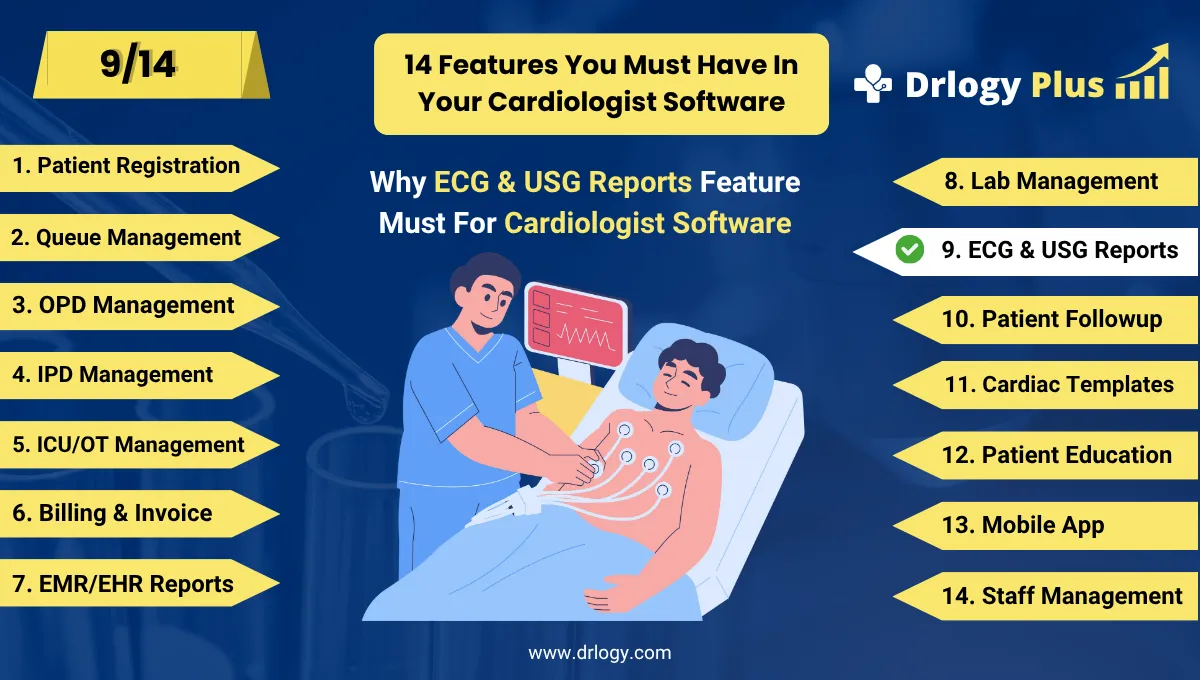
Here are 14 basic features for Drlogy Cardiologist Software.
Summary
Overall, The Echocardiogram & USG Report feature in Cardiologist Software is essential for delivering fast, accurate, and standardized cardiac diagnostics.
Check Drlogy Cardiologist Software Features Guide streamline cardiology clinic management, improve patient flow for cardiac related conditions, and enhance overall efficiency in cardiology practice for heart surgons and cardiologist.