Drlogy
Healthcare organization
How OPD Management Feature Optimizes Cardiologist Software
Cardiology clinics manage a high volume of critical patients needing timely diagnosis, treatment, and follow-ups.
Check:
An efficient OPD (Outpatient Department) Management feature in Cardiologist Software ensures a smooth, organized, and high-quality experience for both patients and doctors.
10 Reasons Why OPD Management Feature Must For Cardiologist Software
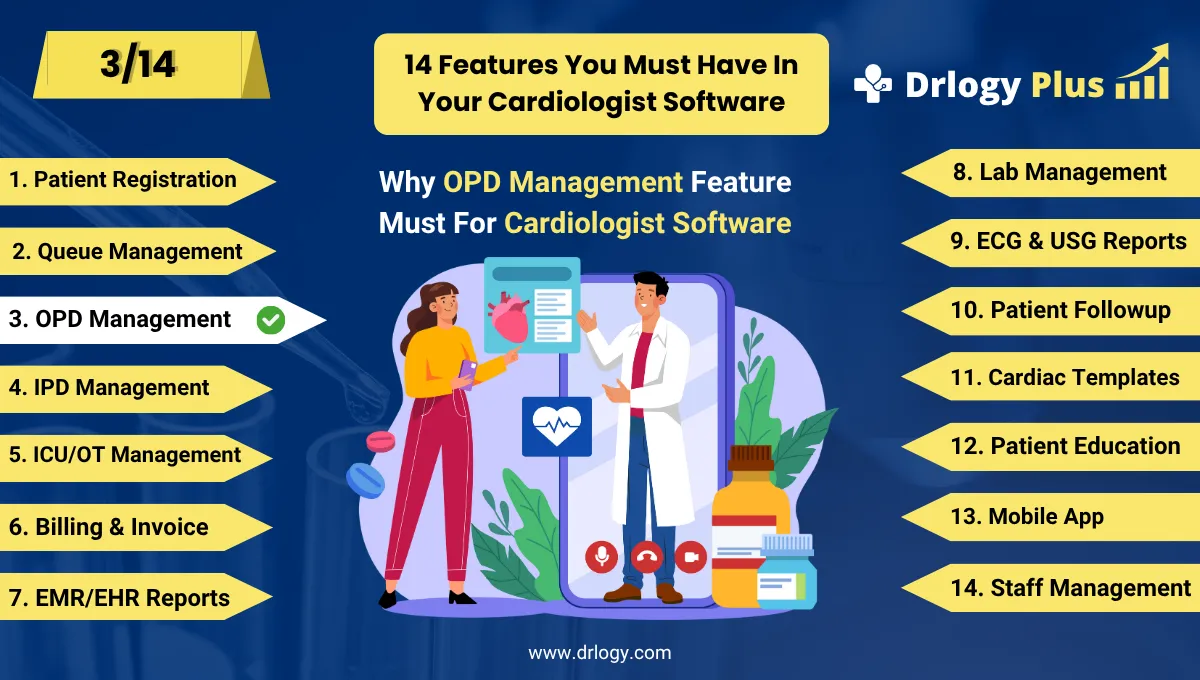
Here are 10 Reasons Why OPD Management Feature Must For Cardiologist Software.
1. Streamlines Patient Consultations
- Organizes appointments, check-ins, and consultation queues digitally.
- Doctors can view patient details, history, and complaints in one click.
- Minimizes administrative delays and manual errors.
- Keeps OPD schedules running on time.
- Enhances daily patient flow and clinical productivity.
Organized OPD workflows help cardiologists serve more patients with less hassle.
2. Centralizes Patient Information
- Captures vitals, symptoms, medical history, and lifestyle details.
- Consolidates reports, medications, allergies, and previous visits.
- Allows cardiologists to make informed decisions in real time.
- Supports data continuity for chronic cardiac care.
- Reduces risk of missing crucial information.
All relevant clinical data is instantly accessible during OPD visits.
3. Enhances Chronic Disease Management
- Ideal for managing hypertension, heart failure, arrhythmia, etc.
- Tracks long-term treatment progress and medication response.
- Allows easy monitoring of cholesterol, ECGs, and lifestyle compliance.
- Supports personalized treatment adjustments.
- Improves care consistency for chronic heart conditions.
Efficient OPD tools support long-term, structured cardiac care.
4. Reduces Documentation Time
- Auto-fills common templates for cardiac complaints like chest pain or palpitations.
- Saves cardiologists time on note-taking and paperwork.
- Enables staff to assist with non-clinical data entry.
- Improves doctor-patient interaction during visits.
- Reduces burnout and increases efficiency.
Faster documentation frees up more time for patient-focused care.
5. Integrates with Lab, Imaging & E-Prescription
- Allows cardiologists to order tests like ECG, echo, or lipid profileectly.
- Links results to the patient's profile for real-time review.
- Enables seamless prescription generation post-consultation.
- Reduces wait time for investigations and follow-ups.
- Builds a fully connected clinical workflow.
One-click access to tests and prescriptions enhances consultation quality.
6. Supports Follow-Up Planning
- Schedules follow-up visits based on diagnosis or treatment protocols.
- Sends alerts for next stress tests, echos, or medication reviews.
- Helps track patient compliance with lifestyle or drug therapies.
- Reduces missed appointments and improves treatment outcomes.
- Builds continuity in heart health management.
Structured follow-up improves care delivery and long-term heart health.
7. Enables-Based Access for OPD Team
- Receptionists, nurses, and doctors have designated access levels.
- Ensures clinical data is protected and workflow is secure.
- Prevents errors by defining who can update or view specific data.
- Supports multitasking and teamwork in busy OPD settings.
- Enhances security without affecting speed.
Secure and organized team access keeps OPD operations safe and efficient.
8. Tracks Consultation and Treatment History
- Maintains chronological visit history for each cardiac patient.
- Helpful during emergency reviews or second opinions.
- Assists in legal, insurance, or research documentation.
- Supports pattern tracking in cardiac symptom progression.
- Enables treatment refinement.
A complete record of each consultation boosts diagnostic accuracy and legal safety.
9. Generates Real-Time OPD Analytics
- Tracks patient inflow, wait times, doctor-wise consultations, and revenue.
- Helpsentify peak times and resource needs.
- Supports planning for staff, equipment, or appointment slots.
- Assists in improving clinic performance and decision-making.
- Offers insights into treatment success and patient satisfaction.
Analytics help cardiology clinics become more efficient and patient-centric.
10. Improves Patient Experience
- Reduces wait time and confusion with a transparent process.
- Ensures each step—from registration to exit—is smooth and digital.
- Builds patient trust with speed, professionalism, and communication.
- Offers clear instructions, prescriptions, and appointment reminders.
- Encourages follow-ups, reviews, and referrals.
A seamless OPD journey keeps patients loyal and confident in your care.
Drlogy Cardiologist Software Features
Here are 14 basic features for Drlogy Cardiologist Software.
Summary
Overall, The OPD Management feature in Cardiologist Software is crucial for ensuring fast, accurate, and high-quality outpatient care. From organizing consultations and reducing paperwork to improving chronic disease monitoring and enhancing patient satisfaction—it transforms cardiology clinics into efficient, care hubs.
Check Drlogy Cardiologist Software Features Guide streamline cardiology clinic management, improve patient flow for cardiac related conditions, and enhance overall efficiency in cardiology practice for heart surgons and cardiologist.