Drlogy
Healthcare organization
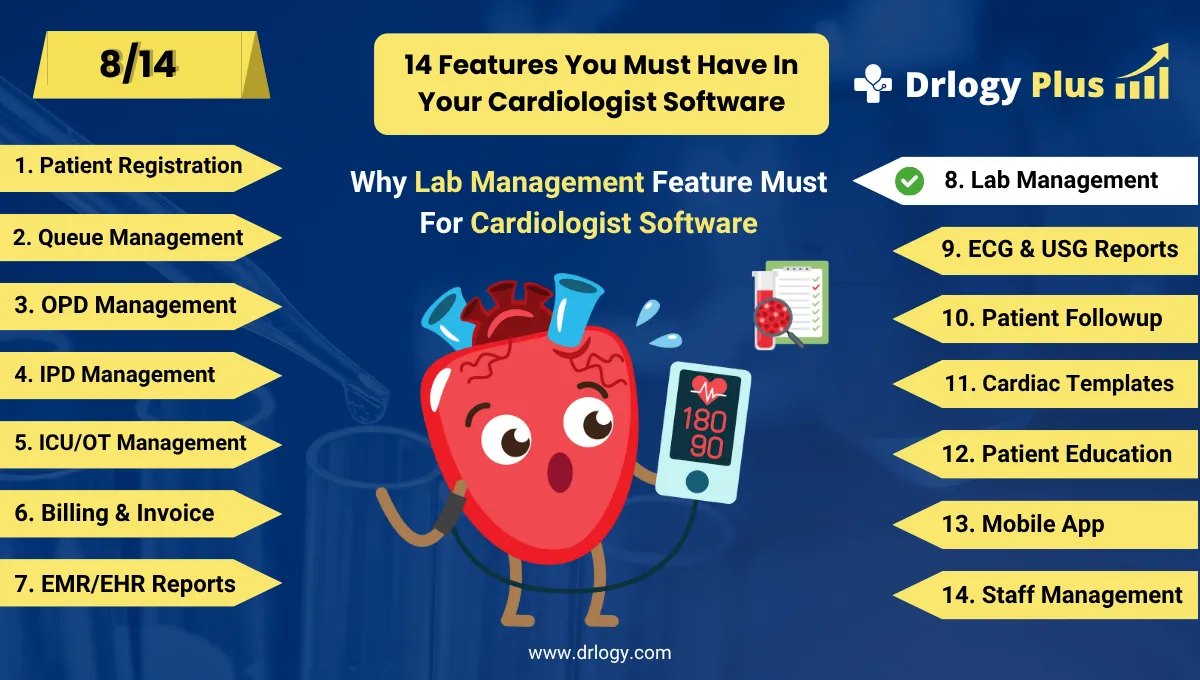
How Lab Management Feature Strengthens Cardiologist Software
Lab investigations are critical to diagnosing and managing heart conditions—from routine lipid profiles to advanced cardiac biomarkers.
Check:
A built-in Lab Management feature in Cardiologist Software ensures faster diagnostics, streamlined coordination, and accurate results for better clinical decisions and patient outcomes.
10 Reasons Why Lab Management Feature Must For Cardiologist Software
Here are 10 Reasons Why Lab Management Feature Must For Cardiologist Software.
1. Streamlines Test Ordering from Patient Profiles
- Cardiologists can request lab testsectly during OPD/IPD visits.
- Auto-suggests common cardiac panels like lipid profile, troponin, D-dimer, etc.
- Reduces manual paperwork and duplicate entries.
- Test orders sync with patient history for seamless tracking.
- Saves time and reduces the chance of missed investigations.
Smart test ordering ensures no diagnostic step is overlooked during consultations.
2. Improves Diagnostic Accuracy
- Digital test entries eliminate handwriting errors and data loss.
- Auto-highlights abnormal values with color-coded alerts.
- Enables easy cross-reference with clinical symptoms and history.
- Ensures accurate, fast, and clinically relevant diagnostic reports.
- Supports informed treatment decisions and follow-ups.
Accurate test results reduce guesswork and improve cardiac care precision.
3. Enhances Monitoring of Cardiac Risk Factors
- Tracks trends in cholesterol, blood sugar, thyroid, renal function, etc.
- Graphical representation of changes over time for chronic patients.
- Supports early intervention for hypertension, CAD, or metabolic syndrome.
- Helps tailor lifestyle and medical interventions based on lab outcomes.
- Assists in predicting cardiovascular risk scores.
Consistent lab tracking strengthens preventive cardiology.
4. Speeds Up Lab Result Turnaround
- Automates lab workflow from test request to report delivery.
- Real-time status updates for pending, completed, and verified reports.
- Reduces delay in initiating or modifying treatment.
- Enables instant communication between doctor and lab technician.
- Improves overall clinic responsiveness and efficiency.
Fast reports mean faster diagnosis and quicker treatment decisions.
5. Enables Digital Sharing with Patients
- Lab reports are available via email, patient portal, or mobile app.
- Eliminates the need for patients to revisit the clinic to collect reports.
- Enhances transparency and convenience.
- Builds trust and improves communication with patients.
- Encourages better engagement in follow-ups and self-care.
Digital access to lab results enhances patient satisfaction and trust.
6. Integrates with EMR and Billing
- Auto-syncs lab charges with patient invoices.
- Links test results with EMR for holistic patient records.
- Avoids double entries and mismatched billing.
- Saves time and reduces errors for clinical and billing staff.
- Supports bundled packages for cardiac checkups or panels.
Integrated lab systems streamline both clinical and financial workflows.
7. Supports Customizable Cardiac Panels
- Allows creation of custom panels (e.g., pre-op cardiac, post-angioplasty, etc.).
- Helps standardize tests for common protocols.
- Saves time on individual test selections.
- Ensures consistency across cardiac care pathways.
- Improves reporting quality and efficiency.
Custom panels speed up testing and ensure no crucial markers are missed.
8. Enhances Internal Quality Control
- Tracks test performance, repeat rates, and technician activities.
- Time-stamped data supports audit trails and lab reviews.
- Enables documentation for NABL or quality certifications.
- Helps reduce errors and improve lab output consistency.
- Ensures high reliability of cardiac-related investigations.
Better lab quality control leads to better clinical reliability.
9. Reduces Manual Workload for Staff
- Automates sample tracking, labeling, and reporting.
- Reduces the burden on front desk and lab technicians.
- Enables multitasking during high-volume periods.
- Minimizes burnout and error-prone processes.
- Increases overall productivity of the clinic or hospital.
Automation allows your team to focus more on care and less on clerical tasks.
10. Increases Clinic Revenue from In-House Diagnostics
- Reduces external lab referrals and retains revenue internally.
- Allows creation of test packages for preventive cardiology or cardiac rehab.
- Provides clarity in test billing and improves patient satisfaction.
- Helps track high-demand tests and optimize offerings.
- Builds your brand as a complete cardiac care center.
In-house lab services improve patient experience and clinic profitability.
Drlogy Cardiologist Software Features
Here are 14 basic features for Drlogy Cardiologist Software.
Summary
Overall, The Lab Management feature in Cardiologist Software is a must-have for delivering timely, accurate, and efficient cardiac care.
Check Drlogy Cardiologist Software Features Guide streamline cardiology clinic management, improve patient flow for cardiac related conditions, and enhance overall efficiency in cardiology practice for heart surgons and cardiologist.