Drlogy
Healthcare organization
How Cardiac Templates Feature Optimizes Cardiologist Software
Cardiology involves repetitive documentation of complex conditions, investigations, and treatment plans.
Check:
A built-in Cardiac Templates feature in Cardiologist Software helps standardize this process, reduce errors, and improve speed—empowering cardiologists to focus more on care and less on paperwork.
10 Reasons Why Cardiac Templates Feature Feature Must For Cardiologist Software
Here are 10 Reasons Why Cardiac Templates Feature Feature Must For Cardiologist Software.
1. Speeds Up Clinical Documentation
- Provides ready-made templates for common cardiac conditions like angina, arrhythmia, hypertension, and CHF.
- Reduces time spent typing case notes or creating reports from scratch.
- Auto-fills key sections with editable clinical phrases.
- Speeds up OPD and IPD documentation.
- Increases the number of patients served without compromising care.
Faster documentation means more time for critical thinking and patient interaction.
2. Ensures Consistency Across Records
- Uses standardized terminology and structured layouts.
- Reduces variation between different doctors in multi-specialist setups.
- Creates uniformity in reports, prescriptions, and progress notes.
- Enhances clarity for follow-ups and cross-references.
- Improves coordination across the cardiology care team.
Consistent documentation builds trust and clinical continuity.
3. Reduces Human Errors
- Predefined templates minimize chances of missed entries or incorrect terms.
- Prompts ensure all essential details are filled before saving.
- Avoids forgetting key factors like allergies, medication history, or prior surgeries.
- Helps meet medical documentation standards.
- Supports audit-readiness and legal protection.
Templates safeguard documentation accuracy and medico-legal compliance.
4. Supports Quick Diagnostic Input
- Templates for ECG, echo, stress test, and angiography interpretation.
- Offers structured drop-downs or predefined fields for findings.
- Ensures complete, standard, and legible diagnostic reports.
- Saves time for cardiologists reviewing high patient volumes.
- Increases report credibility with referring doctors or insurers.
Quick input templates make diagnostic workflows faster and more accurate.
5. Enhances Quality of Care
- Structured templates help focus on evidence-based protocols.
- Promotes thorough documentation of symptoms, examination, and investigations.
- Reduces risk of overlooking critical red flags.
- Supports better decision-making and follow-up planning.
- Builds a clinical picture for complex cases.
Well-designed templates elevate the thoroughness and quality of cardiac care.
6. Personalizes Care with Editable Fields
- Allows doctors to customize templates per patient.
- Combines standard structure with clinician-specific input.
- Supports personalization while maintaining documentation speed.
- Useful for complex cases like congenital heart defects or post-surgical rehab.
- Empowers cardiologists with flexibility and control.
Templates adapt to individual patient needs without slowing down the workflow.
7. Integrates with EMR and EHR Modules
- Template-based entries sync automatically into patient records.
- Eliminates need for duplicate entries in different modules.
- Improves data visibility across OPD, IPD, and follow-ups.
- Enhances EMR utility with organized, searchable data.
- Reduces workload for administrative and nursing teams.
Integration ensures seamless, cross-functional documentation.
8. Improves Discharge and Referral Documentation
- Templates for discharge summaries, referral letters, and fitness certificates.
- Ensures inclusion of diagnosis, treatment given, and follow-up plan.
- Saves time and ensures compliance with hospital policies.
- Enhances patient experience with clear, complete documents.
- Builds better communication between referring and receiving cardiologists.
Structured documents leave a lasting impression on patients and peers alike.
9. Enables Multilingual or Regional Customization
- Cardiac templates can be created in localuages for better understanding.
- Supports regional or global care standards depending on practice location.
- Useful for patient-facing instructions and notes.
- Builds trust in diverse patient populations.
- Adds a localized touch to your digital healthcare delivery.
Multilingual templates improve accessibility and engagement.
10. Increases Clinic Productivity and Scalability
- Reduces repetitive manual tasks and frees up doctor time.
- Enables support staff or junior doctors to assist using templates.
- Makes onboarding of new staff faster and easier.
- Supports high-volume or multi-center practices.
- Lays the foundation for growth with standardized workflows.
Templates make your practice more efficient, scalable, and future-ready.
Drlogy Cardiologist Software Features
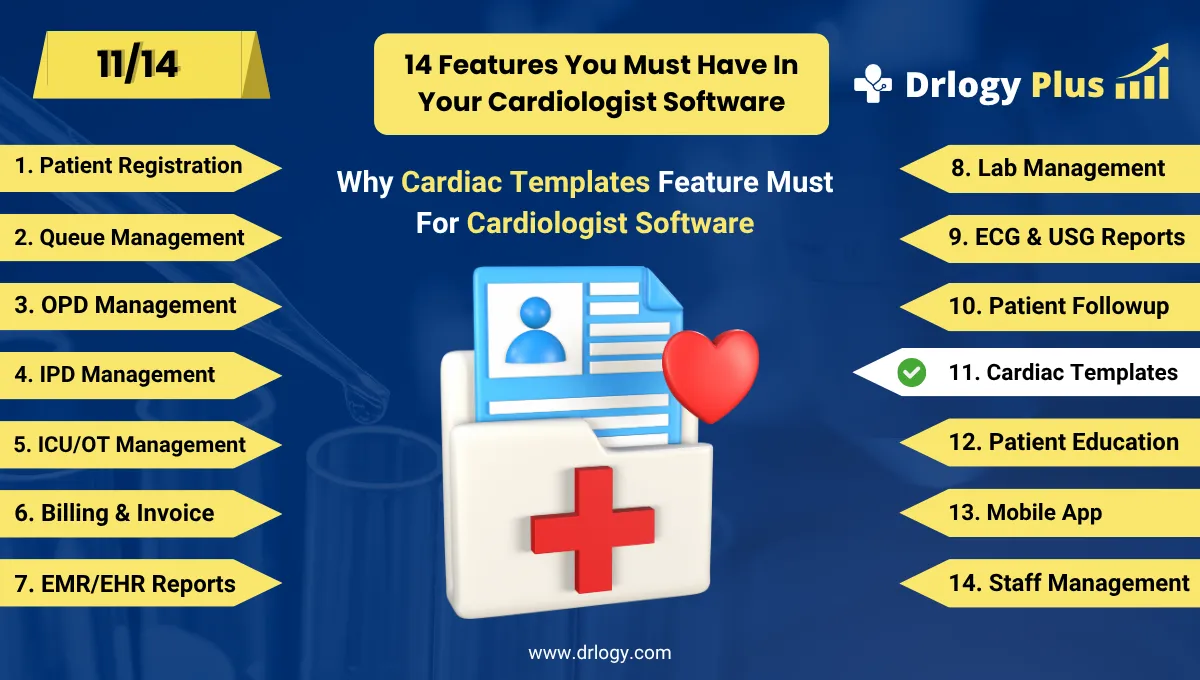
Here are 14 basic features for Drlogy Cardiologist Software.
Summary
Overall, The Cardiac Templates feature in Cardiologist Software is a time-saving, accuracy-boosting tool that streamlines documentation without compromising quality.
Check Drlogy Cardiologist Software Features Guide streamline cardiology clinic management, improve patient flow for cardiac related conditions, and enhance overall efficiency in cardiology practice for heart surgons and cardiologist.