Drlogy
Healthcare organization
How EMR/EHR Reports Feature Empowers Dermatologist Software
Dermatology requires detailed clinical documentation, image tracking, recurring treatments, and personalized care.
Check:
Best Dermatologist Software For Dermatology Clinics & Hospitals
An advanced EMR/EHR (Electronic Medical Record/Electronic Health Record) feature in Dermatologist Software streamlines patient history, supports image-based records, and ensures consistent long-term management of skin, hair, and nail conditions.
10 Ways EMR/EHR Feature Aids Dermatologist Software
Here are 10 Ways EMR/EHR Feature Aids Dermatologist Software.
1. Centralizes Complete Dermatologic History
- Stores detailed patient history, including previous skin conditions, allergies, treatments, and family history.
- Tracks chronic skin diseases like eczema, vitiligo, psoriasis, and acne.
- Helps dermatologists make informed decisions during each visit.
- Avoids repetitive questioning and data entry.
- Improves continuity of care across sessions.
A complete patient view helps dermatologists deliver accurate, consistent, and confident care.
2. Supports Visual Documentation and Image Storage
- Enables uploading of high-resolution images for lesions, rashes, and pigmentation.
- Tracks before/after photos for cosmetic procedures like PRP, microneedling, and laser.
- Compares skin improvement or deterioration over time.
- Essential for medicolegal records and patient satisfaction.
- Allows image tagging to specific diagnosis.
Visual records are vital in dermatology for monitoring and explaining treatment progress.
3. Improves Prescription and Treatment Accuracy
- Links diagnoses to specific medications and treatmentsectly from records.
- Reduces errors in dosage, route, or drug selection.
- Stores past prescriptions for reference and re-use.
- Enables safer, faster prescription writing.
- Supports dermatologic therapy planning.
EMR-driven prescribing helps dermatologists treat with precision and speed.
4. Enhances Follow-Up Care and Reminders
- Tracks upcoming visits, lab tests, and ongoing treatments.
- Sends automatic follow-up reminders to patients.
- Enables scheduling of repeat sessions for acne, hair loss, pigmentation, or cosmetic procedures.
- Ensures patients stay on treatment protocols.
- Reduces no-shows and increases compliance.
Automated continuity of care leads to better dermatologic outcomes and retention.
5. Enables Personalized Skin Treatment Plans
- Uses patient history, allergies, past responses, and current conditions to tailor care.
- Supports personalized cosmetic or clinical plans for every patient.
- Useful in managing long-term issues like melasma, PCOS-related acne, or fungal infections.
- Enhances patient satisfaction through custom protocols.
- Tracks and updates treatment effectiveness.
Personalized EMR-based care improves trust, safety, and satisfaction in dermatology.
6. Streamlines Multi-Session Procedures
- Tracks each session in multi-stage treatments like laser, Botox, or chemical peels.
- Maintains records of dosage, machine settings, practitioner notes, and outcomes.
- Helps in billing and progress tracking.
- Ensures consistency across sessions.
- Improves results and documentation.
EMR simplifies planning and tracking for aesthetic dermatologic procedures.
7. Supports Evidence-Based Dermatology
- Helps refer to past cases and treatment responses for similar conditions.
- Enables dermatologists to adjust treatments based on outcome trends.
- Offers insights from analytics for better clinical decisions.
- Assists in creating clinical protocols.
- Supports a learning-based practice approach.
EMRs turn your practice into a, results-driven dermatology center.
8. Ensures Legal and Regulatory Compliance
- Maintains time-stamped notes, consent forms, and prescriptions.
- Helps protect against malpractice claims.
- Meets documentation standards for audits and insurance.
- Includes features for digital signatures and consent records.
- Safeguards patient data privacy.
Secure and compliant records protect dermatologists legally and professionally.
9. Improves Clinic Collaboration and Handover
- Allows access to patient history by authorized doctors, nurses, or aestheticians.
- Smoothens internal coordination across different treatment zones or branches.
- Ensures staff continuity even if doctor changes occur.
- Improves service consistency and handover notes.
- Helps deliver seamless care.
Shared EMR access boosts coordination in larger or multi-specialty skin clinics.
10. Boosts Clinic Reputation and Patient Trust
- Professional and transparent recordkeeping builds confidence.
- Patients appreciate organized care and visual progress tracking.
- Enhances consultation quality and patient engagement.
- Encourages positive feedback and repeat visits.
- Reflects a modern, high-standard dermatology practice.
Well-managed EMRs set your skin clinic apart as professional, modern, and reliable.
Drlogy Dermatologist Software Features
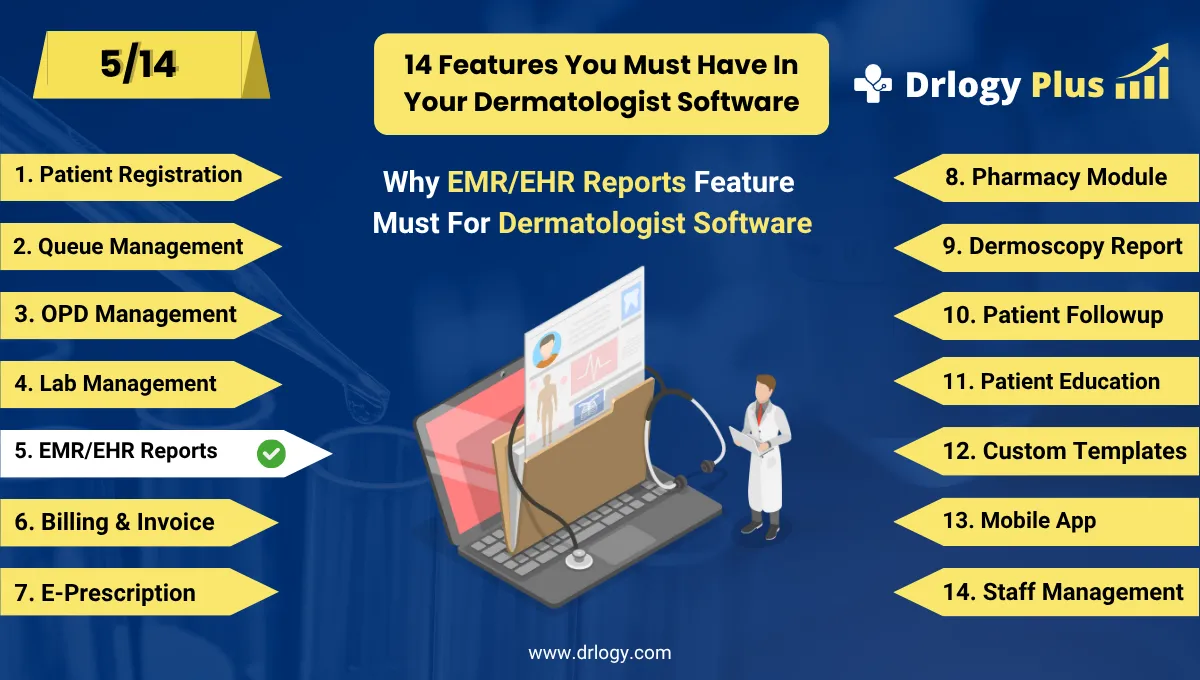
Here are 14 basic features for Drlogy Dermatologist Software.
Summary
Overall, EMR/EHR feature in Dermatologist Software is essential for comprehensive, image-based, and long-term skin care.
Check Drlogy Dermatologist Software Features Guide helps in dermatology clinic management, improve patient flow for hair and skincare related conditions, and enhance overall efficiency in dermatology practice.