Drlogy
Healthcare organization
How Dermoscopy & Imaging Reports Empower Dermatologist Software
In dermatology, visual evaluation plays a central in diagnosing and monitoring skin conditions. Dermoscopy and imaging are vital tools used to assess moles, lesions, pigmentation, and hair/scalp issues.
Check:
Best Dermatologist Software For Dermatology Clinics & Hospitals
Integrating these tools into Dermatologist Software enhances diagnostic accuracy, documentation, patient education, and long-term care planning.
10 Ways Dermoscopy & Imaging Reports Boost Dermatologist Software
Here are 10 Ways Dermoscopy & Imaging Reports Feature Boost Dermatologist Software.
1. Improves Diagnostic Accuracy
- Dermoscopy reveals subsurface skin structures invisible to the naked eye.
- Enhances early detection of conditions like melanoma, basal cell carcinoma, and fungal infections.
- Supports more confident and precise clinical decisions.
- Reduces misdiagnosis of pigmented lesions and rashes.
- Aids in differential diagnosis of similar-appearing conditions.
High-resolution dermoscopy enhances diagnostic precision and clinical safety.
2. Supports Early Detection of Skin Cancer
- Helpsentify malignancies at an early, more treatable stage.
- Allows digital comparison over time to detect rapid changes.
- Ideal for high-risk patients or those with multiple moles.
- Assists in ABCD evaluation of suspicious lesions.
- Offers documented visual evidence for referrals or biopsies.
Early skin cancer detection through dermoscopy saves lives and builds trust.
3. Enables Progress Tracking for Chronic Conditions
- Captures photographic records of acne, psoriasis, vitiligo, and eczema.
- Allows side-by-side comparison of skin improvement across visits.
- Monitors pigmentation changes and lesion size/shape.
- Supports better clinical judgment for long-term treatments.
- Enhances continuity and personalization of care.
Image-based tracking improves treatment planning and patient motivation.
4. Facilitates Pre- and Post-Treatment Documentation
- Records before-and-after images for cosmetic procedures like chemical peels, PRP, laser, Botox, etc.
- Provides visual proof of treatment effectiveness.
- Reduces disputes and builds credibility.
- Assists in marketing and patient education.
- Documents healing after surgeries or aesthetic corrections.
Visual documentation protects your practice and promotes patient confidence.
5. Enhances Patient Understanding and Communication
- Showing dermoscopy images helps patients visualize their skin condition.
- Improves patient acceptance of diagnosis and treatment plan.
- Supports better adherence through visual engagement.
- Builds transparency in consultation.
- Strengthens patient-doctor relationship.
Educating patients with visuals improves trust and compliance.
6. Streamlines Clinical Workflows
- Images are stored automatically in the patient’s EMR.
- Organized reports can be retrieved quickly during follow-ups.
- Reduces reliance on external cameras or manual storage.
- Improves clinic efficiency and accuracy.
- Helps dermatologists focus more on clinical care.
Dermoscopy report integration saves time and eliminates disorganized image handling.
7. Standardizes Documentation for Medico-Legal Safety
- Timestamped images and reports offer defensible clinical records.
- Reduces malpractice risks, especially in lesion diagnosis or cosmetic treatments.
- Offers visual proof of diagnosis and procedure outcomes.
- Meets documentation standards required by legal or insurance bodies.
- Enhances accountability and transparency.
Imaging documentation safeguards your dermatology practice legally.
8. Supports Teledermatology and Remote Consultations
- Enables dermatologists to review high-resolution images remotely.
- Allows asynchronous consultations or second opinions.
- Ideal for follow-ups or rural patients without frequent access.
- Improves continuity of care in digital setups.
- Encourages modern, scalable dermatology practices.
Imaging features extend your reach through telemedicine and remote diagnostics.
9. Enables AI-Driven Skin Analysis (Optional Integration)
- Some advanced software integrates AI-based analysis of dermoscopy images.
- Offers lesionification or malignancy risk scores.
- Assists dermatologists in faster screening and triaging.
- Supports learning and second-check validation.
- Adds a modern edge to practice.
AI-assisted dermoscopy enhances early diagnosis and decision support.
10. Builds a Premium, High-Tech Patient Experience
- Offering dermoscopy imaging during consultation elevates the standard of care.
- Reflects use of advanced technology and evidence-based dermatology.
- Encourages patients to return for visual progress tracking.
- Increases patient satisfaction, reviews, and referrals.
- Sets your clinic apart from traditional competitors.
A visually equipped clinic improves branding and patient retention.
Drlogy Dermatologist Software Features
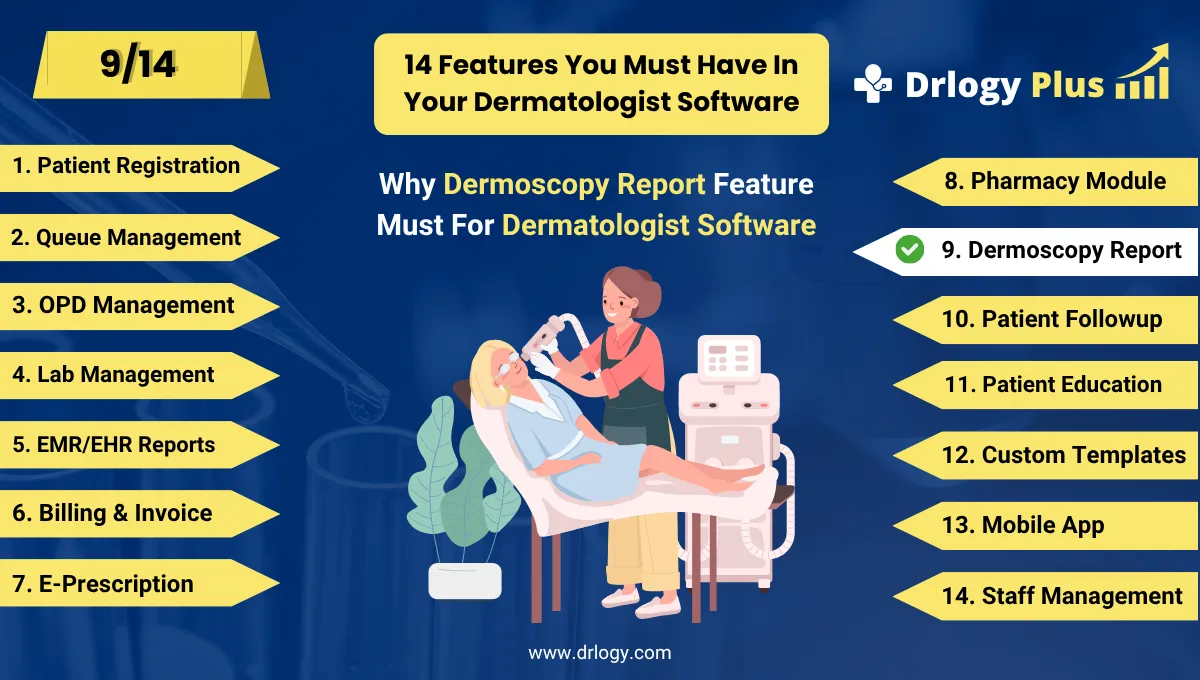
Here are 14 basic features for Drlogy Dermatologist Software.
Summary
Overall, Dermoscopy & Imaging Reports feature in Dermatologist Software is a powerful tool that enhances accuracy, transparency, and professionalism.
Check Drlogy Dermatologist Software Features Guide helps in dermatology clinic management, improve patient flow for hair and skincare related conditions, and enhance overall efficiency in dermatology practice.