Drlogy
Healthcare organization
14 Best Features You Must Have In Operation Theatre Management Software
Operation Theatre Management Software plays a crucial in streamlining surgical workflows and improving patient care.
Check:
With the right features, it ensures a smooth surgical process, minimizes errors, and enhances overall operational efficiency.
Check:
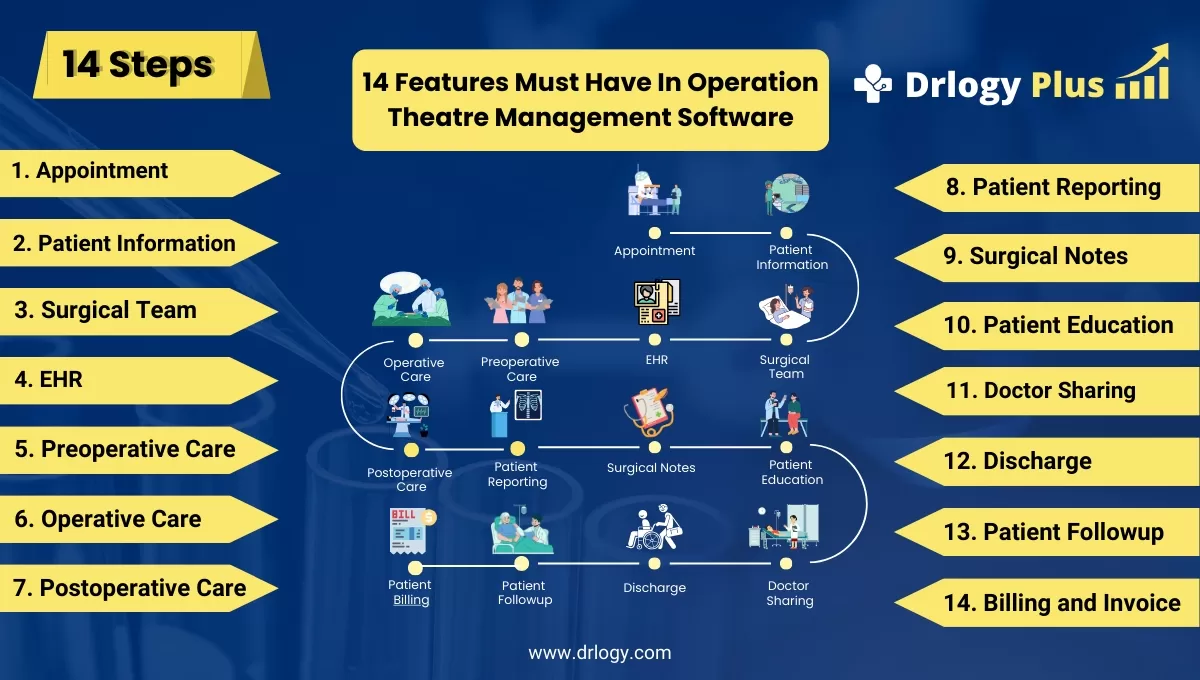
14 Best Features You Must Have In Operation Theatre Management Software
Check 14 Best Features You Must Have In Operation Theatre Management Software.
1. Appointment Management
Efficient appointment management ensures the seamless scheduling of surgeries.
- Allows doctors to schedule surgeries with real-time availability of operation theatres.
- Sends automated reminders to patients and staff to reduce no-shows.
- Manages multiple appointments, including preoperative consultations and follow-ups.
- Ensures proper allocation of OT time slots to avoid conflicts.
- Provides a calendar view to track upcoming surgeries and team schedules.
Check Full Guide
2. Patient Information Management
Centralized patient information is crucial for smooth OT processes.
- Stores comprehensive patient details like medical history, allergies, and past procedures.
- Allows doctors to access patient records quickly before surgeries.
- Ensures secure storage of sensitive information with data encryption.
- Provides patient summaries to the surgical team for better preparation.
- Facilitates patient consent management digitally.
Check Full Guide
3. Surgical Team Management
Effective management of the surgical team is vital for a successful operation.
- Assigns specifics to each member of the surgical team.
- Tracks the availability of surgeons, anesthetists, and nurses.
- Ensures the right specialists are assigned to each procedure.
- Manages shift timings and workload distribution.
- Allows communication and task delegation within the team.
Check Full Guide
4. Electronic Health Records (EHR) Integration
EHR integration enhances data accuracy and accessibility.
- Syncs patient data from the hospital’s EHR system for seamless access.
- Provides real-time updates on patient vitals during surgery.
- Reduces paperwork by digitizing patient records and reports.
- Allows doctors to view test results and diagnostic reports instantly.
- Ensures compliance with medical data privacy regulations.
Check Full Guide
5. Preoperative Checklists
Preoperative checklists reduce surgical risks and ensure preparedness.
- Provides a comprehensive checklist for patient readiness before surgery.
- Includes tasks like consent forms, lab tests, and medical clearances.
- Reduces the risk of missing critical pre-surgery steps.
- Enhances patient safety by ensuring all protocols are followed.
- Allows customization of checklists based on surgery types.
Check Full Guide
6. Operative Preparation
Proper preparation is key to a successful surgery.
- Tracks the availability of surgical instruments and equipment.
- Manages sterilization protocols to ensure a clean environment.
- Ensures all necessary supplies are ready before the procedure.
- Helps staff prepare the OT based on specific surgery requirements.
- Reduces delays by ensuring everything is set up on time.
Check Full Guide
7. Postoperative Care Management
Postoperative care is crucial for patient recovery.
- Tracks the patient’s condition after surgery to ensure a smooth recovery.
- Sends reminders for follow-up appointments and medication.
- Records postoperative complications or infections for analysis.
- Provides doctors with insights into the patient’s recovery progress.
- Ensures continuous monitoring and support for discharged patients.
Check Full Guide
8. Patient Reporting
Accurate patient reporting is essential for tracking outcomes.
- Generates detailed reports on surgery outcomes and patient recovery.
- Tracks patient vitals and progress during and after the procedure.
- Provides insights into the effectiveness of treatments.
- Helps doctors make decisions for future treatments.
- Ensures compliance with regulatory reporting requirements.
Check Full Guide
9. Surgical Notes Management
Surgical notes provide a detailed record of the procedure.
- Allows surgeons to document the entire surgery process.
- Records critical events during the surgery for future reference.
- Provides templates to standardize surgical notes.
- Ensures secure storage and easy retrieval of surgical documentation.
- Helps in legal and insurance claims with accurate records.
Check Full Guide
10. Patient Education
Patient education enhances patient engagement and compliance.
- Provides patients with information about their surgical procedure.
- Offers preoperative and postoperative care instructions.
- Educates patients on potential risks and recovery timelines.
- Improves patient satisfaction through better understanding.
- Reduces anxiety by providing clear, concise information.
Check Full Guide
11. Doctor Sharing and Collaboration
Seamless collaboration among doctors improves patient outcomes.
- Allows doctors to share patient records securely with specialists.
- Enables collaborative discussions on complex cases.
- Provides-based access to sensitive patient information.
- Ensures continuity of care across different departments.
- Enhances multidisciplinary decision-making for better treatment.
Check Full Guide
12. Discharge Management
Efficient discharge processes improve patient experience.
- Automates the discharge summary preparation.
- Provides patients with a clear list of medications and follow-up instructions.
- Ensures billing and insurance claims are processed before discharge.
- Reduces patient wait times during discharge.
- Tracks discharge readiness to avoid delays.
Check Full Guide
13. Patient Follow-Up Management
Follow-ups are essential for post-surgery care.
- Sends automated reminders to patients for follow-up visits.
- Tracks patient recovery and any complications post-surgery.
- Provides doctors with follow-up reports for better care.
- Ensures compliance with postoperative care protocols.
- Enhances patient satisfaction with continuous support.
Check Full Guide
14. Billing and Invoicing
Streamlined billing ensures accurate financial management.
- Generates detailed invoices based on the procedure and services.
- Integrates with insurance providers for seamless claims.
- Offers multiple payment modes for patient convenience.
- Tracks outstanding payments and sends reminders.
- Provides financial reports to track revenue and expenses.
Check Full Guide
Drlogy Operation Theatre Management Software Features Guide
Here are 14 features of Operation Theatre Management Software for hospitals.
| 1. Appointment | 8. Patient Reporting |
| 2. Patient Information | 9. Surgical Notes |
| 3. Surgical Team | 10. Patient Education |
| 4. EHR | 11. Doctor Sharing |
| 5. Preoperative Checklists | 12. Discharge |
| 6. Operative Preparation | 13. Patient Followup |
| 7. Postoperative Care | 14. Billing and Invoicing |
Summary
Overall, The right Operation Theatre Management Software must include essential features like patient management, surgical preparation, billing, and follow-ups to streamline workflows, enhance patient care, and improve operational efficiency.
Check Drlogy Operation Theatre Management Software Features Guide for efficient inpatient management and enhanced patient care for your clinics and hospitals for patient management.