Drlogy
Healthcare organization
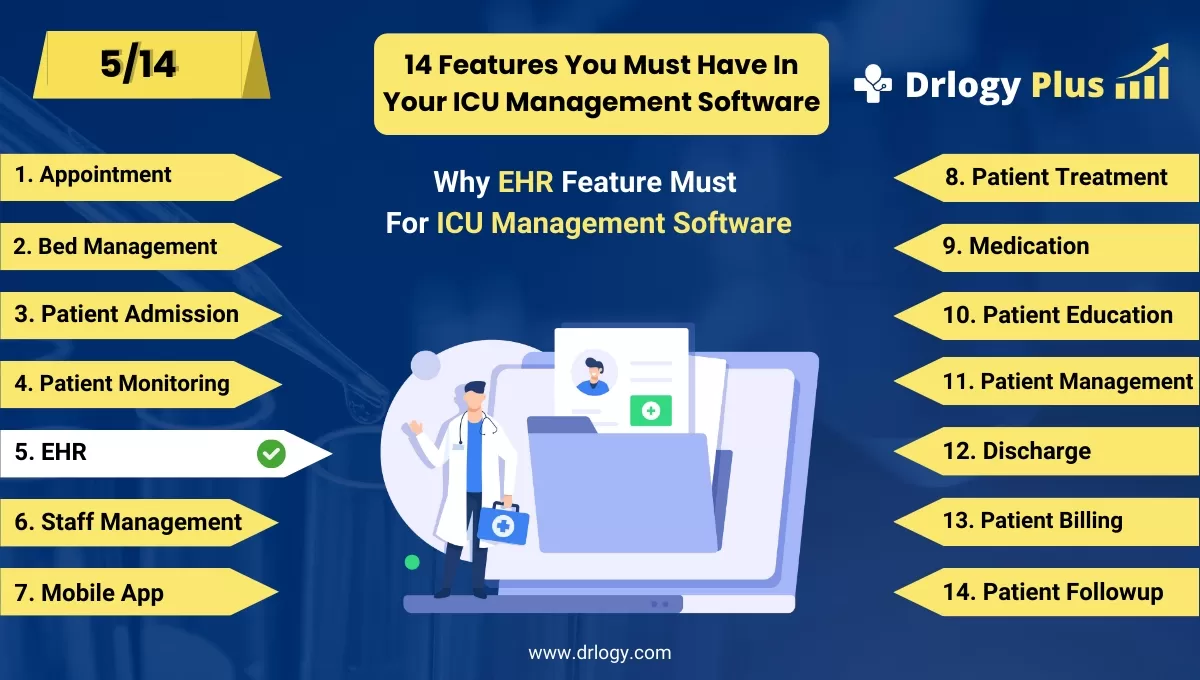
Why EHR Feature Must In ICU Management Software
Electronic Health Record (EHR) systems in ICU management software revolutionize how patient information is managed, ensuring precision, speed, and collaboration.
Check:
These advanced features are vital for delivering high-quality critical care.
Check:
10 Best EHR Feature Benefits For ICU Management Software
Check 10 Best EHR Feature Benefits For ICU Management Software.
1. Centralized Patient Data Management
- Stores all patient information, including medical history, medications, and test results, in one place.
- Ensures easy access to critical patient data for ICU teams.
- Reduces paperwork by digitizing records for improved efficiency.
- Facilitates quick decision-making with a comprehensive view of patient profiles.
- Enhances collaboration among healthcare providers through shared access.
2. Seamless Integration with ICU Devices
- Connectsectly with ICU devices to import real-time patient data.
- Updates electronic health records (EHR) automatically with vital signs and treatment details.
- Reduces manual data entry errors, ensuring accurate information.
- Simplifies the monitoring process by consolidating device data into one platform.
- Supports interoperability for a smoother ICU workflow.
3. Automated Medication Management
- Tracks prescribed medications, dosages, and schedules digitally.
- Reduces medication errors with automated alerts for incorrect dosages or interactions.
- Links to pharmacy systems for real-time inventory updates and prescription refills.
- Provides reminders for medication administration in critical care settings.
- Ensures adherence to treatment plans through precise tracking.
4. Customizable Templates and Forms
- Offers pre-designed templates for ICU-specific documentation needs.
- Enables customization for different types of ICU cases, such as trauma or neonatal.
- Saves time for healthcare providers with structured documentation formats.
- Ensures compliance with clinical and regulatory standards.
- Streamlines record-keeping for accurate and uniform documentation.
5. Advanced Analytics and Reporting
- Generates detailed reports on patient outcomes, ICU performance, and resource utilization.
- Provides actionable insights to improve patient care and operational efficiency.
- Tracks key metrics like length of ICU stay and readmission rates.
- Identifies trends and patterns to optimize ICU workflows.
- Supports decision-making for hospital administrators.
6. Real-Time Collaboration Tools
- Allows ICU staff to communicate and collaborate within the EHR system.
- Enables instant sharing of patient updates and care plans.
- Supports secure messaging and video calls for remote consultations.
- Enhances team coordination, especially during emergencies.
- Reduces delays in care with streamlined communication workflows.
7. Patient Consent and Legal Documentation
- Digitally stores consent forms, advanceectives, and other legal documents.
- Ensures compliance with ethical and legal standards in ICU care.
- Simplifies retrieval of critical documents during audits or legal proceedings.
- Protects patient rights through secure documentation management.
- Enhances transparency and accountability in patient care processes.
8. Mobile and Remote Access
- Provides ICU staff with access to patient records through mobile devices.
- Enables real-time updates and monitoring from remote locations.
- Supports telemedicine by integrating with virtual care platforms.
- Enhances flexibility for specialists who cannot be physically present.
- Improves responsiveness during critical situations.
9. AI-Powered Decision Support
- Utilizes AI algorithms to provide clinical decision support for ICU care.
- Offers recommendations for treatment plans based on patient data.
- Alerts healthcare providers to potential complications or risks.
- Supports early detection of deteriorating conditions for timely intervention.
- Enhances care quality with evidence-based insights.
10. Robust Security and Privacy Features
- Protects sensitive patient data with encryption and multi-factor authentication.
- Complies with healthcare regulations like HIPAA and GDPR.
- Monitors and audits access to patient records for enhanced security.
- Ensures data backup and recovery in case of system failures.
- Builds trust among patients and staff with secure data management.
Drlogy ICU Management Software Guide
Here are 14 steps guide for ICU Management Software.
| 1. Appointment | 8. Patient Treatment |
| 2. Bed Management | 9. Medication |
| 3. Patient Admission | 10. Patient Education |
| 4. Patient Monitoring | 11. Patient Management |
| 5. EHR | 12. Discharge |
| 6. Staff Management | 13. Patient Billing |
| 7. Mobile App | 14. Patient Follow-up |
Summary
Overall, Comprehensive EHR features in ICU management software empower healthcare providers to enhance patient care, streamline workflows, and ensure robust data security.
Check Drlogy ICU Management Software Features Guide for efficient streamlining critical care management and enhance patient outcomes in ICU For Hospitals.