Drlogy
Healthcare organization
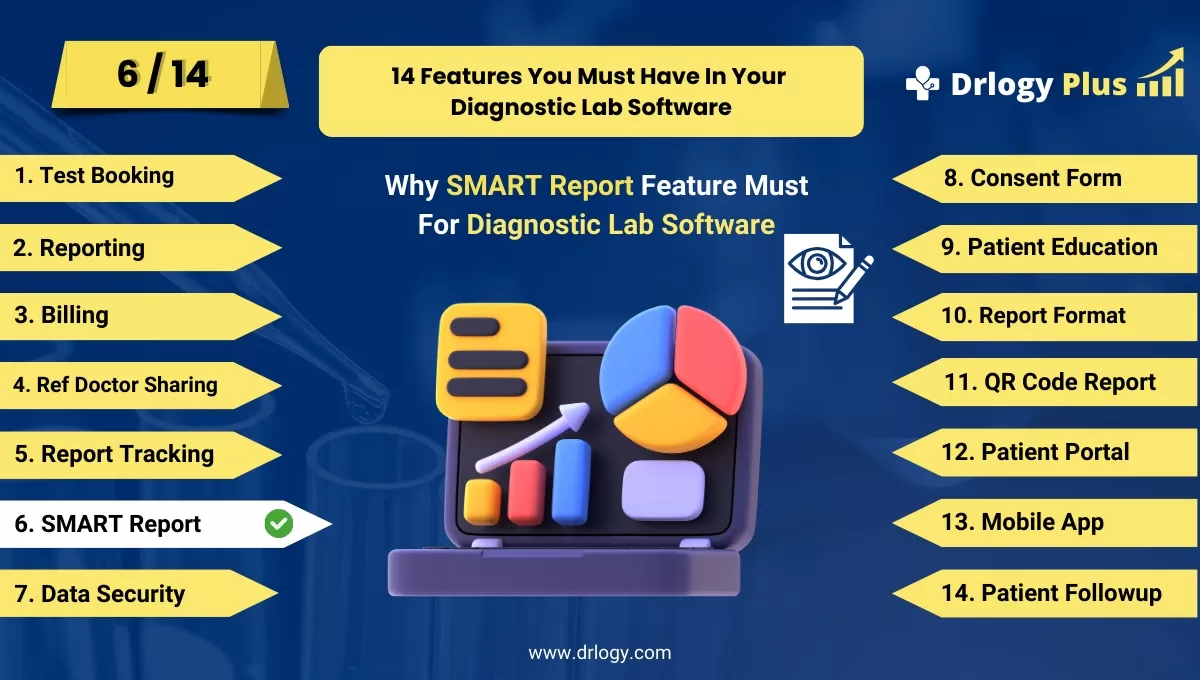
Why SMART Report Feature Must For Diagnostic Lab Software
AI-powered SMART report features are transforming diagnostic labs by improving report accuracy, speed, and personalized patient care.
Check
Implementing these features enhances workflow efficiency and provides actionable insights for better health outcomes.
10 Best SMART Report Features For Diagnostic Lab Software
Here are 10 Best SMART Report features For Diagnostic Lab Software.
1. AI-Driven Report Generation
- Uses AI algorithms to automatically generate test reports based on input data.
- Reduces manual intervention and increases the speed of report creation.
- Enhances accuracy by minimizing human errors during data entry.
- Customizes reports according to specific test types or lab preferences.
- Continuously improves report templates through machine learning.
2. Predictive Analytics for Test Results
- Employs AI to analyze patterns in test data and predict potential health risks.
- Provides early alerts for abnormal results, helping doctors intervene sooner.
- Assists in trend analysis, offering insights into long-term patient health.
- Personalizes health reports based on individual patient data and history.
- Improves decision-making for doctors with actionable data insights.
3. SMART Daily Water Check Reports
- Monitors patients’ hydration levels through advanced AI-powered diagnostics.
- Generates personalized reports with hydration recommendations for optimal health.
- Tracks changes in hydration status over time, helping to prevent dehydration.
- Integrates with wearable devices to provide real-time hydration data.
- Provides alerts to healthcare providers if dehydration risks areentified.
4. SMART Nutrition Check Reports
- Analyzes patient dietary intake and nutritional levels using AI.
- Provides detailed reports on nutritional deficiencies or excesses.
- Suggests personalized nutrition plans based on test results and patient profiles.
- Tracks the effectiveness of dietary changes through follow-up reports.
- Helps doctors guide patients in maintaining balanced nutrition for better health outcomes.
5. Automated Reportification Using AI
- Automaticallyifies reports into categories such as normal, critical, or pending review.
- Prioritizes urgent reports for immediate attention, ensuring timely patient care.
- Reduces the workload of lab personnel by simplifying report organization.
- Helps streamline workflows by routing reports to the appropriate department.
- Continually learns from pastifications to improve future report accuracy.
6. AI-Powered Report Validation
- Utilizes AI to cross-check test results with historical data for consistency.
- Flags potential errors or anomalies in reports before final submission.
- Reduces the risk of inaccurate reports being delivered to patients and doctors.
- Improves quality control by automating the report validation process.
- Provides labs with detailed logs of flagged issues for further investigation.
7. Intelligent Report Summarization
- Summarizes lengthy diagnostic reports into key findings for easier understanding.
- Uses naturaluage processing (NLP) to generate concise and accurate summaries.
- Tailors summaries to different audiences, such as patients or healthcare professionals.
- Reduces the time doctors spend reviewing complex reports.
- Enhances patient understanding of their health status with simple, clear summaries.
8. Dynamic Visual Report Representation
- Converts raw test data into intuitive charts, graphs, and visuals using AI.
- Helps patients and doctors easily interpret results through visual aids.
- Tracks patient health trends visually over time, offering a clearer overview.
- Customizes visual representations based on test type and individual patient needs.
- Integrates with EHR systems for seamless sharing of visual data with healthcare teams.
9. AI-Based Workflow Automation for Reports
- Automates report delivery to patients and healthcare professionals based on predefined rules.
- Sends alerts and notifications for pending or overdue reports.
- Streamlines report approval processes by assigning tasks to the right personnel.
- Automatically updates report statuses within the system as tasks are completed.
- Reduces delays in report delivery, improving overall lab efficiency.
10. SMART Health Monitoring Report
- Incorporates data from patient viats to offer real-time health monitoring insights.
- Tracks key health metrics such as heart rate, blood pressure, and glucose levels.
- Automatically integrates this data into diagnostic reports for a comprehensive health overview.
- Provides patients and doctors with continuous updates on their health status.
- Enables proactive healthcare management byentifying health changes in real time.
14 Steps Guide For Diagnostic Lab Software
Here are 14 Steps Guide For Diagnostic Lab Software.
| 1. Online Test Booking | 8. Consent Form |
| 2. Reporting | 9. Patient Education |
| 3. Billing | 10. Report Format |
| 4. Ref Doctor Sharing | 11. QR Code Report |
| 5. Report Tracking | 12. Patient Portal |
| 6. SMART Report | 13. Online Test Booking |
| 7. Data Security | 14. Patient Followup |
Summary
Overall, Leveraging AI-based SMART report features in diagnostic lab software can revolutionize patient care by enhancing accuracy, efficiency, and personalization in report generation and delivery.
Also, Check our complete 14 steps Drlogy Diagnostic Lab Software Buying Guide guide to make an informed decision and streamline your diagnostic Lab growth and Lab management and growth.