Drlogy
Healthcare organization
10 Best Impact of Patient Counselling in Hospitals & Clinics
Patient counseling's impact in hospitals and clinics is significant, fostering improved patient satisfaction and treatment adherence while reducing healthcare costs through enhanced communication and empowerment, ultimately leading to better health outcomes.
Check:
Its necessity lies in optimizing patient-provider relationships, promoting shared decision-making, and ensuring comprehensive understanding and compliance with treatment plans for optimal healthcare delivery.
Check:
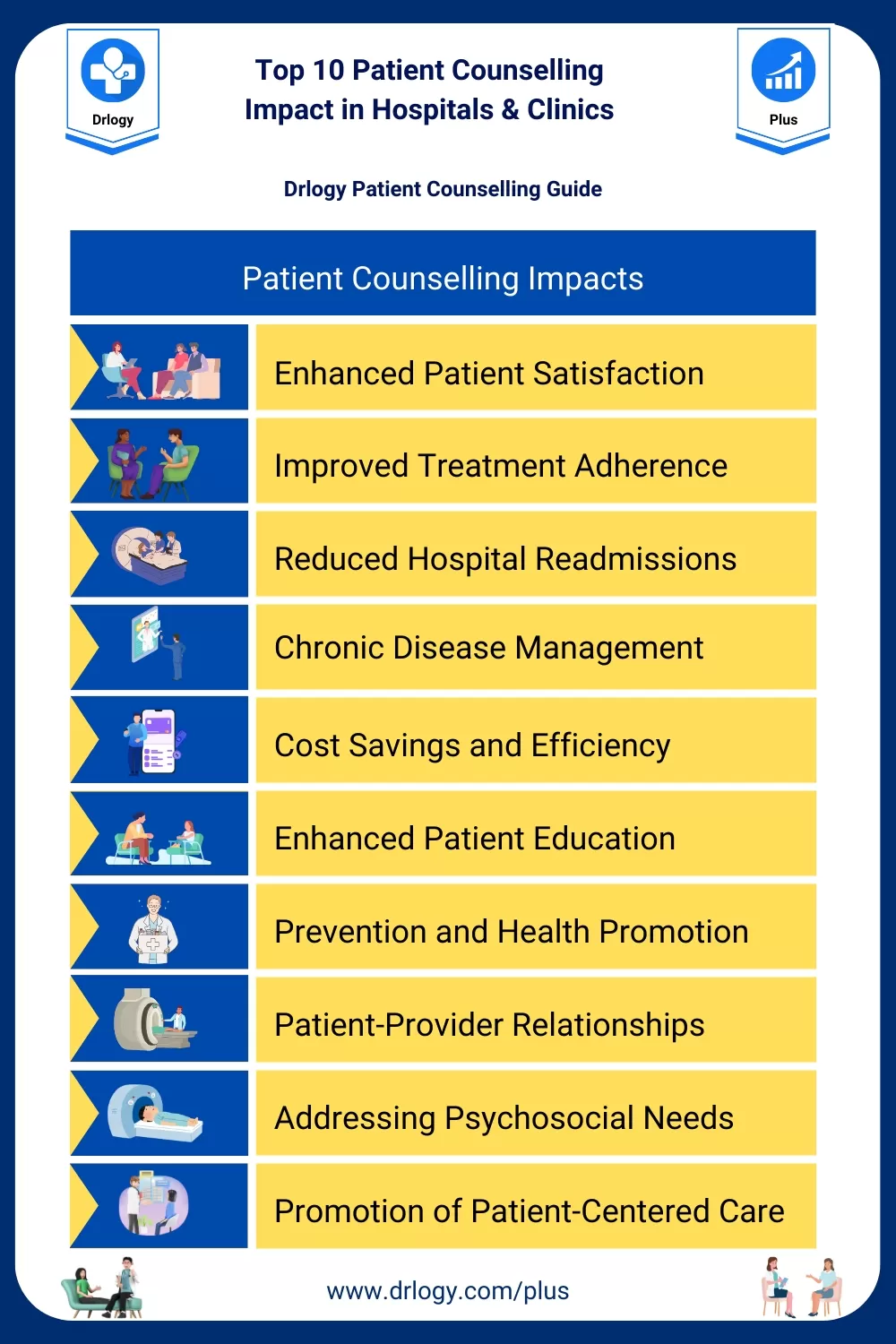
Top 10 Patient Counselling Impact in Hospitals & Clinics
Here are the 10 Best Impacts of Patient Counselling in Hospitals & Clinics.
1. Enhanced Patient Satisfaction
- Patient counseling fosters trust and rapport between healthcare providers and patients, leading to increased satisfaction with the care received.
- By addressing patients' concerns and providing personalized guidance, counseling contributes to a positive healthcare experience.
- Patients who feel listened to and supported are more likely to have favorable perceptions of their treatment and overall satisfaction.
- Improved patient satisfaction can lead to increased patient loyalty and positive word-of-mouth referrals, benefiting the hospital or clinic's reputation.
- Ultimately, satisfied patients are more likely to comply with treatment plans and engage in their healthcare, leading to better outcomes.
2. Improved Treatment Adherence
- Counseling helps patients understand the importance of following their treatment plans and adhering to medication regimens.
- By addressing misconceptions and barriers to adherence, counseling increases patients' commitment to their health.
- Patients who receive counseling are more likely to take their medications as prescribed and attend follow-up appointments.
- Improved adherence leads to better health outcomes and reduces the likelihood of complications or hospital readmissions.
- Ultimately, enhanced treatment adherence contributes to cost savings and improved efficiency in healthcare delivery.
3. Reduced Hospital Readmissions
- Effective counseling can help prevent unnecessary hospital readmissions by ensuring patients understand their discharge instructions and follow-up care plans.
- By educating patients about warning signs and self-management strategies, counseling reduces the risk of complications post-discharge.
- Patients who receive counseling are better equipped to manage their health at home and seek timely medical attention when needed.
- Reduced readmissions not only improve patient outcomes but also alleviate strain on healthcare resources and reduce healthcare costs.
- Counseling plays a vital in promoting continuity of care and supporting patients during transitions between healthcare settings.
4. Better Chronic Disease Management
- Counseling is essential for patients with chronic diseases, providing ongoing support and guidance to help them manage their conditions effectively.
- By educating patients about their disease processes and treatment options, counseling empowers them to take control of their health.
- Patients who receive counseling on lifestyle modifications and self-management techniques experience better disease control and fewer complications.
- Improved chronic disease management leads to a better quality of life for patients and reduces the burden on the healthcare system.
- Counseling also helps patients cope with the emotional and psychological challenges associated with chronic illnesses, enhancing overall well-being.
5. Cost Savings and Efficiency
- Patient counseling contributes to cost savings by reducing the need for unnecessary tests, procedures, and hospitalizations.
- By promoting preventive measures and early intervention, counseling helps prevent costly complications and disease progression.
- Improved treatment adherence and disease management result in fewer healthcare resources being utilized, leading to greater efficiency in healthcare delivery.
- Counseling also reduces the likelihood of medical errors and adverse events, further minimizing healthcare costs.
- Ultimately, investing in patient counseling leads to long-term cost savings and improved resource allocation within hospitals and clinics.
6. Enhanced Patient Education
- Counseling serves as a platform for comprehensive patient education, ensuring individuals understand their medical conditions, treatment options, and self-care practices.
- By providing clear and understandable information, counseling improves health literacy and empowers patients to make informed decisions about their health.
- Patients who are well-educated about their health are more likely to actively participate in their care and take ownership of their well-being.
- Enhanced patient education leads to increased patient engagement, treatment adherence, and overall health outcomes.
- Ultimately, investing in patient education through counseling pays dividends in improved patient satisfaction and healthcare effectiveness.
7. Prevention and Health Promotion
- Counseling plays a critical in preventive healthcare, promoting screenings, vaccinations, and lifestyle modifications to prevent illnesses and maintain optimal health.
- Byentifying risk factors and providing personalized recommendations, counseling empowers patients to adopt healthy behaviors and reduce their risk of developing chronic diseases.
- Patients who receive counseling on preventive measures are more likely to engage in health-promoting activities and adhere to recommended screenings and vaccinations.
- Investing in prevention through counseling reduces the burden of preventable diseases on the healthcare system and improves population health outcomes.
- Ultimately, counseling facilitates early detection and intervention, leading to better health outcomes and reduced healthcare costs in the long term.
8. Strengthened Patient-Provider Relationships
- Counseling fosters trust and collaboration between patients and healthcare providers, strengthening the patient-provider relationship.
- By providing personalized guidance and support, counseling demonstrates a commitment to patient-centered care and empathy.
- Patients who feel supported and respected by their healthcare providers are more likely to communicate openly and honestly, leading to better treatment outcomes.
- Strong patient-provider relationships facilitate shared decision-making and care coordination, enhancing overall healthcare quality.
- Ultimately, investing in patient counseling strengthens the foundation of patient-centered care and promotes a culture of empathy and trust within hospitals and clinics.
9. Addressing Psychosocial Needs
- Counseling addresses the psychosocial needs of patients, including emotional support, coping strategies, and referrals to mental health services.
- By providing a safe and supportive environment, counseling helps patients navigate the emotional challenges associated with illness and healthcare experiences.
- Patients who receive counseling on psychosocial issues experience improved emotional well-being and quality of life.
- Investing in psychosocial support through counseling reduces the stigma surrounding mental health and promotes holistic patient care.
- Ultimately, addressing psychosocial needs enhances patient resilience and coping skills, leading to better health outcomes and overall satisfaction with care.
10. Promotion of Patient-Centered Care
- Counseling promotes patient-centered care by prioritizing the individual needs, preferences, and values of patients.
- By engaging patients in shared decision-making and care planning, counseling ensures treatments are tailored to the unique circumstances of each individual.
- Patients who receive patient-centered care through counseling feel respected, empowered, and actively involved in their healthcare.
- Investing in patient-centered care leads to improved patient satisfaction, treatment adherence, and health outcomes.
- Ultimately, patient-centered care promotes a culture of respect, dignity, and collaboration within hospitals and clinics, resulting in better healthcare experiences for patients and providers alike.
Drlogy Patient Counseling Guide
| 1. Introduction | 8. Impact |
| 2. Objective | 9. Doctor's |
| 3. Patient Education | 10. Medication Education |
| 4. Patient Counseling Software | 11. Lifestyle Modification |
| 5. Benefits | 12. Patient Support |
| 6. Techniques | 13. Long Term Goal |
| 7. Ideas/Examples | 14. Mistakes To Avoid |
Summary
Overall, impact of patient counseling in hospitals and clinics encompasses improved patient satisfaction, treatment adherence, disease management, and overall healthcare outcomes, underscoring its indispensable in fostering patient-centered care and enhancing healthcare delivery.
Check Drlogy Patient Counseling Guide offers comprehensive support for healthcare providers, facilitating effective communication, education, and empowerment for patients, ultimately leading to improved health outcomes.