Drlogy
Healthcare organization
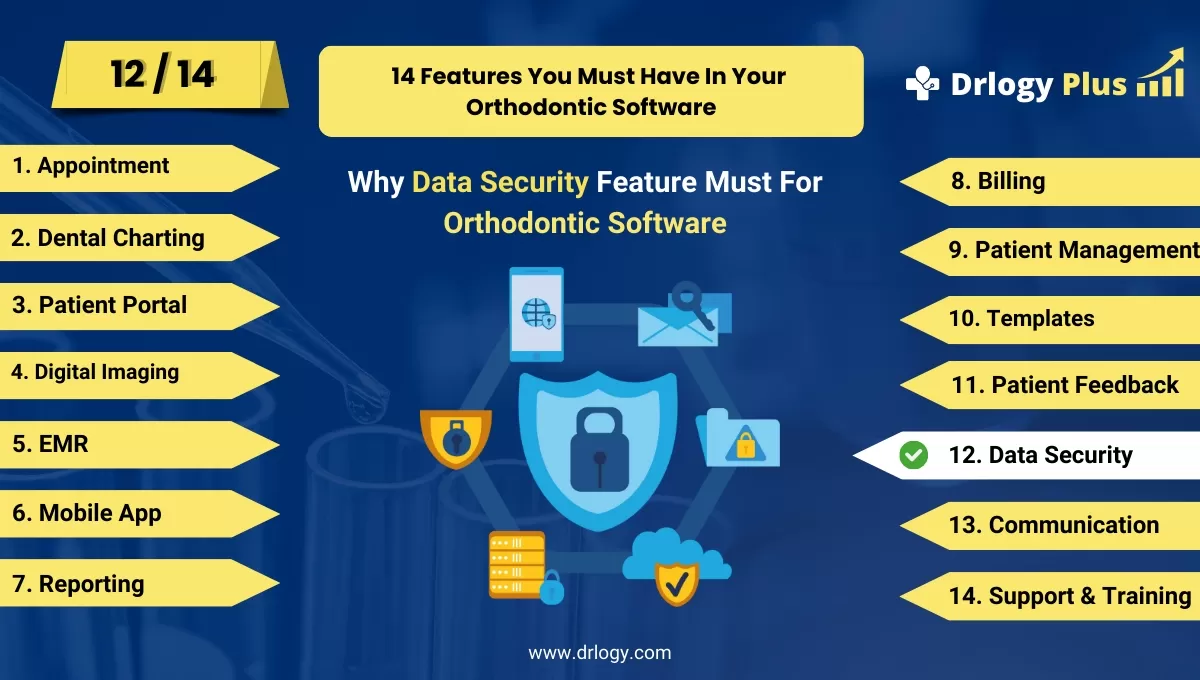
Why Data Security Feature Must In Orthodontic Software
Data security features in orthodontic software are critical for protecting sensitive patient information and ensuring compliance with regulatory standards.
Check:
By implementing robust security measures, clinics can safeguard patient trust, prevent data breaches, and maintain the integrity of their practice.
10 Best Data Security Features for Orthodontic Software
Check 10 Best Data Security Features for Orthodontic Software.
1. Encryption of Data
- Utilize advanced encryption protocols to protect patient data both at rest and in transit.
- Ensure that sensitive information, such as treatment plans and payment details, is stored securely.
- Prevent unauthorized access to patient data through robust encryption measures.
- Comply with industry standards for data protection and privacy.
- Regularly update encryption methods to counter evolving security threats.
2. Access Controls and Permissions
- Implement-based access controls to limit data access to authorized personnel only.
- Customize user permissions based on staffs and responsibilities within the clinic.
- Monitor and log access to sensitive information for accountability and security audits.
- Regularly review and update access permissions to reflect changes in staffs.
- Protect patient data by ensuring that only those who need access can view it.
3. Secure User Authentication
- Require strong password policies that enforce complexity and regular changes.
- Implement multi-factor authentication (MFA) for an added layer of security.
- Enable biometric authentication options (e.g., fingerprint or facial recognition) for user logins.
- Reduce the risk of unauthorized access by verifying userentities through multiple methods.
- Educate staff on the importance of secure authentication practices.
4. Regular Security Audits and Assessments
- Conduct regular security audits toentify vulnerabilities within the software system.
- Assess compliance with industry regulations, such as HIPAA, to ensure data protection.
- Engage third-party security experts for comprehensive security assessments.
- Use findings from audits to implement necessary improvements and enhance security protocols.
- Promote a culture of continuous improvement in data security practices.
5. Data Backup and Recovery Solutions
- Implement automatic data backup solutions to protect patient information against loss.
- Ensure that backup data is stored securely and is easily accessible for recovery.
- Regularly test data recovery processes to guarantee swift restoration of services in case of a breach.
- Develop disaster recovery plans to outline steps for data recovery and continuity of operations.
- Protect patient data by ensuring its availability even in emergencies or cyber incidents.
6. Secure Communication Channels
- Use secure communication protocols (e.g., HTTPS, TLS) for all online interactions.
- Encrypt emails and messages containing sensitive patient information.
- Provide secure patient portals for communication between patients and clinic staff.
- Reduce the risk of data breaches by ensuring all communication channels are secure.
- Promote safe communication practices to maintain patient confidentiality.
7. Incident Response Plan
- Develop a clear incident response plan to address data breaches or security incidents.
- Outline procedures for detecting, reporting, and responding to security breaches.
- Designate a response team responsible for managing security incidents.
- Regularly review and update the incident response plan based on emerging threats.
- Train staff on theirs and responsibilities in the event of a data breach.
8. Compliance with Regulatory Standards
- Ensure that the software adheres to relevant data protection regulations.
- Regularly update policies and procedures to align with changing regulations.
- Conduct staff training on compliance requirements and best practices.
- Maintain detailed documentation of compliance efforts for auditing purposes.
- Protect patient data by prioritizing adherence to regulatory standards.
9. Activity Logging and Monitoring
- Implement logging features to track user activity within the software.
- Monitor access to sensitive patient data toentify suspicious or unauthorized behavior.
- Generate reports on user activity to support audits and investigations.
- Enhance security by ensuring accountability for actions taken within the software.
- Use monitoring data toentify and mitigate potential security threats.
10. Security Training and Awareness Programs
- Provide regular training for staff on data security best practices and protocols.
- Educate employees about recognizing phishing attempts and social engineering tactics.
- Foster a culture of security awareness to minimize the risk of human error.
- Encourage staff to report any suspicious activity or potential security threats.
- Ensure that all team members understand their in protecting patient data.
Drlogy Orthodontic Software Features Guide
Here's a full guide for the 14 best Orthodontic Software features.
| 1. Appointment | 8. Billing |
| 2. Dental Charting | 9. Patient Management |
| 3. Patient Portal | 10. Customizable Templates |
| 4. Digital Imaging | 11. Patient Feedback |
| 5. EMR | 12. Data Security |
| 6. Mobile App | 13. Communication & Sharing |
| 7. Reporting | 14. Support & Training |
Summary
Overall, These data security features are essential for orthodontic software to safeguard sensitive patient information, maintain compliance with regulations, and build trust with patients by demonstrating a commitment to data protection.
Check Drlogy Orthodontic Software Features Guide for offers comprehensive efficient patient management in dental practice management.