Drlogy
Healthcare organization
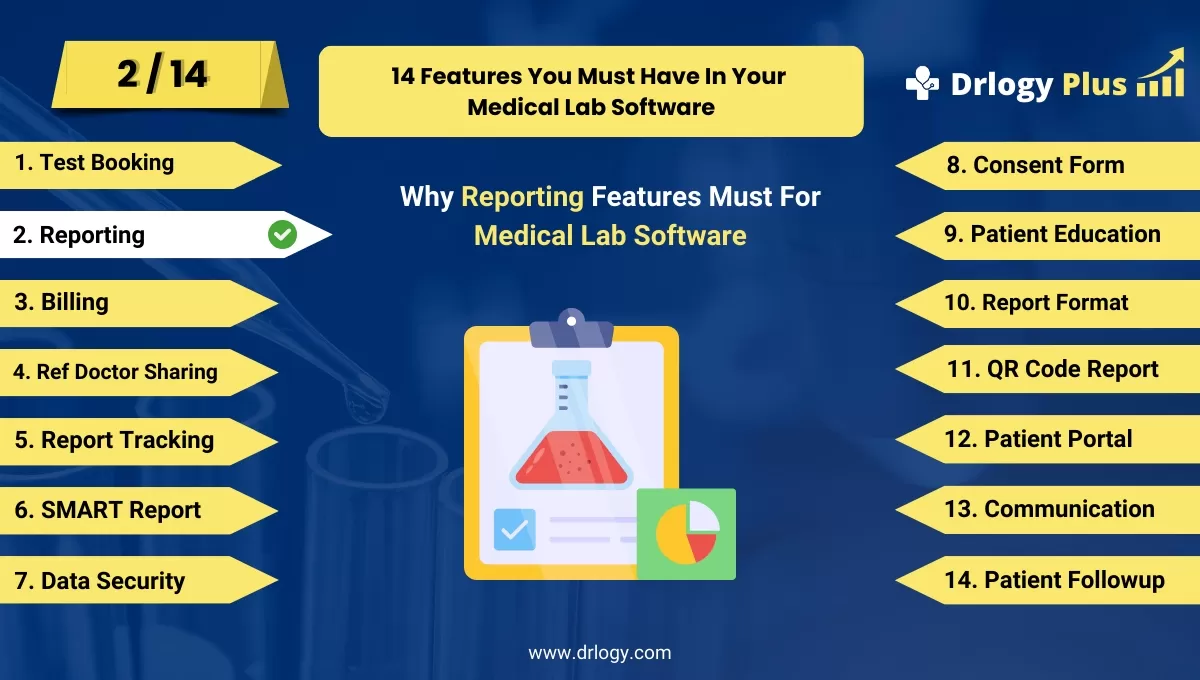
Why Reporting Feature Must For Medical Lab Software
Effective reporting features in medical lab software are critical for ensuring accurate diagnostics, timely communication, and comprehensive patient care.
Check
These features streamline report generation, sharing, and management, leading to better workflow and patient satisfaction.
10 Best Reporting Features For Medical Lab Software
Here are 10 Best Reporting features For Medical Lab Software.
1. Customizable Report Templates
- Allows labs to create and use standardized templates for different test types.
- Ensures consistency and accuracy in all lab reports, minimizing errors.
- Offers customization options based on specific lab needs and regulations.
- Supports multi-language reports for diverse patient demographics.
- Reduces the time spent on report formatting, improving overall efficiency.
2. Automated Report Generation
- Automatically generates reports once tests are completed, reducing manual effort.
- Ensures timely report delivery by eliminating processing delays.
- Integratesectly with lab instruments for accurate data import.
- Allows staff to focus on analysis rather than report creation.
- Minimizes human errors and ensures consistent output across all reports.
3. Electronic Signatures
- Enables lab technicians and doctors to sign reports digitally.
- Ensures reports are authenticated and compliant with regulatory standards.
- Reduces the need for paper-based processes, enhancing efficiency.
- Provides an audit trail for signed documents, ensuring accountability.
- Supports remote signing, allowing for quicker report finalization.
4. Secure Report Sharing
- Allows reports to be securely shared with doctors, patients, and healthcare providers.
- Utilizes encryption protocols to ensure patient data privacy.
- Enables easy sharing via email, patient portals, or secure links.
- Facilitates collaboration between labs and healthcare professionals for better patient care.
- Reduces the need for physical report transfers, saving time and resources.
5. Real-Time Report Access
- Provides patients and doctors with real-time access to lab results.
- Improves communication between labs and healthcare providers for faster decision-making.
- Offers access through patient portals, reducing the need for phone inquiries.
- Keeps patients informed, enhancing their overall experience and satisfaction.
- Supports real-time updates on report status, including completion and review stages.
6. Historical Data Retrieval
- Stores all past reports in an easily accessible database for future reference.
- Allows quick retrieval of previous test results for comparison and ongoing treatment.
- Helps healthcare providers track patient progress over time.
- Reduces the need for repetitive tests, saving time and resources for both the lab and patient.
- Enables comprehensive data analysis for better diagnostic insights.
7. Barcode Integration for Report Accuracy
- Links sample barcodesectly to patient reports, ensuring accurate data matching.
- Reduces the risk of sample mix-ups and reporting errors.
- Streamlines the workflow by automatically associating tests with the correct patient.
- Improves overall traceability and accountability within the lab.
- Enhances the speed and accuracy of the reporting process.
8. Report Status Tracking
- Tracks the progress of reports from sample collection to completion.
- Notifies lab staff and healthcare providers about pending or completed reports.
- Ensures timely follow-ups and reduces delays in report delivery.
- Provides transparency and accountability in the reporting process.
- Enhances operational efficiency by monitoring turnaround times.
9. Integration with EMR/EHR Systems
- Seamlessly integrates with electronic medical record (EMR) and electronic health record (EHR) systems.
- Ensures that lab reports areectly available within patient health records.
- Reduces manual data entry and the potential for transcription errors.
- Streamlines communication between labs and healthcare providers.
- Enhances continuity of care by keeping all patient data in one place.
10. Customizable Reporting for Different Stakeholders
- Offers tailored report formats for doctors, patients, and insurance providers.
- Ensures that each stakeholder receives the information most relevant to their needs.
- Allows reports to include detailed medical explanations for healthcare professionals.
- Provides simplified versions for patients to enhance understanding of their results.
- Supports compliance with insurance and billing requirements through specialized reporting formats.
14 Steps Guide For Medical Lab Software
Here are 14 Steps Guide For Medical Lab Software.
| 1. Reporting | 8. Consent Form |
| 2. Reporting | 9. Patient Education |
| 3. Billing | 10. Report Format |
| 4. Ref Doctor Sharing | 11. QR Code Report |
| 5. Report Tracking | 12. Patient Portal |
| 6. SMART Report | 13. Reporting |
| 7. Data Security | 14. Patient Followup |
Summary
Overall, Incorporating these 10 reporting features in medical lab software significantly improves workflow, accuracy, and communication, ensuring better outcomes for labs, healthcare providers, and patients.
Also, Check our complete 14 steps Drlogy Medical Lab Software Buying Guide guide to make an informed decision and streamline your diagnostic Lab growth and Lab management and growth.