Drlogy
Healthcare organization
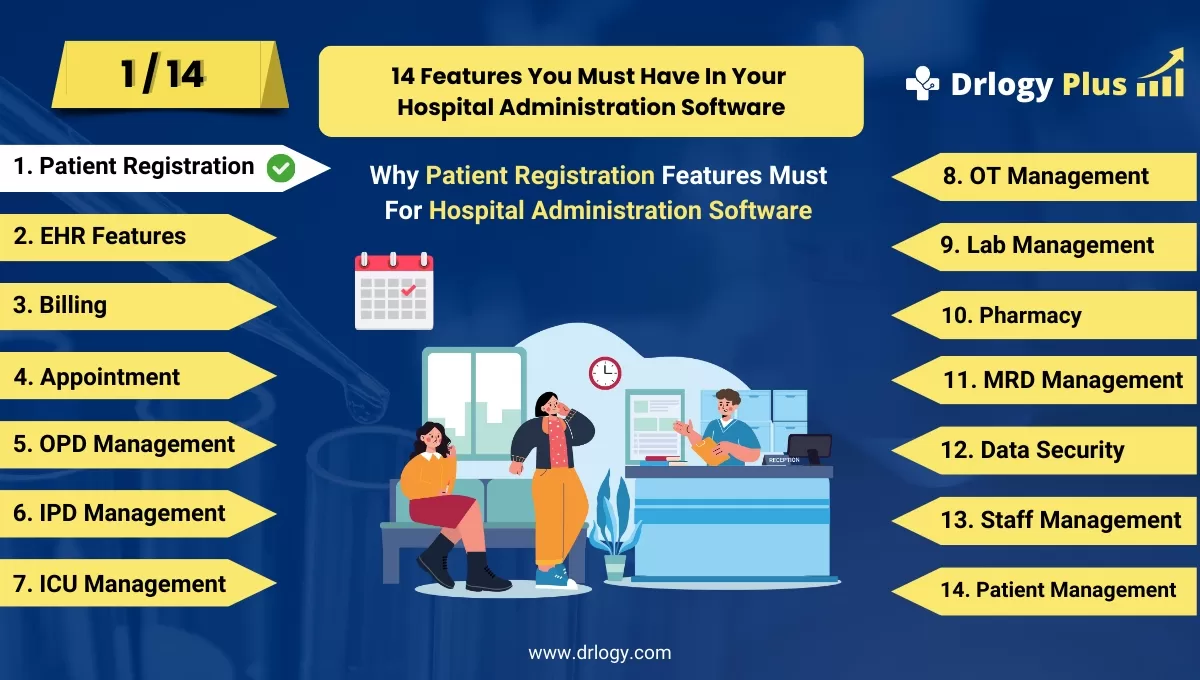
Why Patient Registration Features For Hospital Administration Software
The Patient Registration & Admission feature is crucial for optimizing hospital operations, ensuring accurate patient data management, and enhancing overall patient experience.
Recommended
It streamlines workflows, reduces errors, and supports compliance with regulatory standards.
10 Reasons Why Patient Registration Feature Must For Hospital Administration Software
Here are 10 Reasons Why Patient Registration & Admission Feature Must For Hospital Administration Software.
1. Streamlined Workflow
- Reduces Administrative Burden: Simplifies the patient registration process, minimizing paperwork and manual data entry.
- Improves Efficiency: Speeds up patient admission, allowing staff to focus onect patient care.
- Faster Patient Processing: Accelerates the check-in process, reducing wait times for patients.
- Integrated Data Management: Ensures all patient information is captured and stored systematically in a single system.
- Enhanced Coordination: Facilitates smooth handoffs between departments by providing consistent patient data.
2. Accuracy and Data Integrity
- Minimizes Errors: Automated data entry reduces the risk of human errors in patient information.
- Consistent Data: Ensures that patient details are accurate and consistent across the hospital’s system.
- Real-Time Updates: Provides instant updates to patient records, ensuring current information is available to all relevant staff.
- Verification Tools: Includes tools for verifying patiententity and insurance information.
- Reduces Duplicate Records: Helps prevent the creation of duplicate patient records through automated checks.
3. Improved Patient Experience
- Quicker Check-In: Reduces waiting time for patients at the registration desk.
- User-Friendly Interface: Offers an intuitive interface for patients and staff, making the registration process straightforward.
- Appointment Reminders: Sends automatic reminders to patients about their appointments.
- Online Pre-Registration: Allows patients to complete registration forms online before arriving at the hospital.
- Efficient Handling of Requests: Manages special requests or accommodations efficiently during the admission process.
4. Enhanced Compliance
- Regulatory Adherence: Ensures that patient registration processes comply with healthcare regulations and standards.
- Accurate Documentation: Maintains accurate and complete documentation required for legal and billing purposes.
- Secure Data Storage: Protects patient data with advanced security measures to meet privacy regulations.
- Audit Trails: Provides detailed logs of registration activities for auditing and compliance checks.
- Patient Consent Management: Manages patient consents and agreements digitally, ensuring compliance with consent regulations.
5. Comprehensive Patient Records
- Holistic View: Provides a complete view of the patient’s medical history, including previous visits and treatments.
- Integrated Records: Consolidates patient information from various departments into a single record.
- Accessible Information: Makes patient data easily accessible to authorized healthcare providers for better care.
- Up-to-Date Data: Ensures that all patient records are current and reflect the latest information.
- Historical Data Tracking: Maintains a history of patient interactions and treatments for future reference.
6. Efficient Resource Allocation
- Optimized Staffing: Helps in planning staff allocation based on patient load and registration trends.
- Better Utilization: Ensures resources like exam rooms and medical equipment are utilized effectively.
- Real-Time Data: Provides real-time data on patient volume and needs, aiding in resource management.
- Scheduling Efficiency: Improves the scheduling of patient appointments and procedures, reducing bottlenecks.
- Reduced Wait Times: Helps in managing patient flow to avoid overcrowding and minimize wait times.
7. Improved Communication
- Integrated Systems: Facilitates seamless communication between registration staff, healthcare providers, and patients.
- Automated Notifications: Sends automated notifications and updates to patients regarding their registration status.
- Centralized Information: Ensures that all patient communication is based on accurate and up-to-date information.
- Enhanced Coordination: Improves coordination between different departments by providing shared access to patient data.
- Effective Follow-Ups: Manages follow-up communications and reminders efficiently through the system.
8. Enhanced Security
- Data Encryption: Protects patient information with encryption to prevent unauthorized access.
- Access Controls: Implements-based access controls to ensure only authorized personnel can view sensitive information.
- Secure Authentication: Uses secure authentication methods to verify theentity of users accessing the system.
- Regular Audits: Conducts regular security audits toentify and address potential vulnerabilities.
- Compliance with Standards: Adheres to industry standards for data protection and privacy.
9. Analytics and Reporting
- Data Insights: Provides valuable insights into patient registration trends and hospital performance.
- Custom Reports: Generates custom reports on patient demographics, admission rates, and more.
- Performance Monitoring: Tracks key performance indicators related to patient registration and admission processes.
- Informed Decision-Making: Supports decision-making with detailed analytics and reporting tools.
- Operational Efficiency:entifies areas for improvement in the registration process through data analysis.
10. Scalability and Flexibility
- Adaptable System: Accommodates changes in hospital size and patient volume without disrupting operations.
- Customizable Features: Allows customization of registration forms and processes to meet specific needs.
- Integration Capabilities: Integrates with other hospital systems and software for a cohesive workflow.
- Future-Proof: Scalable to incorporate new technologies and updates as the hospital grows.
- Modular Design: Offers modular features that can be added or adjusted based on hospital requirements.
Drlogy Hospital Administration Software Features Guide For HMIS
Here are 14 Steps Drlogy Hospital Administration Software Features Guide For HMIS Selection.
| 1. Patient Registration | 8. OT Management |
| 2. EHR Features | 9. Lab Management |
| 3. Billing Management | 10. Pharmacy |
| 4. Appointment | 11. MRD Management |
| 5. IPD Management | 12. Data Security |
| 6. OPD Management | 13. Staff Management |
| 7. ICU Management | 14. Patient Management |
Summary
In summary, A robust Patient Registration & Admission feature is essential for modern hospitals, driving efficiency, accuracy, and improved patient satisfaction.
Explore the complete 16 steps Drlogy Hospital Administration Software (HMS) guide for comprehensive insights into optimizing hospital operations and patient care.