Drlogy
Healthcare organization
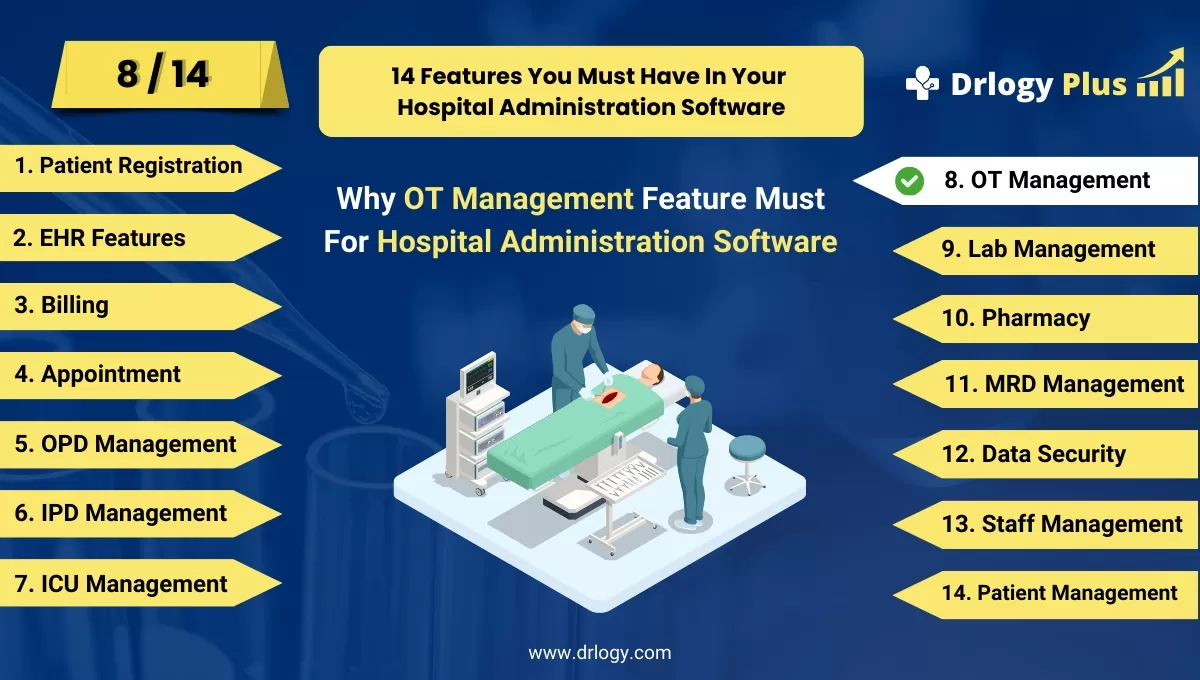
Why OT Management Features For Hospital Administration Software
The OT (Operating Theatre) Management feature is crucial for ensuring smooth and efficient surgical operations within a hospital.
Recommended
It helps in managing the complexities of surgical procedures, scheduling, and resource allocation, leading to improved patient outcomes and optimizing operational efficiency for Hospital Administration Software.
10 Reasons Why OT Management Feature Must For Hospital Administration Software
Here are 10 Reasons Why OT Management Feature Must For Hospital Administration Software.
1. Optimized Scheduling
- Automated Scheduling: Automatically schedules surgeries based on availability, urgency, and surgeon preferences.
- Conflict Avoidance: Prevents scheduling conflicts by providing real-time updates on OT availability.
- Resource Allocation: Ensures optimal allocation of resources like staff, equipment, and operating rooms.
- Real-Time Adjustments: Allows real-time adjustments to the schedule in case of emergencies or delays.
- Reduced Waiting Times: Minimizes patient waiting times by streamlining the scheduling process.
2. Enhanced Patient Safety
- Pre-Op Checklists: Implements mandatory pre-operative checklists to ensure patient safety.
- Sterilization Protocols: Monitors adherence to sterilization protocols within the OT.
- Safety Alerts: Provides real-time safety alerts for any deviations from standard procedures.
- Infection Control: Tracks and enforces infection control measures to reduce surgical site infections.
- Anesthesia Monitoring: Integrates with anesthesia monitoring systems to ensure patient safety during surgery.
3. Efficient Resource Management
- Inventory Tracking: Tracks and manages inventory of surgical instruments and supplies in real-time.
- Equipment Maintenance: Schedules and monitors maintenance of surgical equipment to prevent breakdowns.
- Staff Management: Efficiently allocates and manages OT staff, including surgeons, nurses, and technicians.
- Consumable Management: Monitors the usage of consumables to ensure availability during surgeries.
- Cost Control: Helps in controlling costs by reducing wastage and optimizing resource use.
4. Improved Communication
- Team Coordination: Facilitates seamless communication and coordination among the surgical team.
- Status Updates: Provides real-time updates on surgery status to relevant staff and departments.
- Patient Family Notifications: Keeps patient families informed about the progress of the surgery.
- Inter-Departmental Communication: Ensures smooth communication between the OT and other hospital departments like radiology, pathology, and ICU.
- Shift Handover: Streamlines shift handovers with detailed updates on ongoing and upcoming surgeries.
5. Detailed Documentation
- Surgical Records: Maintains comprehensive digital records of all surgical procedures.
- Compliance Documentation: Ensures documentation compliance with healthcare regulations and standards.
- Audit Trails: Provides audit trails for all actions and decisions made in the OT.
- Post-Op Notes: Facilitates the documentation of post-operative notes and care instructions.
- Legal Documentation: Manages consent forms, surgical agreements, and other legal documentation.
6. Data-Driven Decision Making
- Performance Analytics: Offers analytics on OT performance, including turnaround times and procedure efficiency.
- Outcome Tracking: Tracks surgical outcomes toentify areas for improvement.
- Resource Utilization Reports: Provides insights into the utilization of OT resources for better decision-making.
- Cost Analysis: Helps in analyzing the cost-effectiveness of surgical procedures.
- Predictive Analytics: Uses predictive analytics to forecast OT demand and resource needs.
7. Enhanced Patient Experience
- Pre-Surgery Information: Provides patients with detailed pre-surgery instructions and information.
- Streamlined Admissions: Simplifies the admission process for patients undergoing surgery.
- Post-Op Care Coordination: Ensures smooth coordination of post-operative care and follow-up appointments.
- Feedback Collection: Collects patient feedback on their surgical experience for continuous improvement.
- Reduced Wait Times: Minimizes wait times for patients through efficient OT management.
8. Real-Time Monitoring
- Procedure Tracking: Tracks the progress of surgical procedures in real-time.
- Vital Signs Monitoring: Integrates with monitoring systems to track patient vitals during surgery.
- Emergency Alerts: Provides real-time alerts for any emergencies or critical changes during surgery.
- Workflow Optimization: Monitors and optimizes the workflow within the OT to reduce delays.
- Surgeon Performance Tracking: Tracks surgeon performance and adherence to protocols in real-time.
9. Compliance and Quality Control
- Regulatory Compliance: Ensures that all OT operations comply with healthcare regulations and standards.
- Quality Audits: Facilitates regular quality audits to maintain high standards of care.
- Accreditation Support: Supports hospital accreditation processes by providing comprehensive OT management data.
- Safety Protocols: Enforces adherence to safety protocols within the OT.
- Continuous Improvement: Uses data and feedback to drive continuous improvement in OT operations.
10. Cost Efficiency
- Resource Optimization: Optimizes the use of OT resources to reduce costs without compromising quality.
- Waste Reduction: Reduces wastage of surgical supplies and consumables through better management.
- Budget Management: Helps in managing the OT budget effectively by providing detailed cost reports.
- Revenue Generation: Increases revenue through efficient OT utilization and reduced downtime.
- ROI Tracking: Tracks the return on investment for OT equipment and resources.
Drlogy Hospital Administration Software Features Guide For HMIS
Here are 14 Steps Drlogy Hospital Administration Software Features Guide For HMIS Selection.
| 1. Patient Registration | 8. OT Management |
| 2. EHR Features | 9. Lab Management |
| 3. Billing Management | 10. Pharmacy |
| 4. Appointment | 11. MRD Management |
| 5. IPD Management | 12. Data Security |
| 6. OPD Management | 13. Staff Management |
| 7. ICU Management | 14. Patient Management |
Summary
In summary, Implementing a robust OT Management feature is essential for enhancing patient safety, improving operational efficiency, and optimizing resource utilization in hospital settings.
Explore the complete 14 steps Drlogy Hospital Administration Software guide for comprehensive insights into optimizing hospital operations and patient care.