Drlogy
Healthcare organization
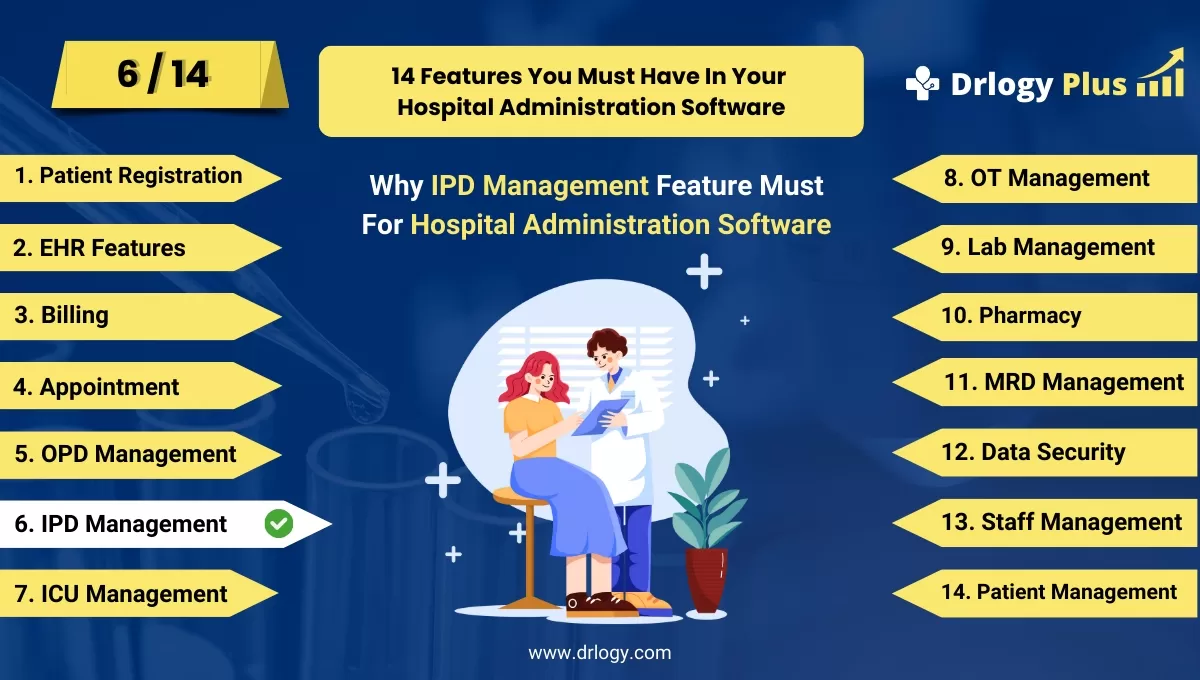
Why IPD Management Features For Hospital Administration Software
The In-Patient Department (IPD) Management feature is vital for streamlining hospital operations, ensuring efficient patient care, and enhancing the overall patient experience.
Recommended
It centralizes and automates the management of in-patient services, from admission to discharge, improving both clinical and administrative workflows in Hospital Administration Software.
10 Reasons Why IPD Management Feature Must For Hospital Administration Software
Here are 10 Reasons Why IPD Management Feature Must For Hospital Administration Software.
1. Streamlined Admission Process
- Automated Admission: Simplifies the patient admission process with automated forms and procedures.
- Bed Management: Ensures efficient allocation and tracking of available beds in real time.
- Real-Time Availability: Provides instant updates on bed availability and patient status.
- Admission History: Tracks and records patient admission history for future reference.
- Custom Admission Protocols: Allows for customization of admission protocols to meet specific hospital requirements.
2. Efficient Bed Management
- Real-Time Bed Status: Monitors the availability and occupancy status of beds in real-time.
- Bed Allocation: Automatically allocates beds based on patient needs and availability.
- Bed Transfer Management: Facilitates easy transfers between wards or departments.
- Bed Utilization Reports: Generates reports on bed utilization for better resource management.
- Reduced Waiting Time: Minimizes patient waiting times for bed allocation.
3. Comprehensive Patient Monitoring
- Real-Time Patient Tracking: Tracks patient status and location within the hospital in real-time.
- Vital Signs Monitoring: Integrates with monitoring devices to track patient vital signs continuously.
- Care Plan Management: Manages individualized care plans for each patient.
- Alert System: Sends automatic alerts for critical changes in patient status.
- Patient Progress Reports: Provides detailed reports on patient progress during hospitalization.
4. Effective Discharge Planning
- Automated Discharge Process: Streamlines the discharge process with automated documentation and approvals.
- Discharge Summary: Generates comprehensive discharge summaries with treatment history and follow-up instructions.
- Billing Integration: Integrates with billing systems to ensure all charges are accounted for before discharge.
- Post-Discharge Follow-Up: Manages follow-up appointments and care plans after discharge.
- Patient Feedback Collection: Collects feedback from patients upon discharge to improve services.
5. Improved Resource Utilization
- Resource Allocation: Efficiently allocates medical staff and equipment based on patient needs.
- Inventory Management: Tracks the usage of medical supplies and medications in real-time.
- Optimized Staffing: Ensures appropriate staffing levels based on patient occupancy.
- Resource Utilization Reports: Generates reports on resource utilization for better planning.
- Reduced Operational Costs: Optimizes resource use to reduce overall operational costs.
6. Enhanced Communication
- Interdepartmental Coordination: Facilitates seamless communication between departments for coordinated patient care.
- Patient Communication: Provides tools for easy communication with patients and their families.
- Staff Notifications: Sends automated notifications to staff about patient needs and status changes.
- Electronic Documentation: Supports electronic documentation for easy access and sharing of patient records.
- Centralized Information: Centralizes all patient information for easy access by authorized personnel.
7. Integrated Billing and Insurance
- Automated Billing: Integrates with the billing system to automate the calculation of patient charges.
- Insurance Claims Management: Streamlines the process of managing insurance claims and approvals.
- Pre-Authorization Handling: Manages pre-authorization processes for insured patients.
- Transparent Billing: Provides patients with transparent billing details during their stay.
- Error Reduction: Reduces billing errors with automated checks and balances.
8. Compliance and Documentation
- Regulatory Compliance: Ensures all patient management processes comply with healthcare regulations.
- Accurate Documentation: Automates documentation processes to ensure accuracy and completeness.
- Audit Trails: Maintains audit trails for all patient management activities.
- Legal Compliance: Supports legal documentation requirements for patient care.
- Data Security: Protects sensitive patient information with advanced security measures.
9. Enhanced Patient Experience
- Personalized Care Plans: Supports the creation of personalized care plans based on patient needs.
- Comfort and Convenience: Facilitates a more comfortable and convenient hospital stay for patients.
- Patient Education: Provides educational resources to patients about their treatment and care.
- Feedback Mechanism: Collects and manages patient feedback to improve hospital services.
- Family Communication: Keeps families informed about patient status and care plans.
10. Data-Driven Decision Making
- Performance Metrics: Tracks key performance metrics related to patient care and hospital operations.
- Real-Time Analytics: Provides real-time analytics on patient management and resource utilization.
- Operational Reports: Generates detailed reports on hospital operations for management review.
- Strategic Planning: Supports strategic planning and decision-making based on data insights.
- Continuous Improvement: Drives continuous improvement initiatives based on insights.
Drlogy Hospital Administration Software Features Guide For HMIS
Here are 14 Steps Drlogy Hospital Administration Software Features Guide For HMIS Selection.
Summary
In summary, A robust IPD Management feature is essential for improving patient care, optimizing hospital operations, and enhancing overall patient satisfaction.
Explore the complete 14 steps Drlogy Hospital Administration Software guide for comprehensive insights into optimizing hospital operations and patient care.