Drlogy
Healthcare organization
10 Benefits of Patient Engagement Strategies
Patient engagement strategies offer numerous advantages in healthcare. They empower patients, improve health outcomes, and foster positive patient experiences, ultimately creating a more efficient and patient-centered healthcare system.
Recommended
- Clinic Profile Listing Without Fees to Visible for Millions of Patients
- Best Clinic Management Software Advanced Solution for Clinic Excellence
10 Benefits of Patient Engagement Strategies
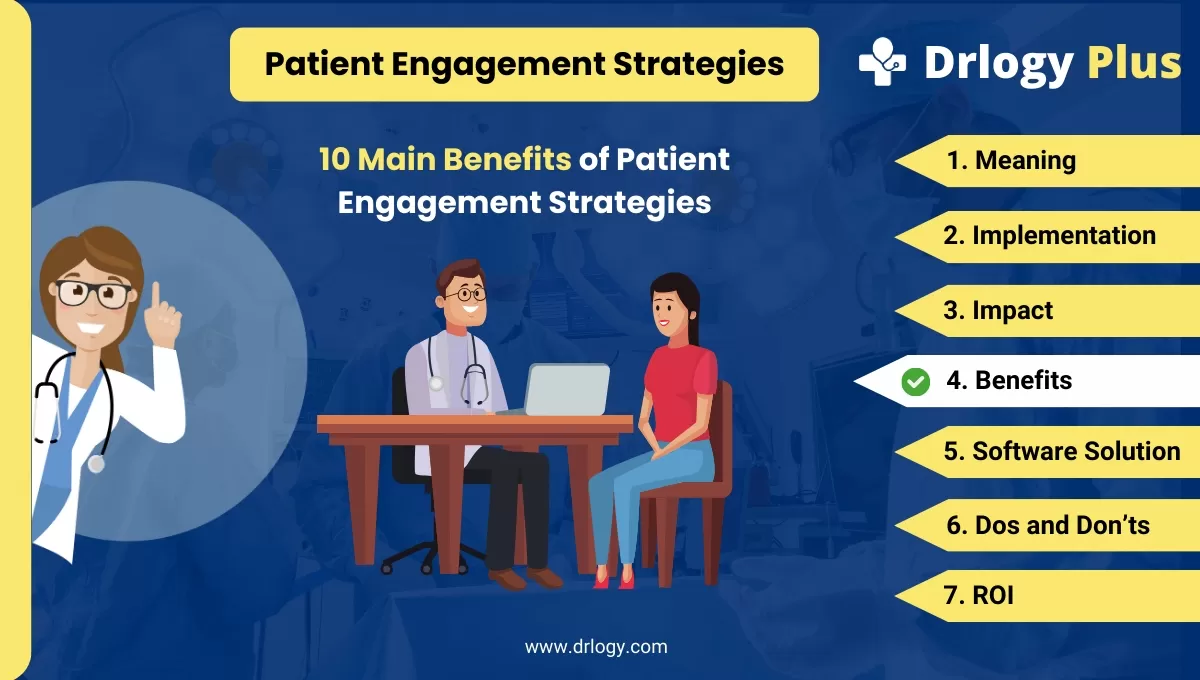
Here are 10 Benefits of Patient Engagement Strategies.
1. Improved Health Outcomes
- Better adherence to treatment plans.
- Enhanced management of chronic conditions.
- Timely detection of health issues.
- Effective preventive measures.
- Reduced hospital readmissions.
Patient engagement strategies lead to improved health outcomes by promoting better adherence, early intervention, and preventive care.
2. Enhanced Patient Satisfaction
- Higher patient satisfaction and trust.
- Positive healthcare experiences.
- Increased involvement in care decisions.
- Personalized care plans.
- Improved patient-provider relationships.
Patient engagement strategies result in higher patient satisfaction, trust, and a more positive patient-provider relationship.
3. Cost Efficiency
- Reduced healthcare costs.
- Lower medication-related expenses.
- Fewer unnecessary tests and treatments.
- More efficient healthcare delivery.
- Decreased long-term healthcare expenses.
Patient engagement strategies reduce healthcare costs through informed decision-making and improved efficiency.
4. Empowerment of Patients
- Active participation in healthcare decisions.
- Greater confidence in self-management.
- Improved health literacy.
- Informed choices regarding treatment.
- Enhanced self-efficacy.
Patient engagement strategies empower individuals to take control of their health and make informed decisions.
5. Prevention and Early Intervention
- Increased participation in preventive measures.
- Timely intervention in health issues.
- Effective management of diseases.
- Early detection of preventable conditions.
- Improved overall health and well-being.
Patient engagement strategies promote prevention and early intervention, leading to better health outcomes.
6. Patient-Centered Care
- Care plans focused on patient needs and preferences.
- Active patient involvement in care decisions.
- Enhanced patient satisfaction.
- Better communication between patients and providers.
- Improved understanding of treatment options.
Patient engagement strategies emphasize patient-centered care, leading to personalized care, satisfaction, and effective communication.
7. Medication Adherence
- Improved adherence to prescribed medications.
- Reduced medication errors.
- Enhanced understanding of medication regimens.
- Fewer medication-related health issues.
- Improved overall health and well-being.
Patient engagement strategies result in better medication adherence, reducing medication-related problems and improving health.
8. Effective Chronic Disease Management
- Active patient participation in chronic disease management.
- Better symptom management.
- Enhanced communication with healthcare providers.
- Slower progression of chronic diseases.
- Improved quality of life.
Patient engagement strategies optimize chronic disease management, leading to improved health and well-being.
9. Improved Communication
- Open and transparent communication.
- Patients feel comfortable discussing their concerns.
- Better understanding of healthcare information.
- Enhanced trust in patient-provider relationships.
- Improved patient compliance.
Patient engagement strategies enhance communication, fostering trust, understanding, and compliance.
10. Healthcare Equity
- Reduction in health disparities.
- Equal access to healthcare information and resources.
- Improved healthcare outcomes for diverse patient groups.
- Active involvement of underserved populations.
- Enhanced healthcare equity.
Patient engagement strategies contribute to reducing health disparities and promoting healthcare equity by ensuring equal access and participation.
Patient Engagement Strategies
Here are 7 main Patient Engagement Strategies.
| 1. Meaning | 2. Implementation |
| 3. Impact | 4. Benefits |
| 5. Software Solution | 6. Dos and Don’ts |
| 7. ROI |
Summary
Patient engagement strategies offer a multitude of benefits, including improved health outcomes, higher patient satisfaction, cost efficiency, patient empowerment, prevention, patient-centered care, better medication adherence, effective chronic disease management, improved communication, and the promotion of healthcare equity.
Check Drlogy Plus Academy to get all answers related to hospitals, labs, clinics and patient management with all in one solution.