Drlogy
Healthcare organization
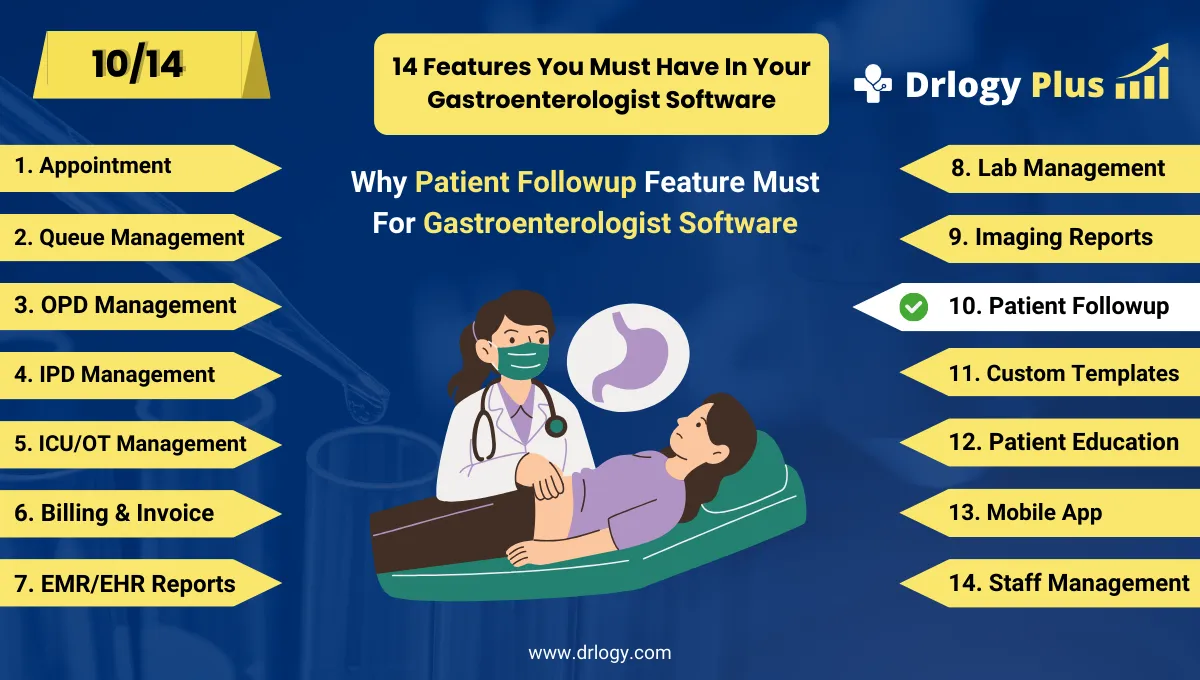
How Follow-Up Feature Improves Gastroenterologist Software
In gastroenterology, patient conditions such as liver cirrhosis, ulcerative colitis, GERD, and pancreatitis require long-term monitoring and treatment adjustments.
Check:
Best Gastroenterologist Software For Oncology Clinics & Hospitals
The Patient Follow-up feature in Gastroenterologist Software helps ensure continuity of care, improved compliance, and better health outcomes through structured tracking, reminders, and documentation.
10 Ways Patient Followup Feature Aids Gastroenterologist Software
Here are 10 Ways Patient Followup Feature Aids Gastroenterologist Software.
1. Ensures Timely Monitoring of Chronic GI Conditions
- Schedules follow-ups for chronic illnesses like IBD, hepatitis, or fatty liver disease.
- Tracks symptom progression and lab/imaging results over time.
- Prevents treatment gaps in long-term conditions.
- Encourages proactive care.
- Reduces risk of complications or readmissions.
Timely follow-ups improve disease control and long-term patient health.
2. Automates Follow-up Reminders
- Sends SMS, email, or app-based reminders to patients before their next visit.
- Reduces no-shows and last-minute cancellations.
- Helps maintain regular review schedules.
- Builds patient discipline in care cycles.
- Frees up staff from manual reminder tasks.
Automated reminders improve attendance and overall clinical flow.
3. Tracks Progress in Treatment Plans
- Compares current status with previous visits, labs, and imaging.
- Helps in assessing response to medications or dietary changes.
- Enables early detection of non-compliance or side effects.
- Supports timely treatment modifications.
- Enhances patient engagement.
Progress tracking ensures personalized care adjustments over time.
4. Supports Structured Documentation of Follow-up Visits
- Provides predefined templates for follow-up notes.
- Captures current complaints, vitals, assessments, and outcomes.
- Links follow-up data with EMR for continuity.
- Reduces documentation errors.
- Improves medical-legal compliance.
Consistent documentation boosts care quality and legal protection.
5. Improves Medication Adherence and Review
- Allows review of past prescriptions and changes over time.
- Tracks refill needs or side effects in chronic GI medication plans.
- Supports tapering or dose adjustments.
- Helps ensure correct medication use.
- Reduces risk of unnecessary escalation.
Medication tracking during follow-ups strengthens treatment safety.
6. Enhances Post-Procedure Monitoring
- Schedules reviews after colonoscopy, endoscopy, ERCP, or surgery.
- Documents healing, complications, or recurrence of symptoms.
- Tracks biopsy results and follow-up tests.
- Reduces post-procedural risks.
- Improves outcomes in GI interventions.
Follow-ups after procedures ensure safe recovery and timely interventions.
7. Coordinates Cross-Department Follow-up Care
- Allows input from dietitians, radiologists, or liver specialists.
- Supports multi-specialty review for complex GI cases.
- Improves communication between providers.
- Centralizes care under one platform.
- Builds a holistic patient journey.
Collaborative follow-ups improve care for multifaceted GI conditions.
8. Boosts Patient Satisfaction and Loyalty
- Patients feel valued through regular follow-up communication.
- Enhances confidence in their care plan.
- Promotes trust and transparency in services.
- Encourages positive reviews and referrals.
- Builds clinic reputation.
Consistent follow-up builds long-term patient trust and engagement.
9. Tracks Outcomes and Quality of Care
- Measures success rates in chronic disease management.
- Identifies improvement or deterioration trends.
- Helps in quality audits and clinical performance review.
- Enables research and publication support.
- Drives better healthcare delivery.
Outcome tracking through follow-ups ensures care standards are met and improved.
10. Drives Clinic Efficiency and Revenue Growth
- Increases patient return rates and continuity of care.
- Improves scheduling accuracy and planning.
- Reduces dependency on new walk-in traffic.
- Boosts operational consistency.
- Generates stable recurring revenue.
Well-managed follow-ups help grow your GI clinic steadily and sustainably.
Drlogy Gastroenterologist Software Features
Here are 14 basic features for Drlogy Gastroenterologist Software.
Summary
Overall, Patient Follow-up feature in Gastroenterologist Software enhances care quality, patient engagement, and clinical efficiency.
Check Drlogy Gastroenterologist Software Features Guide streamline gastroenterology clinic management, improve patient flow for digestiverelated conditions, and enhance overall efficiency in gastroenterology practice.