Drlogy
Healthcare organization
How EMR/EHR Feature Strengthens Gastroenterologist Software
Gastroenterology involves managing chronic and acute digestive system disorders like GERD, IBD, liver cirrhosis, and colorectal cancer, which require continuous tracking, test coordination, and comprehensive documentation.
Check:
Best Gastroenterologist Software For Oncology Clinics & Hospitals
An integrated EMR/EHR (Electronic Medical Record / Electronic Health Record) system in Gastroenterologist Software streamlines clinical workflows, improves diagnostic precision, and enhances long-term patient care outcomes.
10 Ways EMR/EHR Boosts Gastroenterologist Software
Here are 10 Ways EMR/EHR Boosts Gastroenterologist Software.
1. Centralizes Complete Patient History
- Stores patient demographics, history of GI disorders, allergies, surgeries, and medications.
- Tracks previous colonoscopy, endoscopy, or biopsy findings.
- Consolidates reports from labs, imaging, and pathology.
- Ensures no data is missed during follow-up or consultation.
- Improves continuity of care.
Centralized records allow gastroenterologists to make informed, personalized decisions.
2. Improves Accuracy in GI Diagnoses
- Templates and structured fields minimize documentation errors.
- Ensures accurate recordkeeping of symptoms, examination, and test results.
- Helpsentify trends in recurring conditions like IBS, IBD, or hepatitis.
- Supports consistent and standardized diagnosis entries.
- Enhances diagnostic confidence.
Accurate EMR data leads to more precise diagnosis and treatment planning.
3. Speeds Up Clinical Documentation
- Enables quick note-taking using pre-set templates for GI issues.
- Auto-fills common fields for returning patients.
- Reduces paperwork and consultation time.
- Allows doctors to focus more on patient interaction.
- Boosts efficiency during busy OPD hours.
Faster documentation improves patient experience and doctor productivity.
4. Tracks Chronic Digestive Conditions Effectively
- Graphs progress of liver function, inflammation markers, weight, or GI bleeding episodes.
- Schedules and tracks regular screenings (colonoscopy, endoscopy, LFTs).
- Maintains symptom diaries and flare-up logs.
- Improves disease management for IBD, GERD, or cirrhosis.
- Enhances long-term outcomes.
EMR simplifies chronic disease tracking with real-time data visualization.
5. Supports Seamless Clinical Collaboration
- Enables gastroenterologists to share data with surgeons, radiologists, or dietitians.
- Allows multi-specialty input for complex GI cases.
- Enhances team-based care during emergencies or cancer treatments.
- Reduces dependency on physical files or verbal handoffs.
- Improves interdepartmental communication.
Collaborative access leads to integrated care and better patient safety.
6. Integrates with Imaging and Procedure Reports
- Links USG, CT, MRI, and endoscopy findingsectly with patient profiles.
- Stores video or image captures from procedures.
- Provides immediate access to past investigations.
- Reduces duplication of tests and speeds up review.
- Enables better diagnostic correlations.
Integrated imaging within EMR enables faster, more reliable clinical decisions.
7. Enhances Prescription and Lab Order Accuracy
- Pulls medical history to avoid drug interactions or test duplication.
- Auto-generates prescriptions and lab requests from diagnosis templates.
- Reduces handwriting errors and improves compliance.
- Makes follow-up testing structured and standardized.
- Links reports back to diagnosis and care plan.
EMR ensures safe prescribing and organized test management.
8. Enables Secure Remote Access
- Doctors can view and update patient records securely from any device.
- Supports teleconsultations and second opinions for remote patients.
- Reduces dependence on physical charts.
- Improves care delivery during travel or emergencies.
- Enhances convenience and flexibility.
Remote access to EMRs ensures uninterrupted care wherever needed.
9. Improves Regulatory Compliance and Medico-Legal Protection
- Time-stamped notes and digital signatures ensure accountability.
- Tracks consent forms, procedure approvals, and progress notes.
- Creates a defensible legal record in case of audits or disputes.
- Maintains compliance with healthcare data regulations.
- Reduces legal risk for practitioners.
Secure EMR records protect both doctors and patients legally.
10. Provides Data for Clinical and Business Insights
- Tracks patient trends, treatment outcomes, and revenue metrics.
- Helpsentify top procedures or common diagnoses.
- Assists in clinical research or audit reporting.
- Drives improvements in workflow, quality, and service delivery.
- Supports business expansion strategies.
EMR data analytics enable evidence-based improvements in GI care.
Drlogy Gastroenterologist Software Features
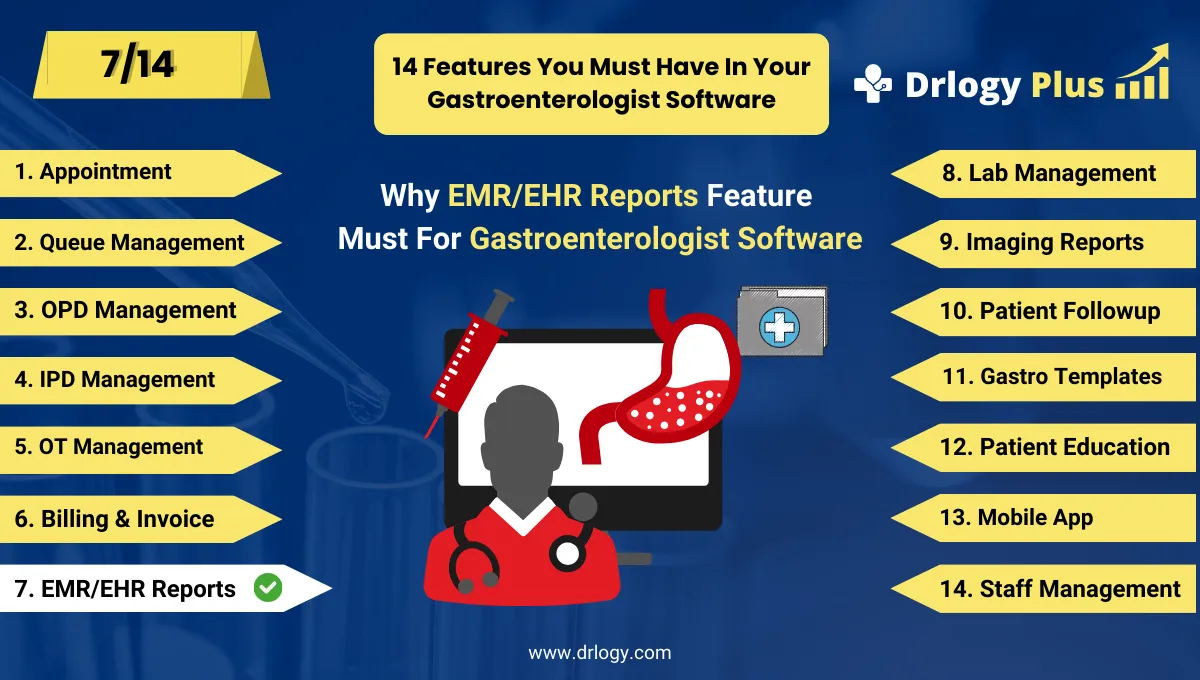
Here are 14 basic features for Drlogy Gastroenterologist Software.
Summary
Overall, EMR/EHR feature in Gastroenterologist Software plays a central in unifying patient records, improving chronic disease monitoring, enabling remote care, and enhancing diagnostic and treatment accuracy.
Check Drlogy Gastroenterologist Software Features Guide streamline gastroenterology clinic management, improve patient flow for digestiverelated conditions, and enhance overall efficiency in gastroenterology practice.