Drlogy
Healthcare organization
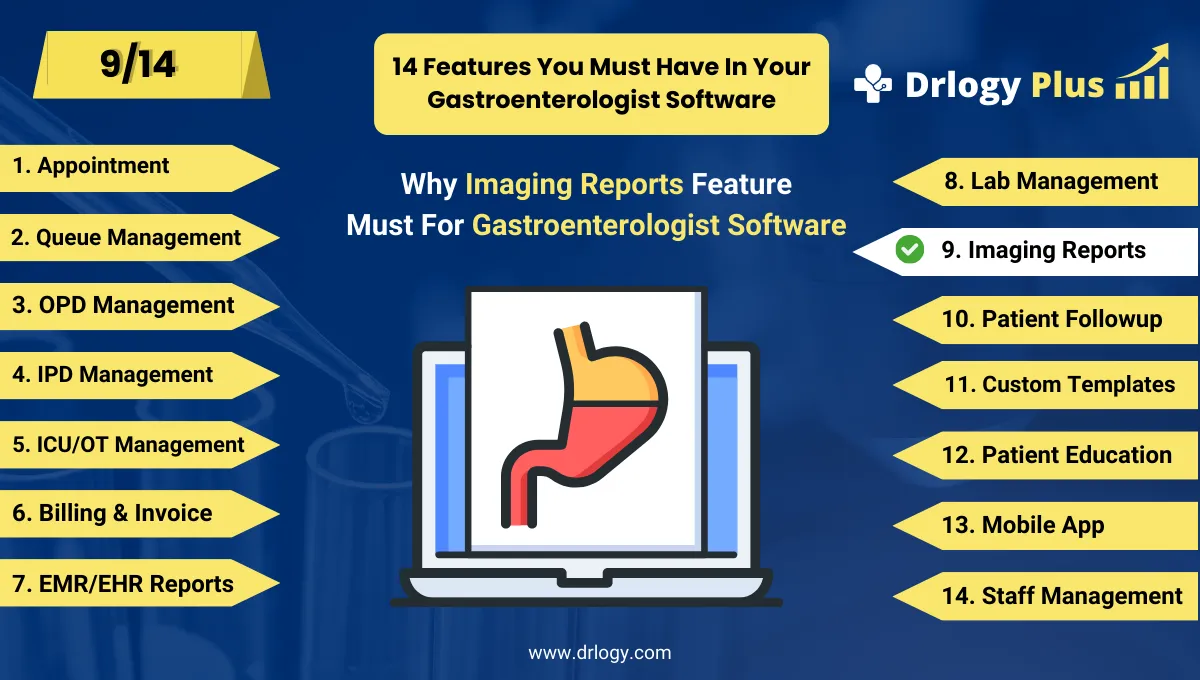
How Imaging Reports Feature Empowers Gastroenterologist Software
Gastroenterology relies heavily on diagnostic imaging like ultrasound (USG), CT scans, MRIs, and endoscopic visuals to detect and manage conditions such as liver disease, gallstones, tumors, and inflammatory bowel disease.
Check:
Best Gastroenterologist Software For Oncology Clinics & Hospitals
Integrating imaging reports within gastroenterologist software ensures faster diagnosis, better treatment planning, and smoother workflows.
10 Ways Imaging Reports Feature Boosts Gastroenterologist Software
Here are 10 Ways Imaging Reports Feature Boosts Gastroenterologist Software.
1. Centralizes All Imaging Results
- Stores ultrasound (USG), CT, MRI, and endoscopy reports in one digital platform.
- Automatically links imaging findings with individual patient profiles.
- Makes historical comparisons easy during follow-ups.
- Eliminates dependency on paper files or external CDs.
- Ensures better record-keeping for long-term GI care.
Centralized imaging records support consistent, informed decision-making.
2. Enables Quick Report Access During Consultations
- Doctors can view imaging results instantly during patient visits.
- No delays in reviewing USG or CT findings for urgent GI issues.
- Allows immediate interpretation and patient explanation.
- Enhances clinical efficiency and trust.
- Speeds up diagnosis-to-treatment flow.
Instant report access improves real-time clinical accuracy and communication.
3. Supports Advanced GI Diagnostics
- Captures findings from liver elastography, MRCP, endoscopic ultrasound, and CT colonography.
- Allows doctors to review specialized imaging for complex diagnoses.
- Integrates annotated images, video loops, or scan snapshots.
- Helps in accurate localization of GI tumors, obstructions, or inflammation.
- Improves clinical precision.
High-quality GI imaging boosts diagnostic confidence and care quality.
4. Improves Follow-Up Monitoring
- Tracks imaging trends in chronic conditions like liver disease, Crohn’s, or pancreatic cysts.
- Enables comparison of size, spread, or resolution across scans.
- Useful for post-surgical or post-procedural evaluations.
- Helps adjust treatment plans based on visual progress.
- Enhances long-term outcome tracking.
Trend-based imaging reviews help tailor chronic GI care effectively.
5. Facilitates Multi-Specialist Collaboration
- Allows gastroenterologists to share imaging with radiologists, surgeons, or oncologists.
- Enables quick second opinions with annotated findings.
- Improves team-based decision-making for complex GI cases.
- Reduces the need for repeat imaging or referrals.
- Enhances clinical coordination.
Collaborative imaging tools support comprehensive, multidisciplinary GI care.
6. Integrates with EMR for Seamless Care
- Imaging reports are automatically linked to consultations, lab results, and prescriptions.
- Helps correlate imaging with clinical and biochemical findings.
- Reduces data fragmentation.
- Offers a 360° view of the patient’s GI condition.
- Simplifies clinical review and audit processes.
EMR integration improves diagnostic depth and continuity of care.
7. Boosts Efficiency in Diagnostic Workflows
- Automates report sharing from imaging departments to doctors.
- Eliminates manual uploading or report handovers.
- Speeds up reporting time and treatment planning.
- Supports streamlined clinic operations.
- Reduces patient wait times.
Efficient workflows lead to faster decisions and higher patient satisfaction.
8. Enhances Patient Communication
- Doctors can show annotated images or videos during consultation.
- Improves patient understanding of their condition.
- Builds trust and engagement through visual education.
- Encourages compliance with recommended procedures.
- Improves overall care experience.
Visual reporting strengthens patient trust and medical clarity.
9. Enables Secure Digital Sharing
- Patients can access and download reports via portals, apps, or email.
- Supports referrals and continuity of care in other centers.
- Reduces the need for physical media or in-person pickups.
- Improves convenience and accessibility.
- Encourages digital-first healthcare experience.
Secure report sharing increases satisfaction and modernizes patient care.
10. Improves Documentation and Medico-Legal Safety
- Time-stamped and signed imaging records are stored permanently.
- Serves as legal documentation in case of disputes or audits.
- Supports insurance claims and surgical planning with verified reports.
- Ensures compliance with medical record regulations.
- Adds professional credibility to care delivery.
Proper imaging documentation strengthens both legal protection and clinical trust.
Drlogy Gastroenterologist Software Features
Here are 14 basic features for Drlogy Gastroenterologist Software.
Summary
Overall, Imaging Reports Feature in Gastroenterologist Software plays a vital in accelerating diagnosis, improving collaboration, enhancing patient communication, and ensuring long-term care continuity.
Check Drlogy Gastroenterologist Software Features Guide streamline gastroenterology clinic management, improve patient flow for digestiverelated conditions, and enhance overall efficiency in gastroenterology practice.