Drlogy
Healthcare organization
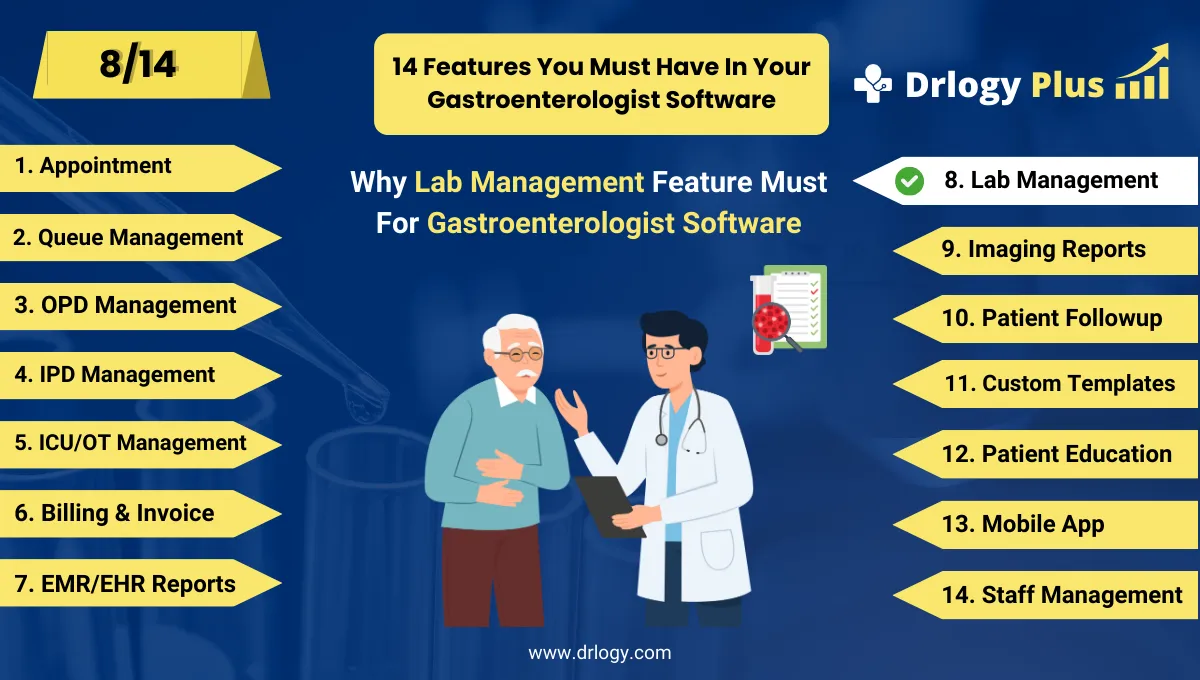
How Lab Management Feature Supports Gastroenterologist Software
Gastroenterology relies heavily on accurate lab diagnostics to assess liver function, digestive disorders, inflammatory conditions, and metabolic imbalances.
Check:
Best Gastroenterologist Software For Oncology Clinics & Hospitals
A built-in Lab Management feature in Gastroenterologist Software ensures timely investigations, streamlined workflows, reduced errors, and better coordination between lab, doctor, and patient.
10 Ways Lab Management Feature Helps Gastroenterologist Software
Here are 10 Ways Lab Management Helps Gastroenterologist Software.
1. Streamlines GI-Specific Test Ordering
- Allows gastroenterologists to order liver function tests (LFT), stool tests, H. pylori, CBC, CRP, and other relevant investigationsectly from the EMR.
- Predefined GI panels (e.g., Hepatitis Profile, IBD Workup) speed up test selection.
- Orders are auto-linked to the patient’s case and consultation.
- Reduces time spent on manual requisitions.
- Ensures no necessary tests are missed.
Smart lab ordering accelerates diagnosis and ensures protocol-based care.
2. Improves Accuracy in Diagnostic Reporting
- Minimizes manual entry errors with digital result uploads.
- Abnormal values are flagged automatically for immediate attention.
- Results are displayed in structured, readable formats.
- Reduces confusion in interpreting critical GI values like ALT, AST, bilirubin, etc.
- Supports clinical confidence.
Accurate lab data enhances diagnostic precision and safety in treatment planning.
3. Enables Faster Report Turnaround
- Integrates with in-house labs or third-party diagnostic systems.
- Auto-notifies doctors and patients when reports are ready.
- Speeds up report generation and sharing.
- Reduces patient waiting time for diagnoses or treatment plans.
- Boosts clinic efficiency.
Quicker reports mean faster decisions and shorter diagnostic delays.
4. Linksectly with Patient EMR
- Lab reports are saved under each patient’s profile automatically.
- Accessible during future consultations for trend comparison.
- Supports long-term tracking in chronic GI conditions.
- Avoids lost or misplaced reports.
- Strengthens continuity of care.
Centralized lab records streamline clinical review and follow-up planning.
5. Supports Chronic Disease Monitoring
- Tracks trends for conditions like liver cirrhosis, hepatitis, or IBD.
- Graphical views of recurring test results over time.
- Alerts for repeat testing based on protocols.
- Improves long-term outcome tracking.
- Helps personalize care.
Lab history tracking improves monitoring for chronic gastrointestinal diseases.
6. Reduces Administrative Workload
- Automates billing, report generation, and patient notifications.
- Eliminates need for separate lab registers or paperwork.
- Frees up staff for higher-value patient tasks.
- Improves operational flow in the clinic or hospital lab.
- Lowers human error risk.
Automation saves time and boosts staff productivity in lab operations.
7. Improves Patient Communication
- Sends lab reports via SMS, email, or patient portal.
- Reduces patient calls or visits just to collect reports.
- Makes it easier for patients to share results during second opinions.
- Improves overall satisfaction and trust.
- Encourages patient engagement.
Convenient digital sharing builds transparency and patient confidence.
8. Enables Package-Based GI Lab Testing
- Creates test bundles like “Liver Health Panel” or “Gastro Routine Screening.”
- Simplifies billing and ordering for common GI complaints.
- Improves consistency in diagnosis and revenue tracking.
- Appeals to patients looking for preventive GI care.
- Adds value to your practice.
Lab packages support preventive care and better service branding.
9. Generates Lab Analytics for Decision-Making
- Tracks most requested tests, turnaround times, and abnormal result rates.
- Helps forecast reagent usage and demand trends.
- Supports internal audits and process improvements.
- Allows revenue tracking from lab services.
- Drives growth strategies.
Lab data insights help clinics optimize quality, inventory, and profitability.
10. Strengthens Gastroenterology Brand as Full-Service Provider
- Offers end-to-end care—consultation, testing, diagnosis, and treatment in one place.
- Reduces patient dependency on outside labs.
- Increases patient trust in your comprehensive GI services.
- Improves patient retention and referral rate.
- Enhances clinic reputation.
An in-house lab system elevates your clinic’s value and competitiveness.
Drlogy Gastroenterologist Software Features
Here are 14 basic features for Drlogy Gastroenterologist Software.
Summary
Overall, The Lab Management feature in Gastroenterologist Software is crucial for timely diagnosis, chronic disease tracking, and seamless coordination between testing and treatment.
Check Drlogy Gastroenterologist Software Features Guide streamline gastroenterology clinic management, improve patient flow for digestiverelated conditions, and enhance overall efficiency in gastroenterology practice.