Drlogy
Healthcare organization
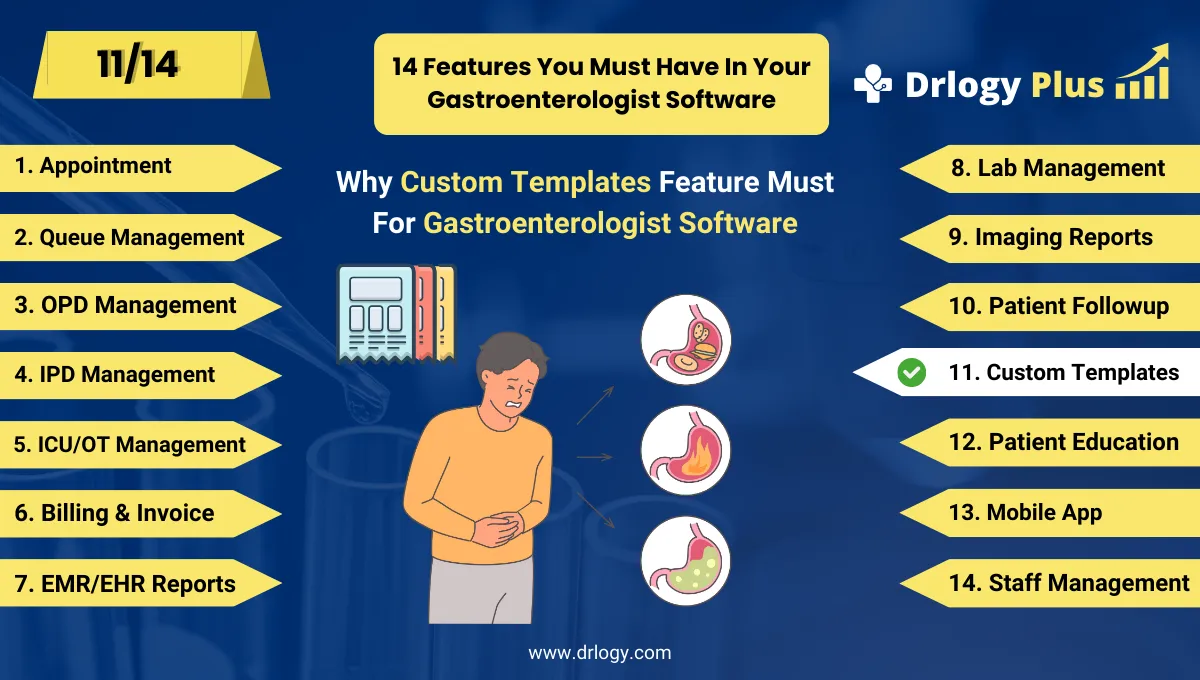
How Gastro Templates Streamline Gastroenterologist Software
Gastroenterology involves a wide range of complex conditions—ranging from liver disease and IBD to GI bleeding, GERD, and chronic abdominal pain.
Check:
Best Gastroenterologist Software For Oncology Clinics & Hospitals
Predefined Gastro Templates in gastroenterologist software simplify documentation, standardize patient care, and reduce time spent on repetitive tasks. These templates are tailored for common GI disorders and procedures, helping doctors deliver faster, more consistent, and accurate care.
10 Ways Gastro Templates Improve Gastroenterologist Software
Here are 10 Ways Gastro Templates Feature Improve Gastroenterologist Software.
1. Standardizes Documentation for Common GI Conditions
- Templates for GERD, IBD, IBS, liver cirrhosis, and peptic ulcers provide structured fields.
- Ensures key details like symptoms, duration, triggers, and past treatments are always captured.
- Promotes consistency across all patient records.
- Makes case reviews and audits easier.
- Enhances clinical quality.
Standard templates ensure nothing is missed during documentation.
2. Speeds Up Clinical Note-Taking
- Doctors can document history, findings, and assessment in just a few clicks.
- Saves time during busy OPD or hospital rounds.
- Reduces typing and manual entry.
- Improves patient flow in high-volume settings.
- Boosts doctor productivity.
Faster documentation gives doctors more time for patient interaction.
3. Improves Diagnostic Accuracy
- Structured templates guide logical questioning and clinical reasoning.
- Encourages step-by-step assessment of symptoms like abdominal pain, bloating, or bleeding.
- Reduces omissions in history-taking.
- Helps in correlating symptoms with lab or imaging findings.
- Supports early, accurate diagnosis.
Template-guided assessments reduce diagnostic errors.
4. Simplifies Procedure Documentation
- Includes ready-to-use templates for endoscopy, colonoscopy, ERCP, and sigmoidoscopy.
- Records findings, impressions, complications, and follow-up advice.
- Ensures medico-legal documentation is complete.
- Saves time for both doctors and support staff.
- Improves procedure quality tracking.
Procedure templates ensure complete and compliant documentation every time.
5. Supports Evidence-Based Care
- Templates include suggested tests, medications, and follow-up intervals based on best practices.
- Encourages adherence to standard treatment protocols.
- Promotes consistent and high-quality care across the practice.
- Reduces variation in treatment approaches.
- Enhances patient safety.
Embedded clinical logic guides better, evidence-based decision-making.
6. Enhances Chronic Disease Monitoring
- Templates track disease progression in conditions like IBD, fatty liver, or chronic pancreatitis.
- Supports comparisons over time using structured formats.
- Makes it easier toentify improvement or deterioration.
- Helps in adjusting long-term treatment plans.
- Strengthens follow-up care.
Structured templates support long-term GI disease management.
7. Improves Patient Communication and Understanding
Clear documentation helps explain diagnoses and next steps to patients.
Summaries can be shared via email, app, or printout.
Boosts transparency and trust.
Encourages treatment compliance.
Reduces patient confusion.
Well-organized templates improve communication and patient satisfaction.
8. Facilitates Multi-Specialty Collaboration
- Makes it easy for radiologists, dietitians, or surgeons to understand the GI assessment.
- Standard notes improve handoffs and referrals.
- Enhances teamwork in complex GI or hepatic cases.
- Reduces duplicate assessments.
- Ensures continuity of care.
Templates support smooth collaboration with other healthcare providers.
9. Helps in Training and Junior Staff Standardization
- Junior doctors, residents, or assistants can use templates to maintain clinical accuracy.
- Reduces risk of documentation gaps or errors.
- Promotes learning and habit-building in new clinicians.
- Saves senior doctors time on supervision.
- Elevates overall clinical standards.
Templates act as educational tools for consistency across care teams.
10. Improves Audit, Research, and Analytics
- Uniform data points make it easier to extract insights for internal audits.
- Supports quality improvement and clinical benchmarking.
- Enables structured data for GI research and publishing.
- Tracks outcomes across conditions and procedures.
- Strengthens growth.
Structured templates power better reporting, audits, and quality research.
Drlogy Gastroenterologist Software Features
Here are 14 basic features for Drlogy Gastroenterologist Software.
Summary
Overall, Gastro Templates feature in gastroenterologist software transforms routine and complex patient care into a standardized, time-efficient, and accurate process.
Check Drlogy Gastroenterologist Software Features Guide streamline gastroenterology clinic management, improve patient flow for digestiverelated conditions, and enhance overall efficiency in gastroenterology practice.