Drlogy
Healthcare organization
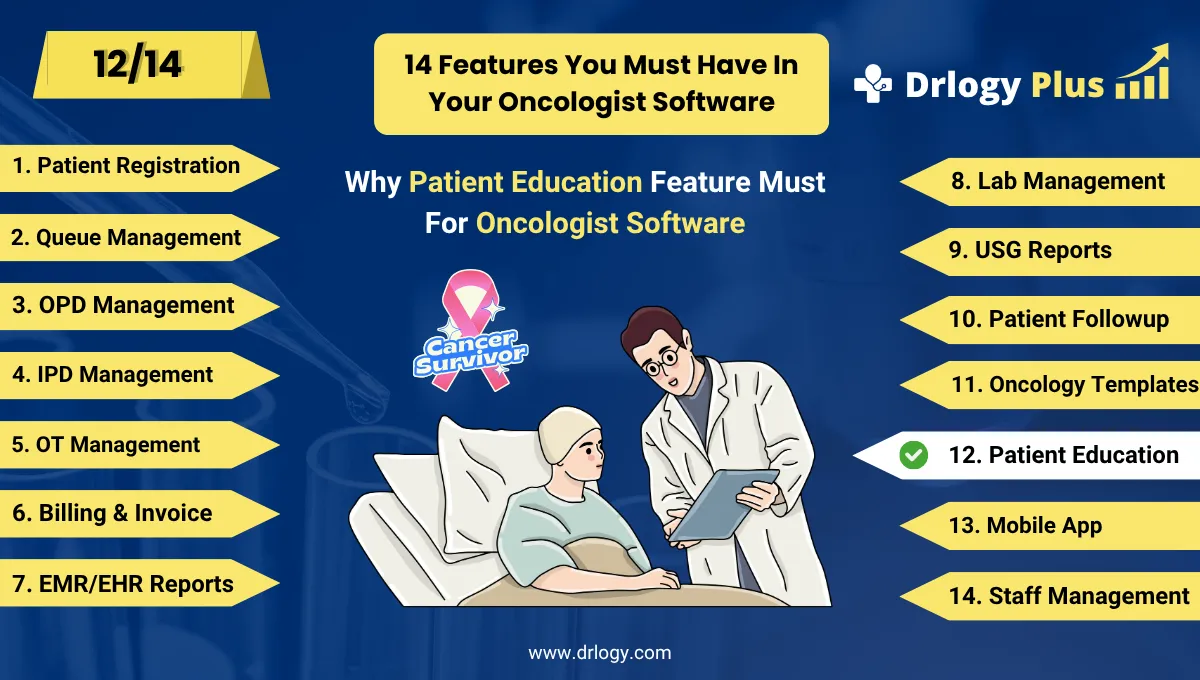
How Patient Education Feature Empowers Oncologist Software
In oncology, patient understanding plays a critical in treatment success. The complexity of cancer therapies, emotional stress, and long treatment durations make clear communication and education essential.
Check:
A built-in Patient Education feature in Oncologist Software empowers patients with knowledge, builds trust, and supports better clinical outcomes.
10 Ways Patient Education Feature Helps Oncologist Software
Here are 10 Ways Patient Education Feature Helps Oncologist Software.
1. Improves Treatment Understanding
- Provides clear, structured information on diagnosis, cancer stage, and treatment options.
- Explains chemotherapy, radiation, surgery, and their expected outcomes.
- Reduces confusion and myths about cancer.
- Helps patients and caregivers make informed decisions.
- Builds trust between doctor and patient.
Informed patients are more confident and cooperative throughout treatment.
2. Boosts Compliance and Adherence
- Offers step-by-step guidance on medication schedules, dietary needs, and precautions.
- Reinforces verbal instructions with written or visual content.
- Reduces missed appointments and medication errors.
- Encourages completion of long treatment cycles.
- Enhances clinical success rates.
Educated patients are more likely to follow their care plan diligently.
3. Prepares Patients for Side Effects
- Lists common and serious side effects of chemotherapy, immunotherapy, or radiation.
- Provides guidance on how to manage or report them.
- Reduces panic during treatment reactions.
- Promotes early intervention for complications.
- Helps patients feel more in control of their journey.
Awareness of side effects reduces fear and promotes timely care-seeking.
4. Engages Caregivers and Family Members
- Shares educational content with family or primary caregivers.
- Helps them understand their in emotional, nutritional, and medication support.
- Reduces miscommunication and anxiety within the family.
- Encourages a team approach to healing.
- Improves support system around the patient.
Informed caregivers are crucial for better at-home care and emotional support.
5. Reduces Patient Anxiety and Emotional Stress
- Helps demystify the disease and its treatment.
- Provides reassurance through success stories or recovery tips.
- Combats misinformation or internet-based fears.
- Encourages open communication with doctors.
- Enhances emotional resilience.
Knowledge is power—and comfort—for patients fighting cancer.
6. Personalizes Education Based on Cancer Type
- Offers specific content for breast, colon, lung, prostate, blood cancers, and more.
- Tailors advice based on the patient’s age, gender, stage, and comorbidities.
- Makes content more relevant and easier to apply.
- Supports accurate understanding of prognosis and expected outcomes.
- Improves personalization of care.
Targeted education improves relevance and patient engagement.
7. Supports Shared Decision-Making
- Provides options with pros, cons, and expected outcomes in understandable formats.
- Encourages patients to ask questions and express preferences.
- Promotes ethical and transparent decision-making.
- Strengthens doctor-patient collaboration.
- Improves satisfaction with chosen treatments.
Educated patients are active participants in their care, not passive recipients.
8. Improves Post-Treatment Self-Care
- Provides instructions for recovery after surgery, chemo, or radiation.
- Educates on signs of recurrence or complications.
- Encourages healthy habits like diet, exercise, and mental wellness.
- Supports better survivorship care.
- Reduces unnecessary hospital visits.
Education extends healing beyond hospital walls.
9. Increases Software Utility and Patient Engagement
- Lets oncologists share PDFs, videos, or interactive contentectly from the software.
- Tracks which materials were shared and whether the patient accessed them.
- Encourages regular interaction through apps or portals.
- Keeps patients connected between visits.
- Enhances value and functionality of the oncology software.
The more patients use the platform, the more connected they stay to their care.
10. Supports Accreditation and Quality Compliance
- Ensures documentation that patient education was provided.
- Fulfills guidelines from NABH, JCI, or other quality bodies.
- Enhances clinic reputation for ethical, patient-centered care.
- Contributes to a transparent, audit-ready practice.
- Protects against medico-legal risk from "uninformed consent."
Documented education builds a legally and clinically stronger oncology practice.
Drlogy Oncologist Software Features
Here are 14 basic features for Drlogy Oncologist Software.
Summary
Overall, The Patient Education feature in Oncologist Software is more than a communication tool—it’s a clinical asset.
Check Drlogy Oncologist Software Features Guide streamline oncology clinic management, improve patient flow for cancer related conditions, and enhance overall efficiency in oncology practice for cancer patient.