Drlogy
Healthcare organization
How EMR & EHR Management Strengthens Oncologist Software
Cancer care requires meticulous, long-term documentation of diagnoses, treatments, scans, lab reports, and progress notes.
Check:
The EMR/EHR (Electronic Medical Record/Electronic Health Record) feature in Oncologist Software ensures a centralized, secure, and structured platform to track each cancer patient’s journey over months or years.
10 Ways EMR/EHR Feature Helps Oncologist Software
Here are 10 Ways EMR/EHR Feature Helps Oncologist Software.
1. Centralizes All Cancer Case Records
- Stores full medical history, diagnostics, staging, treatment cycles, and progress.
- Consolidates reports from lab, radiology, surgery, and chemotherapy.
- Maintains lifetime access to patient data across all visits.
- Provides oncologists with a 360° clinical view in seconds.
- Reduces dependency on paper records.
A single digital file for every patient improves continuity and precision.
2. Supports Accurate Cancer Diagnosis and Staging
- Enables structured entry of TNM staging, biopsy results, tumor markers, etc.
- Provides templates for common cancer types (breast, lung, colon, etc.).
- Helps compare diagnostic tests across visits to monitor changes.
- Assists oncologists in early and accurate treatment planning.
- Reduces documentation errors in staging and grading.
Structured diagnosis records strengthen treatment accuracy.
3. Tracks Chemotherapy and Radiation Cycles
- Logs date, drug regimen, dose, cycle number, and side effects.
- Flags lab parameters (e.g., neutrophils, liver function) before each session.
- Helps oncologists adjust doses based on response or toxicity.
- Ensures protocol compliance across all sessions.
- Improves safety and personalization.
EMR tracks every therapy step, ensuring safer cancer treatments.
4. Integrates Lab, Imaging, and Surgical Reports
- Fetches test resultsectly into the patient's EMR.
- Supports viewing of PET, CT, MRI scans and histopathology.
- Links surgical notes, OT findings, and post-op recovery logs.
- Enables quicker clinical decisions based on complete information.
- Reduces need for repeat or missing tests.
One-click access to all clinical data saves time and avoids guesswork.
5. Improves Multi-Disciplinary Collaboration
- Allows multiple specialists (surgical, medical, radiation oncologists) to view/update the file.
- Supports tumor board discussions with updated case histories.
- Facilitates shared care without losing track of progress.
- Helps allied teams (nutrition, palliative care) align with the treatment plan.
- Boosts coordinated decision-making.
Collaborative records improve outcomes in complex cancer care.
6. Enhances Patient Follow-Up and Survivorship Tracking
- Schedules and records regular reviews post-treatment.
- Monitors recurrence, remission, or late effects.
- Provides graphs for tumor markers or weight change over time.
- Sends automated reminders to patients for scans or checkups.
- Enables better long-term survivorship care.
Structured EMR supports life-long monitoring after cancer treatment.
7. Ensures Legal and Regulatory Compliance
- Maintains timestamped visit notes, treatment consents, and discharge summaries.
- Helps meet NABH, JCI, HIPAA, and cancer registry standards.
- Reduces medico-legal risks by maintaining a complete clinical audit trail.
- Supports secure digital signatures and encryption.
- Creates legally defensible documentation.
Digitally stored, compliant records protect your practice and your patients.
8. Improves Patient Experience and Transparency
- Patients receive access to treatment summaries and reports digitally.
- Ensures no loss of prescriptions or reports during referrals.
- Boosts patient understanding through documented care plans.
- Builds trust through organized and transparent recordkeeping.
- Makes referrals or second opinions easier and faster.
Digital records empower patients with knowledge and clarity.
9. Enables Powerful Data Analytics and Reporting
- Tracks outcomes by cancer type, stage, or treatment protocol.
- Generates trends in recurrence, survival, or complications.
- Helps with internal audits and quality improvement.
- Assists in clinical research and publication preparation.
- Supports population-level oncology data reporting.
EMR data helps transform your clinic into a research-ready setup.
10. Boosts Operational Efficiency Across the Oncology Clinic
- Reduces paperwork, file handling, and manual record search.
- Improves speed of documentation for doctors and nurses.
- Minimizes duplication or conflicting treatment decisions.
- Enhances communication between departments.
- Frees up time for more focused patient care.
Digital efficiency through EMR makes cancer care smoother and smarter.
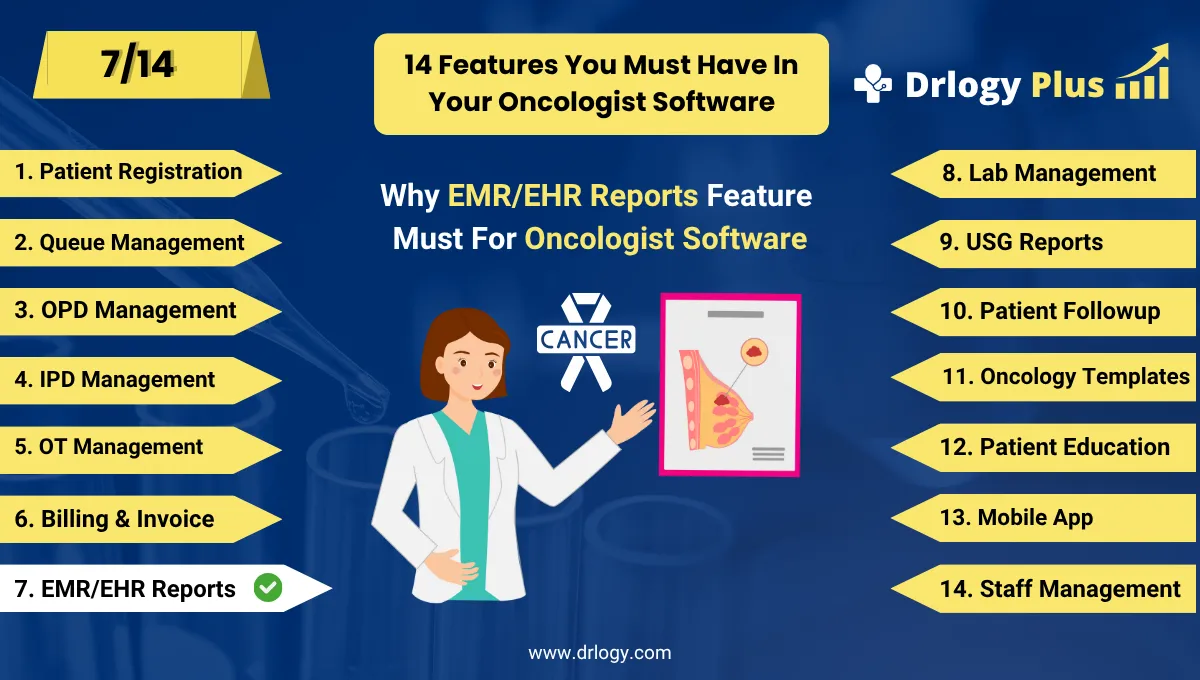
Drlogy Oncologist Software Features
Here are 14 basic features for Drlogy Oncologist Software.
Summary
Overall, The EMR/EHR Feature in Oncologist Software is more than just a digital record—it’s the foundation for accurate, efficient, and coordinated cancer care
Check Drlogy Oncologist Software Features Guide streamline cardiology clinic management, improve patient flow for cancer related conditions, and enhance overall efficiency in oncology practice for cancer patient.