Drlogy
Healthcare organization
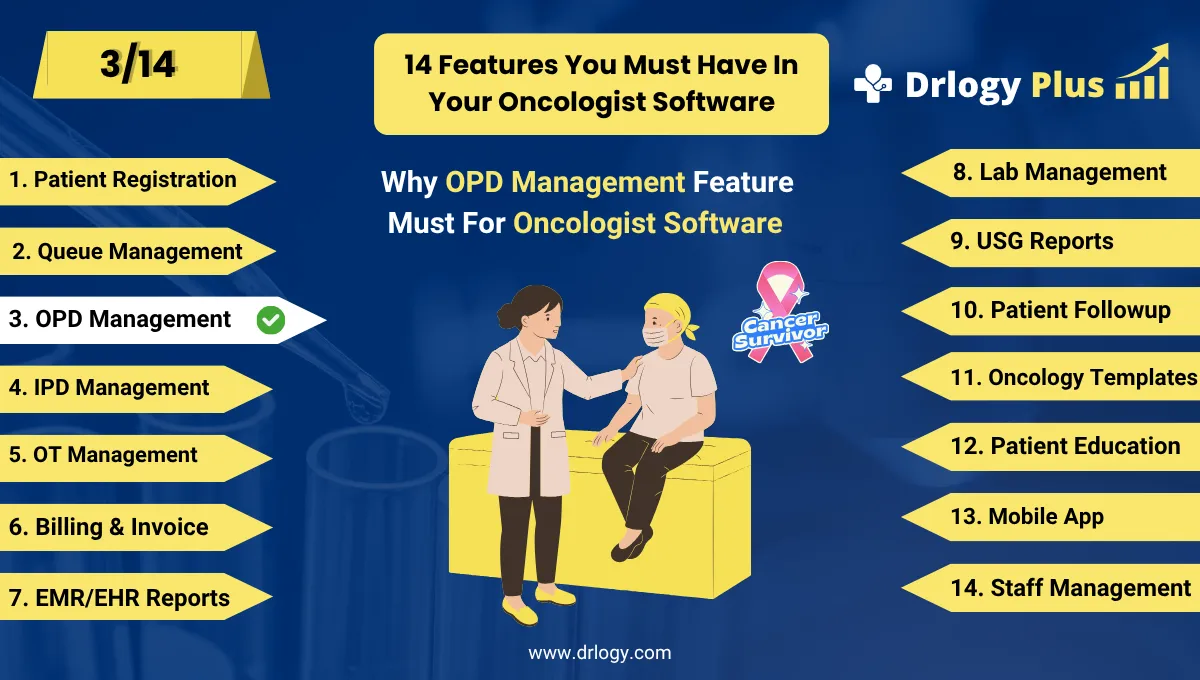
How OPD Management Feature Optimizes Oncologist Software
Oncology outpatient departments (OPDs) are the frontlines of cancer care—handling everything from first-time consultations to ongoing treatment reviews.
Check:
A dedicated OPD feature in Oncologist Software ensures accurate documentation, streamlined workflow, and personalized care delivery across every cancer stage.
10 Ways OPD Feature Enhances Oncologist Software
Here are 10 Ways OPD Feature Enhances Oncologist Software.
1. Streamlines First-Time Patient Evaluation
- Records complete case history, symptoms, diagnosis, and risk factors.
- Supports structured input for cancer type, stage, and site.
- Enables early staging, imaging requests, and biopsy planning.
- Provides a digital foundation for long-term treatment mapping.
- Helps oncologists make informed decisions from the very first visit.
Structured OPD workflows ensure better assessment of new cancer patients.
2. Manages Follow-Up Consultations Smoothly
- Auto-fetches prior case records, reports, and visit notes.
- Allows easy comparison of symptoms, lab values, and response to therapy.
- Schedules review timelines based on treatment cycles (chemo/radio).
- Tracks tumor markers and recurrence alerts.
- Enhances long-term monitoring of cancer progression.
Follow-up support ensures continuity of care in complex oncology cases.
3. Organizes Multi-Specialty Collaboration
- Links OPD workflows with surgical, radiation, or medical oncology departments.
- Coordinates shared care for tumor boards or MDT meetings.
- Enables unified access to patient records for all specialists.
- Reduces duplication in assessments or recommendations.
- Facilitates team-based decision-making for critical cases.
OPD modules foster collaborative treatment for better cancer outcomes.
4. Integrates Seamlessly with Lab & Imaging
- Allows oncologists to order CBC, tumor markers, scans (CT, MRI, PET)ectly from OPD screen.
- Tracks test status and fetches reports into patient EMR automatically.
- Saves time and avoids manual follow-ups on investigations.
- Enables quicker diagnosis and timely treatment planning.
- Improves care turnaround for high-risk patients.
Integrated diagnostics accelerate early detection and intervention.
5. Supports Protocol-Based Treatment Planning
- Provides cancer-specific templates for various malignancies (e.g., breast, lung, colon).
- Documents standard staging, TNMification, ECOG performance status.
- Suggests investigation and treatment protocols as per guidelines.
- Reduces variation and human error in cancer case management.
- Improves evidence-based decision-making.
Protocol-driven OPD tools support accuracy and consistency in care.
6. Simplifies Patient Counseling and Documentation
- Enables structured documentation of treatment risks, benefits, and consent.
- Tracks psychological, nutritional, or financial counseling sessions.
- Stores educational materials shared with patients and families.
- Helps maintain communication records for legal and quality assurance.
- Builds a holistic view of patient support needs.
Effective counseling records improve patient understanding and trust.
7. Enhances Appointment Management
- Syncs OPD visits with oncology consultant schedules.
- Manages new, review, chemotherapy, and emergency appointments.
- Reduces overbooking and patient wait time.
- Sends SMS/WhatsApp reminders for follow-up visits.
- Improves OPD efficiency in high-volume clinics.
Smart appointment flow keeps OPD running smooth and punctual.
8. Supports Chemo/Radiation Session Planning
- OPD notes auto-link with therapy planning modules.
- Tracks cycle-wise progress and side effects.
- Flags pre-chemo labs or imaging required before sessions.
- Ensures timely therapy scheduling and safety checks.
- Prevents treatment delays and compliance issues.
OPD-to-therapy integration bridges the gap between evaluation and action.
9. Improves Billing and Documentation Accuracy
- Captures consultation charges, investigations, and services during the OPD visit.
- Ensures all procedures and documents are properly billed.
- Prevents revenue leakage from missed entries.
- Enables accurate reimbursement and insurance claims.
- Keeps financials transparent for both patients and clinics.
Clean OPD documentation improves revenue and patient clarity.
10. Strengthens Clinic Reputation & Patient Satisfaction
- Organized OPD care creates confidence in cancer patients.
- Reduces errors, confusion, or delays in diagnosis and treatment.
- Supports faster recovery through structured planning.
- Delivers personalized, responsive, and respectful service.
- Increases positive feedback, referrals, and patient retention.
A well-run OPD reflects the quality and integrity of the oncology practice.
Drlogy Oncologist Software Features
Here are 14 basic features for Drlogy Oncologist Software.
Summary
Overall, The OPD Feature in Oncologist Software is essential for managing every stage of cancer care—from diagnosis to recovery.
Check Drlogy Oncologist Software Features Guide streamline cardiology clinic management, improve patient flow for cancer related conditions, and enhance overall efficiency in oncology practice for cancer patient.