Drlogy
Healthcare organization
How Patient Education Empowers Parents via Pediatrician Software
In pediatric care, educating parents is as important as treating the child.
Check:
Best Pediatrician Software For Pediatric Clinics & Hospitals
The Patient Education feature in pediatrician software allows doctors to share reliable, easy-to-understand health information with families—improving compliance, reducing anxiety, and promoting healthy child development both inside and outside the clinic.
10 Way Patient Education Feature Helps Pediatrician Software
Here are 10 Way Patient Education Feature Helps Pediatrician Software.
1. Builds Parent Confidence Through Clear Guidance
- Provides easy explanations about common pediatric conditions (e.g., fever, cold, teething).
- Reduces panic and misinformation from online sources.
- Empowers parents with knowledge to manage minor issues at home.
- Strengthens trust in the pediatrician’s advice.
- Leads to more confident and informed decision-making.
Educated parents feel more in control and connected to their child’s care.
2. Improves Medication Adherence
- Offers written dosage instructions, administration techniques, and side-effect info.
- Clarifies how and when to give medications to infants and children.
- Prevents under- or over-dosing due to confusion.
- Supports safe medicine use at home.
- Reduces follow-up calls for clarification.
Patient education ensures medicines are given correctly, safely, and effectively.
3. Supports Vaccine Awareness and Safety
- Shares vaccine benefits, potential reactions, and post-vaccination care tips.
- Builds parental confidence in immunization programs.
- Prevents missed or delayed doses due to fear or lack of understanding.
- Promotes completion of full vaccine schedules.
- Reduces vaccine hesitancy.
Education about vaccines helps increase coverage and protect public health.
4. Encourages Healthy Child Growth & Nutrition
- Provides dietary tips for each age group (e.g., breastfeeding, weaning, balanced meals).
- Educates on managing picky eating, food allergies, and anemia.
- Helps track healthy weight gain and development.
- Prevents nutrition-related complications.
- Supports long-term well-being.
Nutrition education fosters healthy growth and habits from an early age.
5. Reduces Unnecessary Emergency Visits
- Guides parents on when to monitor vs. when to seek urgent care.
- Offers red-flag symptoms that require attention.
- Prevents panic during mild fevers, rashes, or vomiting.
- Improves triage at home.
- Reduces unnecessary ER visits and costs.
Clear education prevents overreaction and supports wise health decisions.
6. Supports Chronic Disease Management in Children
- Offers resources for asthma, ADHD, diabetes, allergies, etc.
- Helps parents understand daily care routines and emergency plans.
- Increases long-term condition control.
- Reduces complications through proactive care.
- Encourages collaborative care between parent and provider.
Education empowers families managing complex pediatric conditions.
7. Simplifies Post-Treatment and Discharge Instructions
- Provides take-home guides after minor surgeries, illnesses, or injury care.
- Ensures proper wound care, medication timing, and rest routines.
- Minimizes readmissions and complications.
- Improves healing outcomes.
- Creates structured aftercare.
Post-care education improves recovery and reduces confusion at home.
8. Promotes Developmental Awareness
- Educates parents on speech, motor, social, and behavioral milestones.
- Encourages early screening and professional help if needed.
- Supports timely diagnosis of autism, learning disorders, or delays.
- Guides home activities to boost development.
- Enhances early childhood outcomes.
Awareness leads to earlier intervention and better developmental progress.
9. Improves Clinic Efficiency
- Reduces repetitive explanation time for common conditions.
- Offers standardized handouts or digital materials via app/email.
- Frees up doctor time for complex cases.
- Standardizes communication and reduces variation.
- Enhances consistency in clinical care.
Education tools save time and improve doctor-patient communication.
10. Strengthens Patient Loyalty and Satisfaction
- Shows that the clinic cares beyond the consultation.
- Builds long-term trust through guidance and clarity.
- Enhances the parent experience and clinic reputation.
- Encourages repeat visits and referrals.
- Differentiates your clinic from competitors.
Educational support improves satisfaction and turns families into lifelong patients.
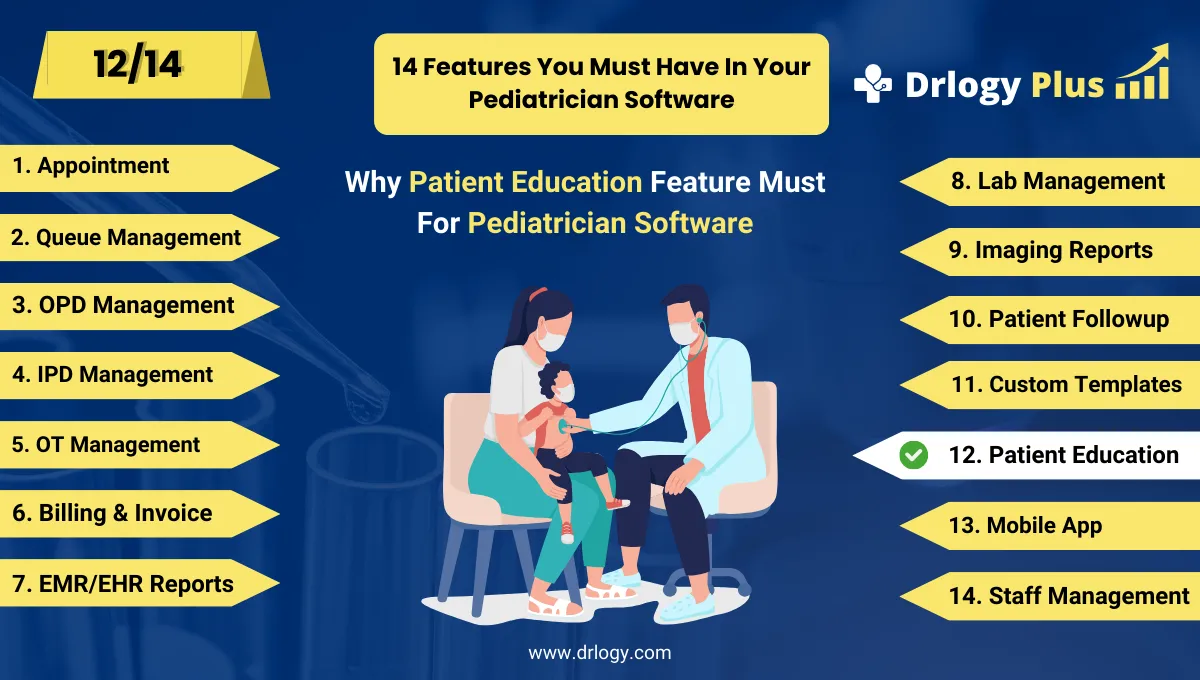
Drlogy Pediatrician Software Features
Here are 14 basic features for Drlogy Pediatrician Software.
Summary
Overall, Patient Education feature in pediatrician software adds immense value by supporting parents with reliable, practical, and age-appropriate health guidance. It enhances safety, encourages better outcomes, and builds a strong, trusted relationship between pediatricians and the families they care for.
Check Drlogy Pediatrician Software Features Guide streamline Pediatric clinic management, improve child care for digestive related conditions, and enhance overall efficiency in Pediatric practice.