Drlogy
Healthcare organization
How EMR/EHR Reports Support Pediatrician Software Accuracy
Pediatricians deal with frequent visits, vaccination tracking, developmental milestones, and chronic conditions across all childhood stages.
Check:
Best Pediatrician Software For Pediatric Clinics & Hospitals
An advanced EMR/EHR (Electronic Medical Records/Electronic Health Records) feature in pediatrician software enables seamless access to patient history, smarter clinical decisions, and safer, personalized care for every child.
10 Ways EMR/EHR Report Improves Pediatrician Software
Here are 10 Ways EMR/EHR Report Improves Pediatrician Software.
1. Centralizes Child Health Records
- Stores complete medical data: allergies, vaccination history, illnesses, growth patterns.
- Accessible from any device or location.
- Reduces dependency on physical files.
- Enables holistic understanding of a child’s health journey.
- Saves time during follow-ups.
A central EMR ensures pediatricians have complete child health data instantly.
2. Tracks Growth and Development Milestones
- Records weight, height, head circumference, and BMI by age.
- Compares data with pediatric growth charts (WHO/CDC standards).
- Flags developmental delays or abnormalities early.
- Supports proactive care planning.
- Encourages better parental involvement.
Automated growth charts enhance pediatric developmental assessments.
3. Improves Vaccination Tracking and Safety
- Auto-updates due, missed, or upcoming vaccines.
- Logs batch numbers, brands, and administration dates.
- Prevents duplicate or incorrect vaccine doses.
- Supports compliance with national immunization schedules.
- Creates vaccine completion certificates for school/travel.
Integrated vaccine records reduce errors and ensure timely immunizations.
4. Streamlines Prescription and Treatment History
- Provides quick access to past prescriptions, dosages, and responses.
- Helps avoid overprescribing antibiotics or repeating ineffective meds.
- Tracks medicine allergies and contraindications.
- Reduces medication errors.
- Supports precise care for recurring illnesses.
Accurate prescription history improves medication safety and decision-making.
5. Supports Chronic Condition Monitoring
- Tracks asthma, pediatric diabetes, allergies, anemia, etc.
- Charts lab values, visit frequency, and medication adjustments.
- Helps monitor long-term progress and flare-ups.
- Enhances coordination with specialists if needed.
- Enables personalized care plans.
EMRs improve continuity and long-term pediatric chronic care.
6. Boosts Clinical Efficiency and Decision-Making
- Doctors access patient details in seconds during busy OPD hours.
- Pre-filled templates for common pediatric conditions reduce note-taking time.
- Allows decisions backed by child history.
- Minimizes repetitive questions to parents.
- Enhances consultation speed and quality.
Faster access to accurate records empowers smarter pediatric care.
7. Enhances Parent Communication and Trust
- Allows pediatricians to show charts, vaccine schedules, and reports during consultations.
- Improves transparency and parental involvement in care.
- Builds trust through clarity and education.
- Parents feel heard and informed.
- Supports better compliance and follow-up.
EMRs help doctors communicate better and earn parent confidence.
8. Improves Emergency Preparedness
- Instant access to allergy data, past surgeries, and health conditions.
- Supports rapid decisions during pediatric emergencies or hospital referrals.
- Helps in school or travel emergencies where parents may not be present.
- Reduces treatment delays.
- Enables faster triage and accurate care.
Complete EMRs are life-saving tools during pediatric emergencies.
9. Generates Reports and Summaries Easily
- Creates visit summaries, referral notes, school fitness certificates, and vaccination charts.
- Prepares discharge or follow-up summaries with one click.
- Customizes reports with clinic branding.
- Reduces paperwork and manual errors.
- Enhances clinic professionalism.
Quick summaries improve documentation and parent communication.
10. Ensures Legal and Compliance-Ready Records
- Time-stamped, traceable medical entries for every visit.
- Supports medico-legal protection for pediatricians.
- Complies with data privacy, audit, and clinic accreditation standards.
- Secures patient data with encrypted storage.
- Facilitates smoother insurance claims.
Well-maintained EMRs protect your practice and ensure legal safety.
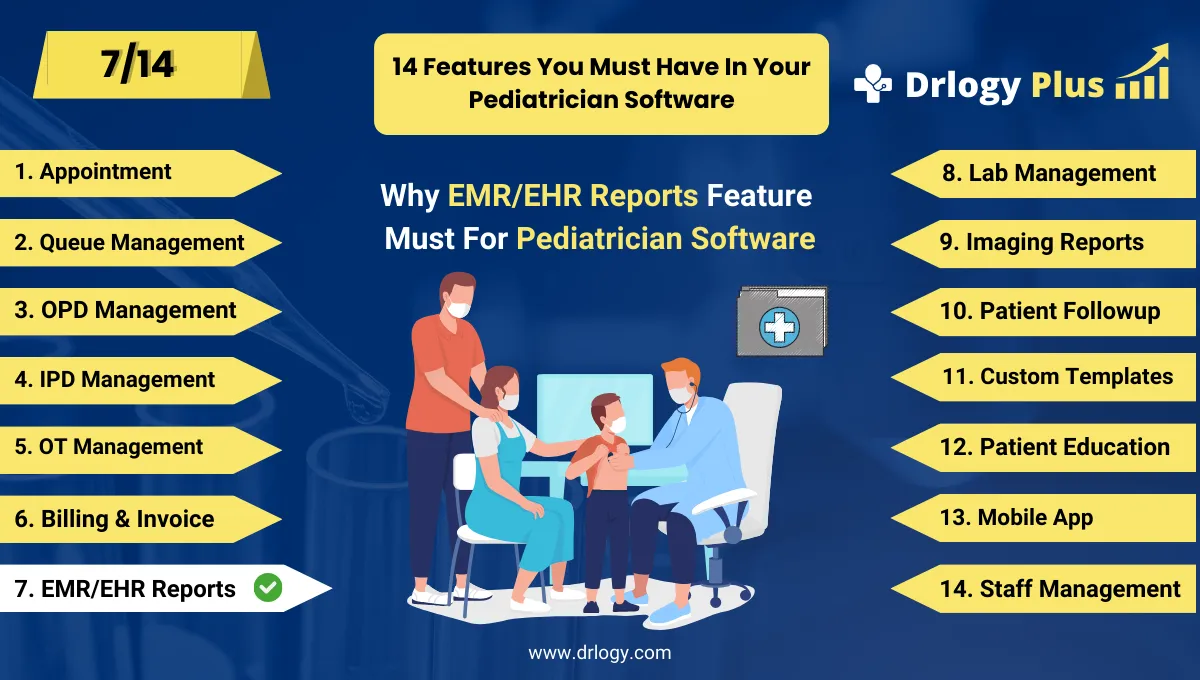
Drlogy Pediatrician Software Features
Here are 14 basic features for Drlogy Pediatrician Software.
Summary
Overall, EMR/EHR feature in pediatrician software plays a central in delivering organized,, and child-centered care. It ensures every health detail—from vaccinations to growth milestones—is recorded, retrievable, and usable for timely, safe, and efficient pediatric treatment.
Check Drlogy Pediatrician Software Features Guide streamline Pediatric clinic management, improve child care for digestive related conditions, and enhance overall efficiency in Pediatric practice.