Drlogy
Healthcare organization
How OT Management Simplifies Pediatric Surgical Procedures
In pediatric clinics and hospitals, surgeries such as hernia repairs, tonsillectomies, appendectomies, or emergency procedures are often necessary for children.
Check:
Best Pediatrician Software For Pediatric Clinics & Hospitals
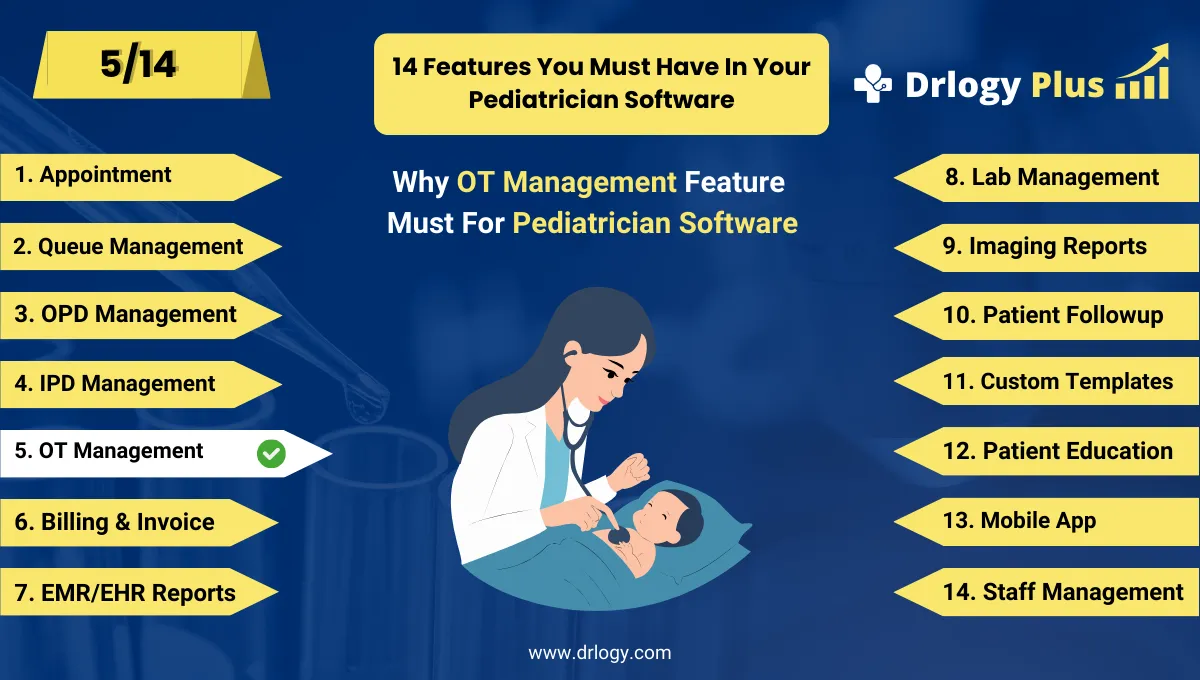
The OT (Operation Theater) Management feature in pediatrician software streamlines surgical workflows, improves safety, ensures coordination across teams, and enhances post-operative care—all tailored to pediatric needs.
10 Ways OT Management Feature Aids Pediatrician Software
Here are 10 Ways OT Management Feature Aids Pediatrician Software.
1. Simplifies Pediatric Surgery Scheduling
- Enables advance booking and real-time updates of pediatric OT slots.
- Manages scheduling conflicts between multiple pediatricians or surgeons.
- Coordinates with anesthetists and OT support staff.
- Reduces delays and last-minute rescheduling.
- Optimizes OT utilization.
Smooth scheduling helps pediatric surgical care stay timely and organized.
2. Supports Pre-Operative Planning
- Captures detailed pre-op evaluations including vitals, allergies, anesthesia risk, and consent forms.
- Links lab and imaging reports for surgical readiness.
- Flags incomplete or pending requirements before surgery.
- Reduces pre-op errors and cancellations.
- Builds safety into the workflow.
Well-documented pre-op planning ensures every child is ready for safe surgery.
3. Enhances Anesthesia and Surgical Record-Keeping
- Tracks anesthesia details including type, dosage, duration, and complications.
- Logs surgical steps, time stamps, and intraoperative notes.
- Links surgeon, pediatrician, and anesthetist documentation.
- Ensures medico-legal compliance.
- Helps with future case reviews or audits.
Accurate surgical documentation improves care quality and accountability.
4. Improves OT Staff Coordination
- Assigns tasks to OT nurses, assistants, and equipment techs.
- Ensures everyone knows their responsibilities per surgery.
- Reduces confusion or delays during critical procedures.
- Enables real-time updates across the care team.
- Improves intraoperative efficiency.
Clear team coordination supports safe and successful pediatric surgeries.
5. Integrates Seamlessly with IPD and EMR Modules
- Connects surgery records with patient’s inpatient and medical history.
- Auto-updates post-op status in EMR and IPD timelines.
- Reduces duplicate data entry.
- Improves holistic care tracking.
- Supports better discharge planning.
OT integration ensures every surgery is part of a complete pediatric care story.
6. Enhances Infection Control and Sterilization Tracking
- Logs OT cleaning cycles and sterilization status.
- Ensures compliance with pediatric infection control protocols.
- Tracks equipment maintenance and surgical kit usage.
- Reduces hospital-acquired infection risks.
- Strengthens safety in vulnerable age groups.
Meticulous OT hygiene tracking protects young patients from complications.
7. Streamlines Post-Operative Monitoring
- Creates alerts and charts for post-surgery vitals and symptoms.
- Enables pediatricians and nurses to monitor recovery milestones.
- Links pain management, antibiotics, and diet plans.
- Ensures quickentification of post-op complications.
- Supports seamless handover to ward care.
Post-op tracking in OT workflows ensures smooth recovery phases.
8. Generates Surgery-Specific Billing
- Auto-calculates charges for OT usage, surgeon fees, anesthesia, and consumables.
- Links with patient’s IPD and overall bill.
- Reduces billing discrepancies.
- Supports insurance claims and package billing.
- Enhances financial transparency for families.
Surgical billing clarity builds trust and reduces administrative stress.
9. Supports Pediatric Surgical Outcomes Analysis
- Tracks types, outcomes, and success rates of pediatric surgeries.
- Helps assess complication trends and improvement areas.
- Generates analytics for quality improvement programs.
- Supports hospital accreditation and audits.
- Enables evidence-based decision-making.
Data-driven surgical reporting helps improve clinical care and standards.
10. Boosts Parental Trust and Satisfaction
- Transparent surgical scheduling, real-time updates, and smooth discharge impress parents.
- Reassures families with detailed documentation and structured follow-ups.
- Reflects clinic/hospital professionalism and modern standards.
- Encourages repeat visits and positive reviews.
- Builds a strong pediatric brand reputation.
Organized OT care earns long-term trust from concerned parents.
Drlogy Pediatrician Software Features
Here are 14 basic features for Drlogy Pediatrician Software.
Summary
Overall, OT Management feature in pediatrician software plays a critical in delivering safe, efficient, and well-documented surgical care for children. From pre-op prep to post-op recovery, it ensures accuracy, coordination, and peace of mind for pediatricians and parents alike.
Check Drlogy Pediatrician Software Features Guide streamline Pediatric clinic management, improve child care for digestive related conditions, and enhance overall efficiency in Pediatric practice.