Drlogy
Healthcare organization
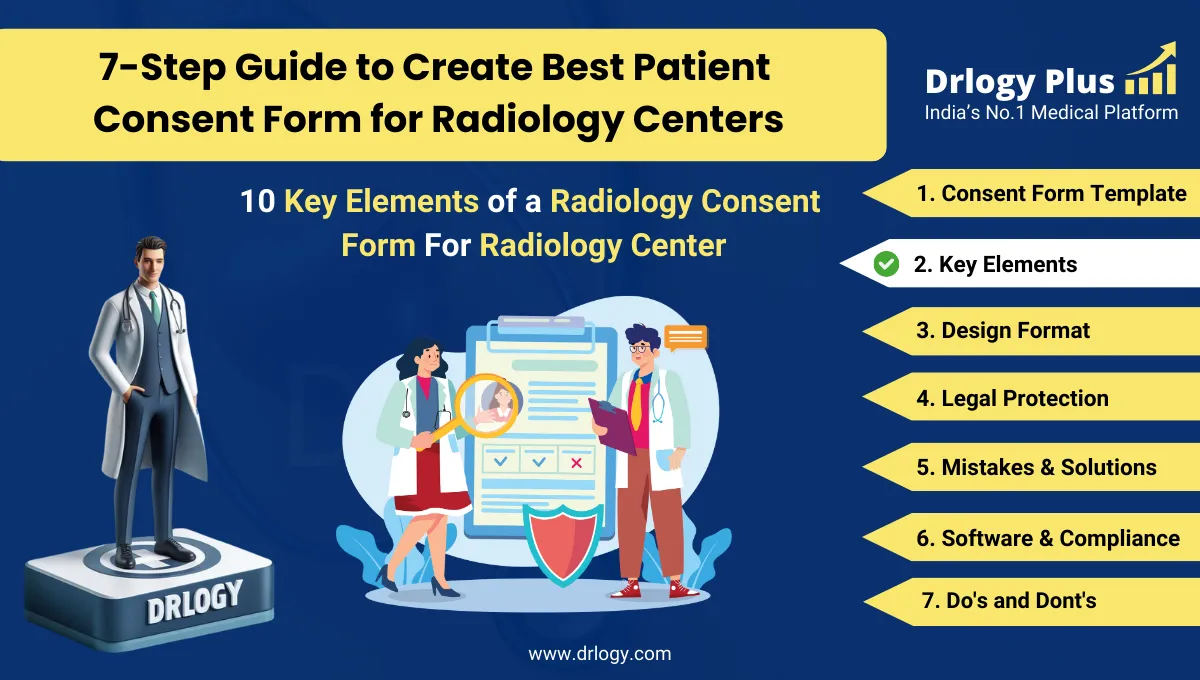
10 Key Elements Types of a Radiology Consent Form For Patients
A well-structured radiology consent form is essential to protect patient rights while ensuring legal and procedural clarity.
Check:
Including key elements helps enhance understanding, build trust, and support informed decision-making.
10 Key Elements Types of a Radiology Consent Form For Patients
Here are 10 Key Elements Types of a Radiology Consent Form For Patients.
1. Patiententification Details
- Includes full name, date of birth, gender, and patient.
- Ensures the consent form is accurately matched to the patient.
- Reduces the risk of misidentification or diagnostic errors.
- Acts as a legal record of who the form pertains to.
- Links consent to patient’s hospital or clinic file.
Accurate patient details are the first step in safe diagnostics.
2. Procedure Description
- Provides a clear name and description of the radiology test.
- Outlines steps involved during the procedure.
- Explains why the procedure is being recommended.
- Clarifies how long the procedure may take.
- Describes what the patient might experience during the scan.
Clear explanations help patients make informed choices.
3. Risks and Complications
- Mentions common side effects or potential complications.
- Describes contrast-related reactions, if any.
- Addresses risks specific to the imaging type (e.g. MRI, CT).
- Includes disclaimer for rare but serious issues.
- Protects both patient and provider by setting expectations.
Transparency about risks builds patient trust.
4. Benefits of the Procedure
- Explains the diagnostic importance of the test.
- Describes how it will assist in treatment planning.
- Highlights accuracy and speed of radiological imaging.
- Reinforces how results contribute to better outcomes.
- Gives confidence to patients about the purpose of testing.
Patients value understanding how a scan helps their care.
5. Alternatives Available
- Lists any alternate imaging procedures (e.g. ultrasound instead of CT).
- Mentions non-imaging or observational alternatives, if applicable.
- Provides pros and cons of each alternative.
- Informs patients of their right to choose among options.
- Supports ethical and informed patient-centered care.
Offering alternatives empowers patients in their treatment.
6. Confidentiality & Data Use
- Assures that patient data will be protected and not misused.
- Clarifies where and how medical images will be stored.
- States who can access reports or view the scans.
- Includes information about third-party sharing if applicable.
- Fulfills HIPAA or local regulatory compliance.
Confidentiality clauses build legal and ethical credibility.
7. Consent for Contrast Agents
- Mentions the type of contrast agent to be used (e.g. iodine, gadolinium).
- States the purpose of using the agent in the procedure.
- Lists potential side effects or allergic reactions.
- Requests allergy history or previous contrast reaction details.
- May require separate consent if contrast is high-risk.
Contrast consent ensures safety during enhanced imaging.
8. Emergency Consent Clause
- Gives healthcare providers permission to act in emergencies.
- Often applies to sedated or interventional radiology cases.
- Details the scope of action allowed during complications.
- Offers legal protection for the radiology team.
- Explains patient care protocols during unexpected events.
Preparation for emergencies is a sign of responsible care.
9. Signature and Date Section
- Includes fields for patient, guardian, witness, and radiologist signatures.
- Captures the date and time of consent clearly.
- Allows for digital or manual signatures based on setup.
- Confirms that all terms were explained and understood.
- Ensures the form holds legal validity in court if needed.
Without a signature, the consent is incomplete and invalid.
10. Right to Refuse or Withdraw
- Informs patients they may say no to the procedure at any time.
- Describes the process to revoke consent.
- Ensures patients are not coerced into medical decisions.
- Empowers autonomy and promotes ethical practices.
- Protects the rights and dignity of every patient.
Patients must feel empowered to accept or decline care.
Drlogy Radiology Consent Form Guide
Here are 7 steps guide for Drlogy Radiology Consent Form Guide.
| 1. Radiology Consent Form Templates |
| 2. Types of Consent Forms |
| 3. Consent Form Design Format |
| 4. Consent Form Legality |
| 5. Consent Form Mistakes |
| 6. Consent Form Compliance |
| 7. Consent Form Do's & Don'ts |
Summary
Overall, These 10 key elements ensure radiology consent forms are safe, compliant, and patient-focused.
Check Drlogy Radiology Consent Form Guide to providing a comprehensive overview of essential consent forms, ensuring your Radiology remains compliant, transparent, and patient-friendly.