Drlogy
Healthcare organization
10 Radiology Consent Form Mistakes & How to Prevent Them
Radiology consent forms are critical for both patient safety and legal protection.
Check:
However, even small oversights can lead to serious consequences, including patient mistrust, procedural delays, or legal liabilities.
Top 10 Consent Form Templates for Radiology Centers
Here are Top 10 Consent Form Templates for Radiology Centers
1. Using Generic Forms for All Procedures
- Fails to capture procedure-specific risks.
- Leads to vague or incomplete information.
- Creates confusion for both staff and patients.
- Reduces legal strength of the document.
- Prevention: Use tailored consent forms per procedure type.
Specific forms = specific protection for each procedure.
2. Lack of Patient-Friendlyuage
- Overuse of medical jargon confuses patients.
- Reduces patient comprehension and informed consent.
- Increases anxiety or refusal to proceed.
- Could invalidate the consent legally.
- Prevention: Use simple, clear, and visual-friendlyuage.
Clarity builds confidence and trust.
3. Missing Signatures or Dates
- Renders the form legally incomplete.
- Could lead to disputes about consent validity.
- Complicates audit trails or medico-legal investigations.
- Delays or cancellations of procedures.
- Prevention: Double-check for all required signatures and dates.
No signature = no protection.
4. Skipping Consent for Contrast Agents
- Ignores specific risks linked to contrast materials.
- Violates informed consent principles.
- Increases liability in case of allergic reactions.
- Compromises patient safety protocols.
- Prevention: Always use separate contrast agent consent forms.
Contrast needs consent—every time.
5. Not Updating Forms With Legal Changes
- Outdateduage may be non-compliant with regulations.
- Can affect the validity of patient agreement.
- Jeopardizes hospital accreditation.
- Fails to protect in evolving legal scenarios.
- Prevention: Regularly review and update consent templates.
Outdated forms = outdated protection.
6. Incomplete Disclosure of Risks
- Patients are not fully informed of potential side effects.
- Could result in lack of true informed consent.
- Increases chances of post-procedure litigation.
- May be perceived as deceptive or negligent.
- Prevention: Clearly list all material risks and alternatives.
Transparency is your strongest shield.
7. Failing to Provide Copies to Patients
- Patients may forget or misunderstand procedure details.
- Reduces transparency and accountability.
- Weakens trust and communication.
- Could lead to disputes or complaints.
- Prevention: Always provide a signed copy to the patient.
Give clarity, give copies.
8. Skipping Interpreter Services
- Non-native speakers may not understand the consent content.
- Violates rights and informed consent laws.
- Could be seen as discrimination.
- Jeopardizes patient safety and legal coverage.
- Prevention: Always use certified interpreters when needed.
Language should never be a barrier to consent.
9. Lack of Consent Audit Trails
- Makes it hard to verify past consent records.
- Limits internal tracking and accountability.
- Increases risk during legal or regulatory review.
- Can slow down patient treatment decisions.
- Prevention: Digitize forms with audit-tracking features.
Track it, timestamp it, secure it.
10. Not Customizing Forms for Pediatric or High-Risk Cases
- Fails to address consent from guardians or special conditions.
- Neglects unique considerations for children or high-risk adults.
- Violates legal and ethical standards.
- Can lead to serious legal consequences.
- Prevention: Customize forms based on age, risk, and condition.
One-size-fits-all doesn’t work in healthcare consent.
Drlogy Radiology Consent Form Guide
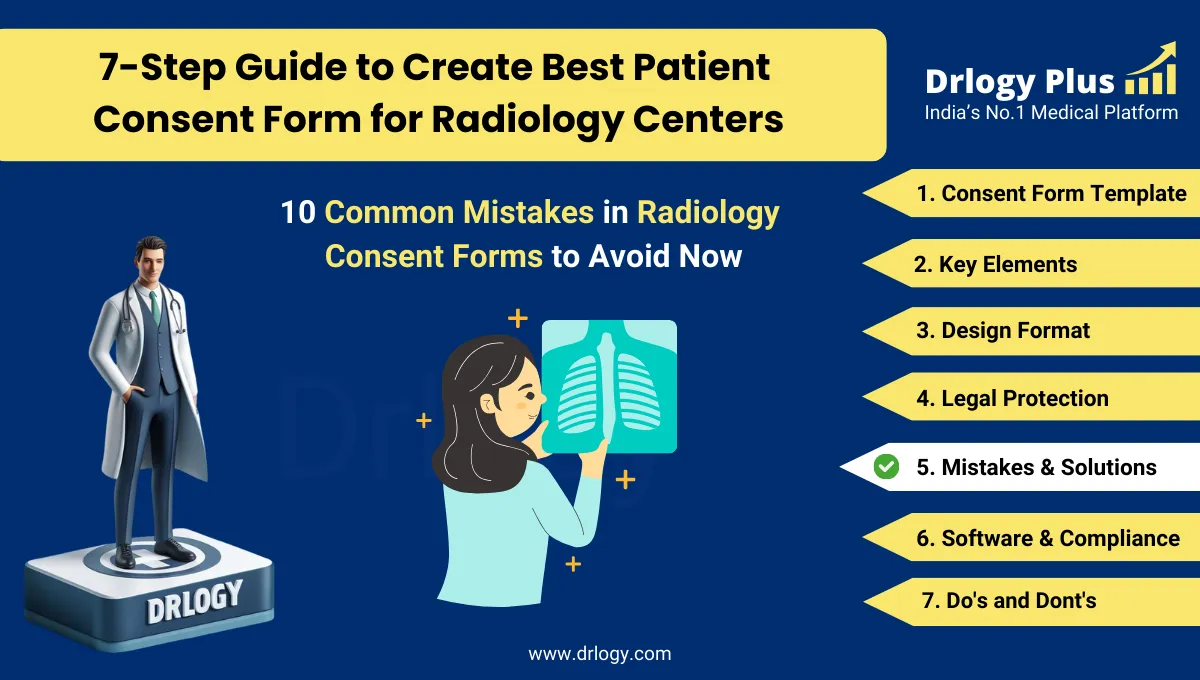
Here are 7 steps guide for Drlogy Radiology Consent Form Guide.
| 1. Radiology Consent Form Templates |
| 2. Types of Consent Forms |
| 3. Consent Form Design Format |
| 4. Consent Form Legality |
| 5. Consent Form Mistakes |
| 6. Consent Form Compliance |
| 7. Consent Form Do's & Don'ts |
Summary
Overall, Avoiding common consent form mistakes ensures better patient care, compliance, and legal safety in radiology practices.
Check Drlogy Radiology Consent Form Guide to providing a comprehensive overview of essential consent forms, ensuring your Radiology remains compliant, transparent, and patient-friendly.