Drlogy
Healthcare organization
10 Do’s and Don’ts for Radiology Consent Forms That Work
Radiology consent forms are essential for ensuring patient safety and legal protection.
Check:
Following key do's and don'ts guarantees these forms are effective and legally binding.
10 Do’s and Don’ts for Radiology Consent Forms That Work
Here are 10 Do’s and Don’ts for Radiology Consent Forms That Work
1. Do: Use Clear and Simpleuage
- Avoid medical jargon and useuage that patients can easily understand.
- Provide explanations for complex procedures in layman’s terms.
- Ensure that instructions are clear and unambiguous.
- Use plainuage for consent to reduce confusion.
- Ensure patients fully understand the risks and benefits of the procedure.
Clear communication ensures informed decisions.
2. Don’t: Overwhelm with Excessive Information
- Avoid overwhelming the patient with unnecessary details.
- Provide essential information without excessive technicalities.
- Stick to the most relevant facts related to the procedure.
- Keep the form focused on the most critical aspects of the procedure.
- Too much information may confuse the patient and hinder their understanding.
Less is more when it comes to patient consent forms.
3. Do: Include a Patient Acknowledgement Section
- Ensure the form includes a clear statement of patient understanding.
- Have the patient acknowledge that they have had their questions answered.
- Provide space for patient signatures and dates to confirm their agreement.
- Ensure the acknowledgment is distinct and easy to locate on the form.
- Ensure the patient feels empowered to ask questions before signing.
Patient acknowledgment reinforces informed consent.
4. Don’t: Skip the Risks and Benefits
- Clearly outline potential risks associated with the radiology procedure.
- List both common and rare side effects or complications.
- Include the benefits to help the patient make an informed choice.
- Be transparent about the risks and benefits involved.
- Failure to do so can result in invalid consent and legal issues.
Transparency fosters trust and informed decision-making.
5. Do: Offer Contact Information for Questions
- Provide contact information for a staff member or radiologist who can answer questions.
- Ensure the contact person is accessible and available to clarify doubts.
- Make it clear how the patient can reach out before or after signing.
- Include details like phone numbers or email addresses for easy communication.
- Patients should feel comfortable asking for clarification if needed.
Accessibility enhances patient confidence.
6. Don’t: Use Vague or Ambiguous Statements
- Avoid general phrases that leave room for interpretation.
- Ensure every section of the form is specific and clear.
- Use preciseuage to describe the procedure, risks, and benefits.
- Ensure patients fully comprehend what they are consenting to.
- Ambiguity can undermine the validity of consent in legal terms.
Clarity protects both the patient and the healthcare provider.
7. Do: Keep the Form Concise
- Ensure the form is as short as possible while still including necessary information.
- Focus on key details that are essential for informed consent.
- Make the form easy to read with clear headings and subheadings.
- Avoid unnecessary repetition of information.
- Concise forms improve patient engagement and understanding.
Short and to the point ensures clarity and compliance.
8. Don’t: Ignore the Patient’s Right to Refuse
- Make it clear that the patient has the right to refuse the procedure.
- Provide information on alternative options or treatments if applicable.
- Ensure that refusal won’t result in any negative repercussions.
- Respect the patient’s autonomy in making healthcare decisions.
- Failure to acknowledge this right could lead to legal complications.
Respecting autonomy is a core principle in healthcare.
9. Do: Ensure Readability
- Use large fonts and clear formatting for easy reading.
- Ensure the form is legible for all patients, regardless of visual abilities.
- Avoid cluttered layouts; use white space to improve readability.
- Ensure contrast between text and background for clarity.
- Make sure patients can read and review the form thoroughly before signing.
Readability equals better understanding.
10. Don’t: Rush the Patient’s Decision
- Give patients enough time to read the form and ask questions.
- Ensure the patient has the opportunity to discuss concerns with a doctor or staff member.
- Rushing can cause confusion or mistakes in the consent process.
- Be patient and allow the patient to make an informed, voluntary decision.
- Pressure can lead to invalid consent and legal issues later on.
Allow time for careful consideration to ensure valid consent.
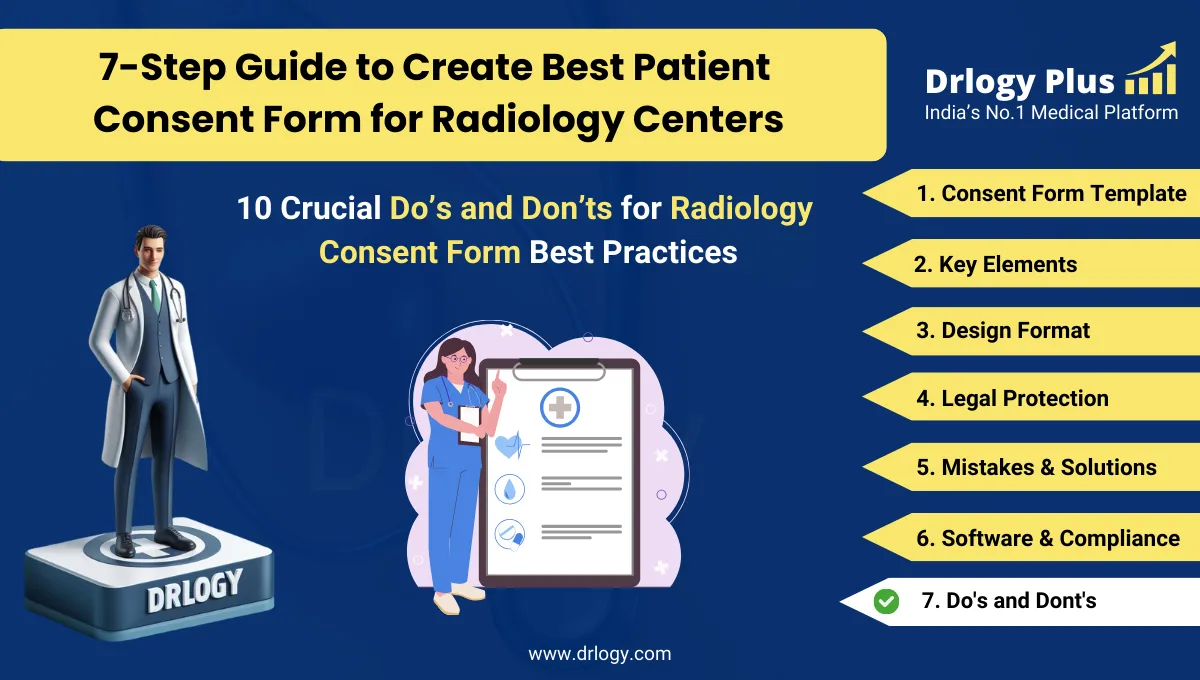
Drlogy Radiology Consent Form Guide
Here are 7 steps guide for Drlogy Radiology Consent Form Guide.
| 1. Radiology Consent Form Templates |
| 2. Types of Consent Forms |
| 3. Consent Form Design Format |
| 4. Consent Form Legality |
| 5. Consent Form Mistakes |
| 6. Consent Form Compliance |
| 7. Consent Form Do's & Don'ts |
Summary
Overall, Adhering to these do's and don'ts ensures that radiology consent forms are clear, legally valid, and promote patient understanding.
Check Drlogy Radiology Consent Form Guide to providing a comprehensive overview of essential consent forms, ensuring your Radiology remains compliant, transparent, and patient-friendly.