Drlogy
Healthcare organization
Why Radiology Consent Forms Are Critical for Legal & Patient Safety
Radiology consent forms are more than just paperwork—they are legal tools that ensure patient safety, ethical practice, and medical transparency.
Check:
These forms protect both healthcare providers and patients by outlining risks, procedures, and rights clearly.
10 Reasons Why Radiology Consent Forms Are Critical for Legal & Patient Safety
Here are 10 Reasons Why Radiology Consent Forms Are Critical for Legal & Patient Safety
1. Legal Proof of Patient Agreement
- Confirms that the patient voluntarily agrees to the procedure.
- Serves as legal evidence in case of future disputes.
- Protects radiologists and institutions from malpractice claims.
- Demonstrates compliance with medical laws and standards.
- Upholds ethical standards of medical practice.
Consent is your strongest legal shield in radiology care.
2. Ensures Informed Decision-Making
- Patients understand the purpose of the scan or procedure.
- Details benefits, risks, and alternatives clearly.
- Helps patients make conscious, confident choices.
- Promotes transparency between patient and provider.
- Fosters trust and mutual understanding.
Informed choices empower patients and reduce confusion.
3. Clarifies Risks and Side Effects
- Outlines possible complications or side effects.
- Especially important when using contrast agents or radiation.
- Protects the hospital if rare complications arise.
- Increases awareness and acceptance of potential outcomes.
- Shows ethical transparency in diagnostics.
Knowing the risks is part of respecting patient autonomy.
4. Complies with Regulatory Guidelines
- Meets standards set by health authorities and legal bodies.
- Required for accreditation by national and international boards.
- Prevents penalties or revocation of operational licenses.
- Ensures legal and procedural correctness.
- Demonstrates commitment to compliance culture.
Compliance isn’t optional—it’s mandatory for safe practice.
5. Protects Radiology Staff Legally
- Guards against unauthorized procedure claims.
- Documents patient acknowledgment and understanding.
- Offers a safety net during legal scrutiny or audits.
- Protects radiologists from personal liability.
- Strengthens the institution's defense in litigation.
Consent protects both the hands that scan and those who interpret.
6. Encourages Ethical Medical Practice
- Promotes honesty and transparency in communication.
- Encourages shared decision-making between doctor and patient.
- Eliminates ambiguity regarding procedure intent.
- Fulfills the ethical duty to disclose and educate.
- Elevates institutional values and integrity.
Ethics starts with consent—it’s the patient’s right and your duty.
7. Reduces Patient Anxiety
- Explains procedures in simple, digestible terms.
- Alleviates fear with clarity and visual aids if needed.
- Promotes mental readiness for the scan or test.
- Helps families feel included and reassured.
- Improves overall patient satisfaction.
Clarity calms—well-informed patients are less anxious.
8. Documents Special Conditions
- Records pregnancy, allergies, or implant information.
- Adjusts procedures to minimize risk accordingly.
- Ensures patient-specific care protocols are followed.
- Avoids accidental harm during radiological scans.
- Improves diagnostic accuracy with safer planning.
Personalized safety starts with documented consent.
9. Supports Digital Workflow Integration
- Digital consent forms align with modern EMRs and RIS systems.
- Enables faster access, storage, and retrieval.
- Reduces paper clutter and manual errors.
- Allows for e-signature tracking and timestamping.
- Improves audit readiness and operational efficiency.
Consent isn't just smart—it's now going digital too.
10. Standardizes Consent Across Procedures
- Maintains consistency in legaluage and information flow.
- Ensures no key element is missed across departments.
- Simplifies training and onboarding for new staff.
- Promotes a unified patient experience.
- Improves accountability and recordkeeping.
Standard consent = streamlined process + reduced risk.
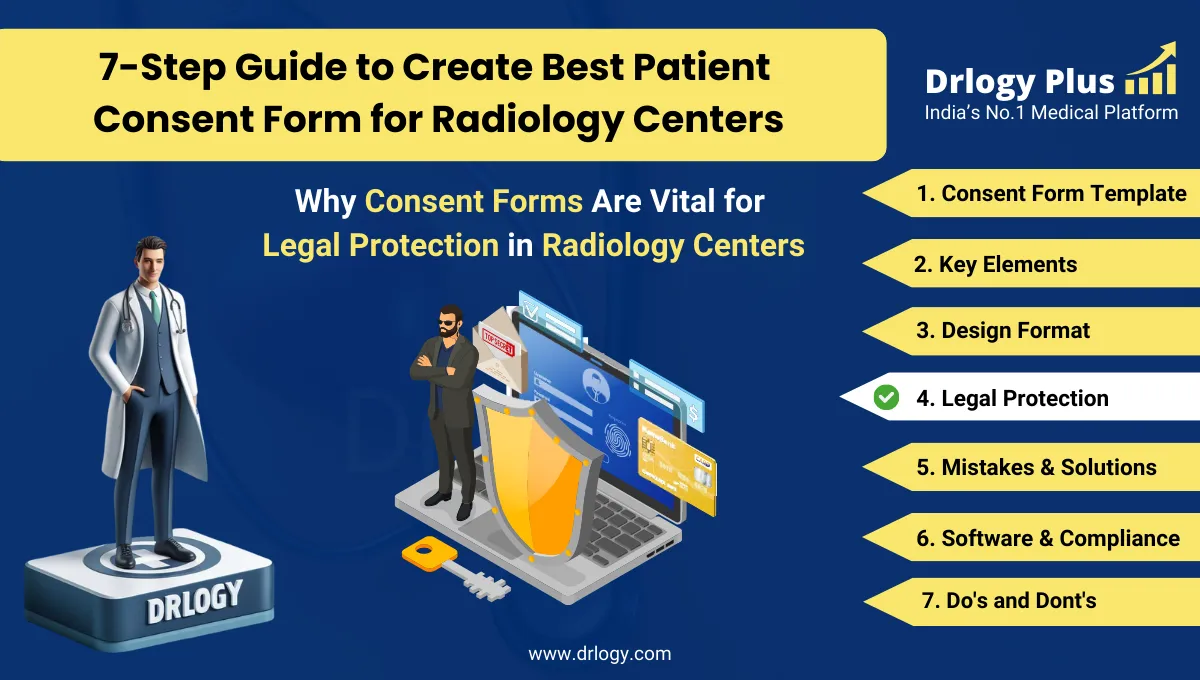
Drlogy Radiology Consent Form Guide
Here are 7 steps guide for Drlogy Radiology Consent Form Guide.
| 1. Radiology Consent Form Templates |
| 2. Types of Consent Forms |
| 3. Consent Form Design Format |
| 4. Consent Form Legality |
| 5. Consent Form Mistakes |
| 6. Consent Form Compliance |
| 7. Consent Form Do's & Don'ts |
Summary
Overall, Radiology consent forms are essential for maintaining legal safety, ethical standards, and patient trust in diagnostic care.
Check Drlogy Radiology Consent Form Guide to providing a comprehensive overview of essential consent forms, ensuring your Radiology remains compliant, transparent, and patient-friendly.