Drlogy
Healthcare organization
Radiology Consent Form Design Format Key Guidelines
Creating a clear and compliant radiology consent form starts with proper design and formatting.
Check:
Following essential design guidelines ensures patients understand procedures while maintaining legal and ethical standards.
Top 10 Radiology Consent Form Design Format Key Guidelines
Here are Top 10 Radiology Consent Form Design Format Key Guidelines.
1. Clear Heading & Procedure Title
- Start the form with a bold, descriptive title (e.g., "MRI Consent Form").
- Use consistent font and size for clarity.
- Make headings stand out using bold or color variations.
- Include the name of the procedure clearly under the main heading.
- Ensure it's immediately recognizable by patients and staff.
First impressions matter—start with clarity in titles.
2. Patient Information Section
- Include full name, age, gender, and hospital.
- Use clearly labeled fields for easy data entry.
- Offer optional fields for guardian or emergency contact.
- Ensure all fields are spaced well for neat writing or typing.
- Helps avoid errors in patiententification.
Accurate patient details are the backbone of consent validity.
3. Simpleuage
- Avoid medical jargon and use patient-friendly terms.
- Use short paragraphs or bullet points to explain concepts.
- Translate into regionaluages if needed.
- Include a glossary for any unavoidable medical terms.
- Boosts patient comprehension and informed consent.
When in doubt, write like you're explaining to a family member.
4. Step-by-Step Procedure Explanation
- Use a numbered list or flowchart format for each step.
- Describe what the patient should expect during the scan.
- Include instructions like fasting, clothing, or movement.
- Visually break down complex procedures.
- Reduces patient anxiety and confusion.
Clarity reduces fear and builds trust in care delivery.
5. Risk & Safety Section
- Use bullets to list common side effects and rare risks.
- Include contrast-related or radiation exposure notes.
- Highlight allergic reaction signs in bold.
- Include emergency instructions or response protocols.
- Ensure patients understand both minor and serious possibilities.
Transparency in risk builds ethical and legal strength.
6. Use of Icons or Visual Aids
- Use icons to represent steps like "fasting" or "no metal items."
- Use checkboxes or symbol indicators for patient choices.
- Enhances understanding, especially in low-literacy settings.
- Breaks monotony of long text blocks.
- Creates a more patient-friendly design.
A picture is worth a thousand words—especially in healthcare.
7. Multiple Signature Fields
- Provide separate signature lines for patient, radiologist, and witness.
- Label each field clearly withs and names.
- Include date and time of signature.
- Make digital signature options available.
- Ensures form is legally valid and traceable.
Clear signature zones protect both patient and provider legally.
8. Optional Sections for Special Consent
- Include additional checkboxes for contrast, pregnancy, or sedation consent.
- Helps in tailoring consent for specific procedures.
- Allows one form to cover multiple scenarios.
- Avoids repetition and saves admin time.
- Keeps the format compact yet inclusive.
Flexibility makes your form smarter, not longer.
9. Right to Refuse Statement
- Clearly mention the patient can refuse or withdraw consent.
- Use a checkbox for acknowledgment.
- Use bold text for emphasis on this legal right.
- Reinforces ethical medical practice.
- Builds patient confidence and transparency.
Freedom to choose makes consent meaningful.
10. Digital-Friendly Format
- Design forms for mobile, tablet, and desktop compatibility.
- Use fillable PDF or form builder software tools.
- Enable secure online storage and patient access.
- Reduce paper clutter and manual errors.
- Improves record keeping and workflow efficiency.
Digital design isn’t the future—it’s the present of healthcare.
Drlogy Radiology Consent Form Guide
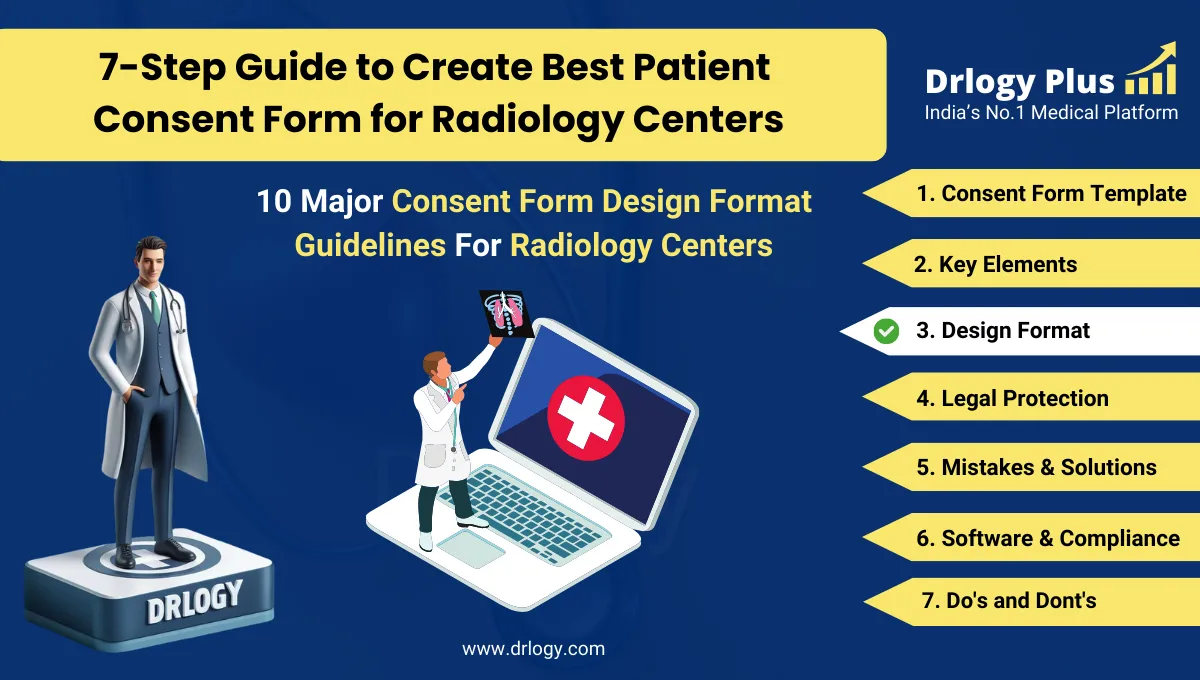
Here are 7 steps guide for Drlogy Radiology Consent Form Guide.
| 1. Radiology Consent Form Templates |
| 2. Types of Consent Forms |
| 3. Consent Form Design Format |
| 4. Consent Form Legality |
| 5. Consent Form Mistakes |
| 6. Consent Form Compliance |
| 7. Consent Form Do's & Don'ts |
Summary
Overall, These 10 design guidelines help ensure radiology consent forms are clear, professional, and compliant for optimal patient understanding and legal protection.
Check Drlogy Radiology Consent Form Guide to providing a comprehensive overview of essential consent forms, ensuring your Radiology remains compliant, transparent, and patient-friendly.