Drlogy
Healthcare organization
10 Common Lab Consent Form Mistakes and How to Avoid Them
Even small mistakes in lab consent forms can lead to legal issues, patient dissatisfaction, or compliance failure.
Check:
Knowing what to avoid helps improve your lab's professionalism and builds patient trust.
10 Common Lab Consent Form Mistakes and How to Avoid Them
Here are 10 Common Lab Consent Form Mistakes and How to Avoid Them.
1. Using Generic or Outdated Consent Templates
- Relying on old templates can leave out critical legal or clinical updates.
- Generic forms may not reflect your lab's services or new regulations.
- Patients may be confused by irrelevant or outdated content.
- Risks non-compliance with current health regulations.
- Update your forms annually to match industry standards.
Using current, lab-specific templates avoids compliance risks.
2. Not Explaining the Procedure Clearly
- Patients may not fully understand the tests being performed.
- Lack of clarity increases anxiety or refusal of testing.
- Confusion may lead to legal disputes if outcomes are unexpected.
- Every step of the procedure should be broken down in simple terms.
- Train staff to explain consent content properly.
Clarity builds trust and reduces test refusal or confusion.
3. Missing Signature Fields
- A consent form without a signature section is legally useless.
- Omitting signature lines (for patient, witness, or doctor) weakens the consent.
- Can result in consent being declared invalid during audits.
- Include date fields along with signatures.
- Digital forms must have e-sign options.
A signed form is your strongest legal protection.
4. Skipping Risk Disclosure
- Not mentioning potential side effects or risks is unethical and risky.
- Leaves your lab open to liability if complications arise.
- Patients may feel misled if not informed upfront.
- Always outline possible complications, even if minimal.
- Balance risks with the benefits of the test.
Honest risk disclosure keeps both lab and patient safe.
5. Inconsistent Consent Across Departments
- Different units using different forms leads to confusion.
- Inconsistencies can cause double consent or no consent at all.
- Creates gaps in record-keeping and patient understanding.
- Use a centralized and standardized consent form for all services.
- Implement system-wide consent policies.
Standardizing forms across departments ensures consistency.
6. Failing to Update for New Tests or Technologies
- New diagnostic tools often require updated consent elements.
- Using old forms for new procedures leads to gaps in information.
- Could cause legal or ethical problems.
- Update forms when adding new tests or services.
- Communicate updates with all staff members.
Keep your consent forms updated with every new test or method.
7. Ignoringuage and Literacy Barriers
- Patients may not understand medical jargon or English terms.
- Informed consent must be in auage the patient understands.
- Lack of translation can invalidate consent.
- Offer multilingual forms and use plainuage.
- Provide interpreter services if needed.
Consent must be understandable to be valid and ethical.
8. Neglecting to Inform About Data Privacy
- Patients must be assured their data will remain confidential.
- Omitting data handling practices is a major GDPR or HIPAA violation.
- Builds distrust among patients.
- Always include a data privacy section in the form.
- Mention data access, sharing, and storage protocols.
Transparency about data handling ensures patient confidence.
9. No Option for Withdrawal or Refusal
- Patients must know they can say “no” or stop participation at any time.
- Absence of this information can be seen as coercion.
- Reduces trust and ethical integrity.
- Include statements on voluntary participation and withdrawal rights.
- Discuss alternative diagnostic options.
Freedom of choice builds ethical credibility for your lab.
10. Overlooking Consent Renewal for Repeat Tests
- Repeat visits or tests may require fresh consent.
- Old consent forms may no longer apply.
- Failure to renew consent violates protocols.
- Set a time limit for consent validity (e.g., 6 months).
- Remind patients to renew during follow-up appointments.
Always refresh consent for follow-ups to stay compliant.
Drlogy Lab Consent Form Guide
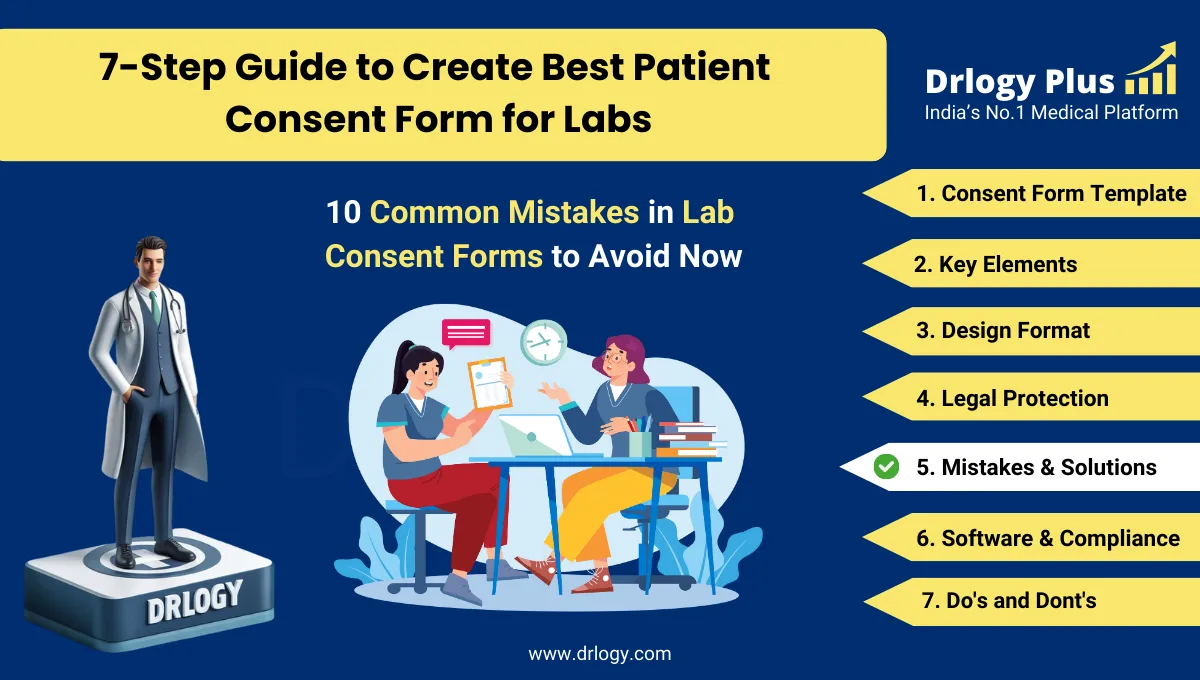
Here are 7 steps guide for Drlogy Lab Consent Form Guide.
| 1. Lab Consent Form Templates |
| 2. Lab Consent Form Key Elements |
| 3. Consent Form Key Guidelines |
| 4. Consent Form Legality |
| 5. Consent Form Mistakes |
| 6. Consent Form Compliance |
| 7. Consent Form Do's & Don'ts |
Summary
Overall, Avoiding these 10 common consent form mistakes strengthens patient trust, ensures legal protection, and enhances the operational efficiency of your pathology lab.
Check Drlogy Consent Form Guide to providing a comprehensive overview of essential consent forms, ensuring your lab remains compliant, transparent, and patient-friendly.