Drlogy
Healthcare organization
10 Do’s and Don’ts for Lab Consent Forms To Maximum Clarity and Safety
Lab consent forms are essential for patient rights and legal protection.
Check:
Following these do’s and don’ts ensures your lab maintains clarity, compliance, and patient trust.
10 Do’s and Don’ts for Lab Consent Forms To Maximum Clarity and Safety
Here are 10 Do’s and Don’ts for Lab Consent Forms To Maximum Clarity and Safety.
1. DO: Use Simple, Easy-to-Understanduage
- Avoid medical jargon and complex terms.
- Write in a tone that any patient can understand.
- Clarity builds trust and ensures informed consent.
- Keep sentences short and to the point.
- Provide translations if needed.
Clearuage ensures no room for misunderstanding.
2. DON’T: Leave Out Essential Information
- Never skip test purpose, risks, or confidentiality statements.
- Missing details can lead to legal consequences.
- Patients have a right to know all critical aspects.
- Review forms thoroughly before sharing.
- Include contact details for queries.
Missing key info can result in consent being invalid.
3. DO: Customize Forms Based on Test Type
- Every test has different implications and risks.
- Tailored forms improve patient understanding.
- One-size-fits-all forms may confuse patients.
- Customization shows professionalism.
- It also meets ethical and legal standards.
Custom forms give test-specific clarity and assurance.
4. DON’T: Use Outdated Formats or Legal Terms
- Always use the most recent legal template.
- Regulations change frequently—update accordingly.
- Outdated forms can jeopardize compliance.
- Keep templates reviewed and approved regularly.
- Consult a legal expert if unsure.
Outdated forms put your lab at legal risk.
5. DO: Include Voluntary Participation and Withdrawal Rights
- Make it clear that consent is voluntary.
- Mention the right to withdraw at any time.
- Builds ethical transparency and trust.
- Avoids claims of coercion or pressure.
- It's also a regulatory requirement.
Voluntary participation is key to ethical consent.
6. DON’T: Rely Solely on Verbal Consent
- Always provide written documentation.
- Verbal agreements can be disputed.
- Written consent protects both lab and patient.
- Signatures serve as legal proof.
- Store copies securely.
Written consent is critical for accountability.
7. DO: Use Digital Consent Tools When Possible
- E-consent tools improve speed and record-keeping.
- Digital signatures are legally valid in most regions.
- Reduces paper usage and storage hassle.
- Allows easy updates and tracking.
- Ideal for remote consultations.
Digital tools simplify consent and enhance compliance.
8. DON’T: Ignore Cultural oruage Barriers
- Provide forms in localuages when needed.
- Consider cultural nuances in explanation.
- Miscommunication leads to invalid consent.
- Hire multilingual staff or use translation software.
- Respect patient backgrounds.
Addressinguage barriers ensures true informed consent.
9. DO: Include a Section for Questions and Clarifications
- Encourage patients to ask questions.
- Leave space for additional notes or responses.
- Shows your lab values informed decision-making.
- Strengthens transparency and patient confidence.
- Promotes a respectful environment
Questions section shows ethical care and openness.
10. DON’T: Forget Signatures and Date Fields
- Both patient and witness signatures are essential.
- Without them, the consent form is invalid.
- Include signature and date fields clearly.
- Ensure all parties review before signing.
- Store signed copies securely.
Missing signatures can void the entire consent process.
Drlogy Lab Consent Form Guide
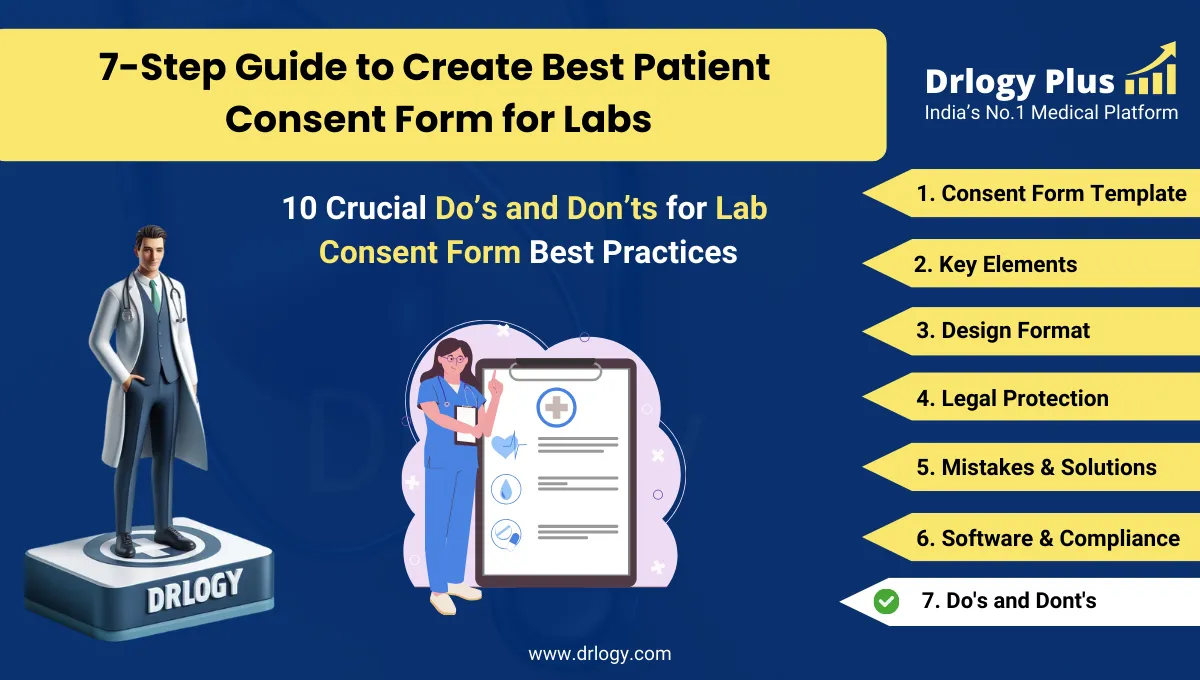
Here are 7 steps guide for Drlogy Lab Consent Form Guide.
| 1. Lab Consent Form Templates |
| 2. Lab Consent Form Key Elements |
| 3. Consent Form Key Guidelines |
| 4. Consent Form Legality |
| 5. Consent Form Mistakes |
| 6. Consent Form Compliance |
| 7. Consent Form Do's & Don'ts |
Summary
Overall, Following these do’s and don’ts helps ensure your lab consent forms are legally sound, ethically responsible, and easy for patients to understand—building trust and ensuring safe operations..
Check Drlogy Consent Form Guide to providing a comprehensive overview of essential consent forms, ensuring your lab remains compliant, transparent, and patient-friendly.