Drlogy
Healthcare organization
How Prescription Management Helps Accuracy in Rheumatologist Software
In rheumatology, where long-term medication like DMARDs, biologics, NSAIDs, and steroids are commonly prescribed, efficient prescription management ensures safe, accurate, and consistent treatment.
Check:
Prescription features in rheumatologist software eliminate manual errors and streamline medication tracking.
10 Ways Prescription Management Help Rheumatologist Software
Here are 10 Ways Prescription Management Help Rheumatologist Software.
1. Error-Free Digital Prescriptions
- Eliminates handwriting confusion and dosage misinterpretation.
- Auto-checks for standard drug names and dosages.
- Prevents adverse drug events due to manual errors.
- Improves pharmacist interpretation.
- Enhances patient safety.
Clear, typed prescriptions mean fewer errors and better outcomes.
2. Auto-Suggestions Based on Diagnosis
- Suggests medicines based on specific rheumatologic conditions.
- Reduces decision fatigue for frequently seen cases like RA, SLE, or gout.
- Increases speed in routine prescribing.
- Ensures evidence-based drug choices.
- Adapts to the doctor’s prescribing.
Smart prescribing speeds up routine workflows.
3. Customizable Prescription Templates
- Create predefined templates for common conditions like RA flare-up, OA, fibromyalgia, etc.
- Standardize care protocols within the clinic.
- Save time for repeated treatment cycles.
- Maintain consistency across multiple consultants.
- Update templates as treatment evolves.
Standardization = consistency + time savings.
4. Track Long-Term Medication History
- Access patient’s full medication history in one click.
- Avoid duplicate prescriptions or drug interactions.
- Monitor patient compliance over months or years.
- Compare historical treatment responses.
- Adjust therapies based on past effectiveness.
Long-term conditions need long-term visibility.
5. Drug Interaction & Allergy Alerts
- Alerts doctors about drug–drug or drug–allergy conflicts.
- Highlights risky combinations like NSAIDs + steroids + anticoagulants.
- Minimizes adverse effects and legal liability.
- Supports clinical safety in polypharmacy cases.
- Reinforces trust in software-aided decisions.
Better safe than sorry — software can catch what memory misses.
6. Instant Sharing via SMS/Email/Print
- Share prescriptions instantly with patients or pharmacies.
- Support teleconsultation and remote follow-ups.
- Allow access to digital copies anytime.
- Encourage paperless practice.
- Improve patient convenience.
Send prescriptions in seconds — from anywhere.
7. Multilingual Prescriptions
- Generate prescriptions in regionaluages for better patient understanding.
- Reduce dependency on verbal instructions.
- Enhance patient compliance and clarity.
- Improve reach in rural or semi-urban clinics.
- Build inclusive practice.
Speak your patient’suage — even in prescriptions.
8. Dosage & Instruction Clarity
- Add frequency, timing, and food-related instructions clearly.
- Use visual icons or standardized tags (like "BD after food").
- Improve adherence in elderly or chronic care patients.
- Reduce calls for clarification.
- Avoid overdose or underdose mistakes.
Clear instructions = better compliance = better outcomes.
9. Link Prescription to Lab & Diagnosis
- Tag medications with corresponding lab reports or clinical findings.
- Maintain an evidence-based treatment trail.
- Simplify clinical audits and insurance queries.
- Help justify high-value prescriptions like biologics.
- Reduce prescription misuse.
Trace every prescription back to diagnosis for accountability.
10. Refill & Follow-Up Reminders
- Set refill dates for monthly medications.
- Auto-remind patients about prescription expiration.
- Improve chronic disease management.
- Increase patient engagement and retention.
- Minimize medication gaps.
Keep patients on track with automated prescription follow-ups.
Drlogy Rheumatologist Software Features
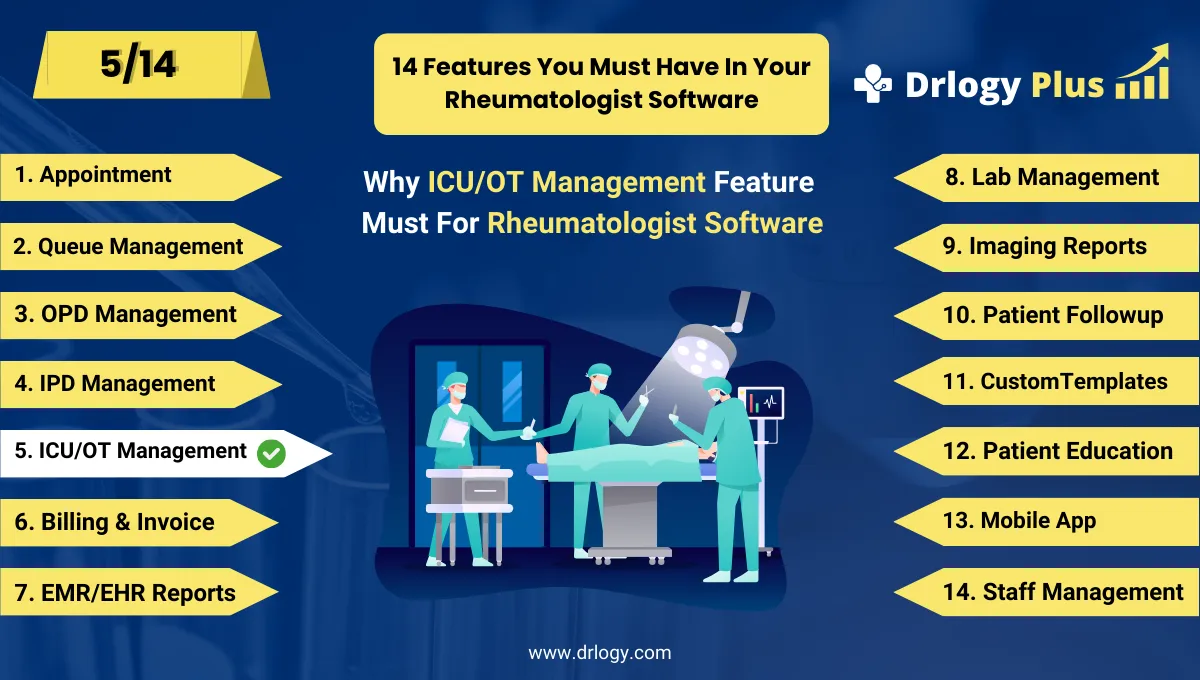
Here are 14 basic features for Drlogy Rheumatologist Software.
Summary
Overall, Prescription management in rheumatologist software enhances patient safety, speeds up routine workflows, and ensures long-term treatment accuracy making it a vital feature for chronic disease care and operational efficiency.
Check Drlogy Rheumatologist Software Features Guide helps in Rheumatology clinic management, improve managing chronic pain, joint care, and autoimmune treatment and enhance overall efficiency in Rheumatology practice.