Drlogy
Healthcare organization
Why EMR/EHR Reports Are a Backbone of Rheumatologist Software
Rheumatology involves complex, long-term patient care requiring detailed documentation, periodic tracking, and multidisciplinary inputs.
Check:
EMR/EHR (Electronic Medical Records/Electronic Health Records) reports simplify and strengthen this process, enabling better decision-making and continuity of care.
10 Benefits of EMR/EHR Reports in Rheumatologist Software
Here are 10 Benefits of EMR/EHR Reports in Rheumatologist Software.
1. Chronic Disease Progress Tracking
- Monitor symptoms, flares, and remission patterns over time.
- View patient history for RA, Lupus, or Psoriatic Arthritis in one timeline.
- Track lab values like ESR, CRP, ANA, or anti-CCP easily.
- Adjust treatment plans based on progression.
- Identify early signs of complications.
Long-term tracking is vital in rheumatology – EMR makes it easy.
2. Integrated Lab & Imaging Reports
- Automatically fetch and store test results linked to visit dates.
- Access radiology images and reports for joint damage, spine changes, etc.
- Compare past reports side-by-side.
- Reduce diagnostic delays.
- Ensure all clinical decisions are.
Stay informed with one-click access to critical diagnostics.
3. Auto-Generated Disease Activity Scores
- Calculate and record DAS28, SLEDAI, BASDAI, or HAQectly within EMR.
- Graph scores across visits for trend analysis.
- Support standardized treatment decisions.
- Share scores with patients for transparency.
- Maintain clinical consistency.
Data-backed scoring supports better treatment strategy.
4. Personalized Treatment History
- Log all DMARDs, steroids, NSAIDs, and biologic usage.
- Track side effects, adherence, and changes.
- View historical prescriptions instantly.
- Avoid duplication or harmful drug interactions.
- Better manage step-up or switch therapies.
Know what’s been tried – and what worked – instantly.
5. Quick Clinical Decision Support
- Real-time alerts for abnormal lab results or drug interactions.
- Access to rheumatology treatment protocols and guidelines.
- Auto-suggest next investigations based on current findings.
- Reduce cognitive load on doctors.
- Improve patient safety.
Smarter care decisions, powered by real-time support.
6. Inter-Consultation Coordination
- Share EMR data with nephrologists, dermatologists, or orthopedists.
- Enable multi-specialty input on overlapping symptoms.
- Track comorbidities like CKD, osteoporosis, or fibromyalgia.
- Streamline referral and co-management.
- Enhance care quality in complex autoimmune cases.
Rheumatology often overlaps – EMR enables collaboration.
7. Paperless, Efficient Documentation
- Eliminate bulky files and manual note-taking.
- Quickly enter SOAP notes and progress updates.
- Retrieve old records in seconds.
- Save time for both doctors and staff.
- Reduce physical storage costs.
More efficient documentation = more time for patients.
8. Improved Patient Engagement
- Show graphs of progress and lab trends during visits.
- Share digital copies of visit summaries and prescriptions.
- Encourage adherence with easy-to-understand reports.
- Build trust with transparent communication.
- Support long-term therapy compliance.
Educated patients stay on track and follow better.
9. Audit-Ready & Legally Compliant Records
- Maintain complete medical histories with timestamps.
- Meet medico-legal documentation standards.
- Easy retrieval for insurance, litigation, or audits.
- Ensures data integrity and accountability.
- Protects both clinic and patient interests.
Your best defense is a well-documented EMR.
10. Analytics & Research Support
- Generate patient trends by disease, medication, or response.
- Conduct clinic-based studies with anonymized data.
- Identify patterns for quality improvement.
- Publish case studies using structured data.
- Drive evidence-based practice.
Transform your clinic data into clinical insights.
Drlogy Rheumatologist Software Features
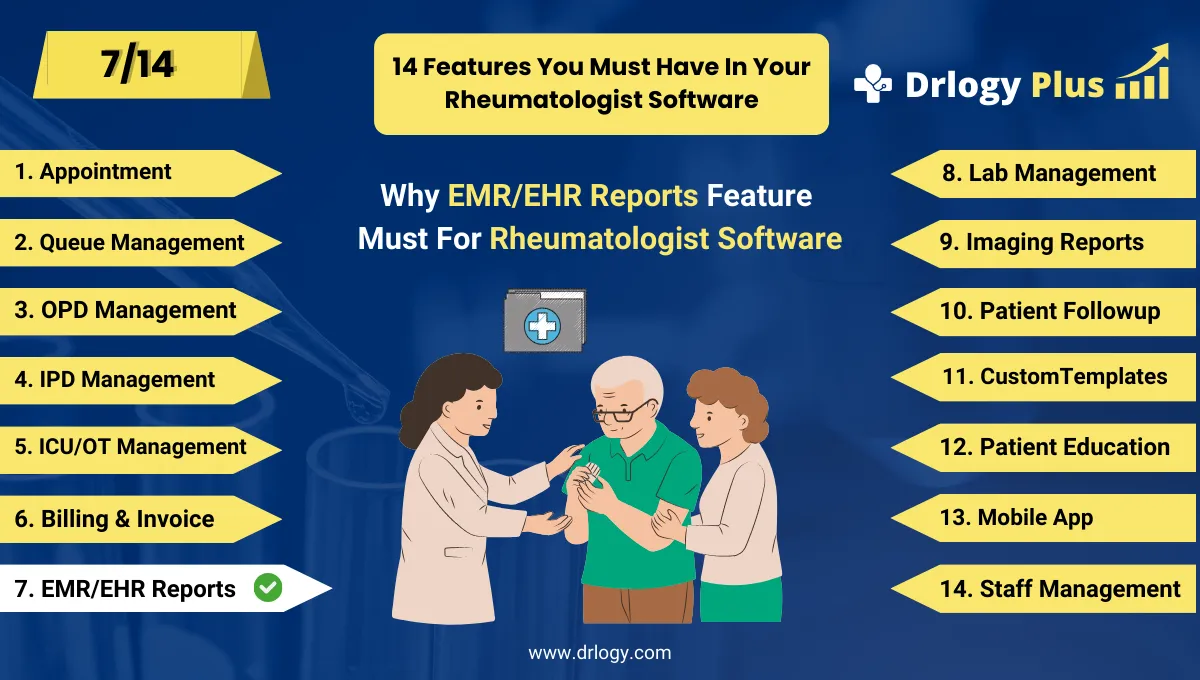
Here are 14 basic features for Drlogy Rheumatologist Software.
Summary
Overall, EMR/EHR reports in rheumatologist software streamline care for chronic, complex conditions by offering structured records, trend tracking, decision support, and seamless coordination — ultimately leading to better outcomes and practice efficiency.
Check Drlogy Rheumatologist Software Features Guide helps in Rheumatology clinic management, improve managing chronic pain, joint care, and autoimmune treatment and enhance overall efficiency in Rheumatology practice.