Drlogy
Healthcare organization
How IPD Management Empowers Rheumatologist Software
Rheumatology patients often require hospitalization for advanced treatments like IV infusions, biologics, or flare-up management.
Check:
IPD features in rheumatologist software help streamline this complex inpatient care and enhance clinical outcomes.
10 Ways IPD Features Strengthen Rheumatologist Software
Here are 10 Ways IPD Features Strengthen Rheumatologist Software.
1. Comprehensive In-Patient Record Keeping
- Tracks every detail from admission to discharge.
- Documents vitals, progress notes, and investigations.
- Maintains continuity in chronic care cases.
- Ensures clarity in multidisciplinary treatment.
- Minimizes clinical errors with centralized access.
Every hospitalization step is traceable and organized.
2. Bed & Room Allocation Management
- Assigns beds based on patient condition and availability.
- Tracks real-time bed occupancy.
- Automates room shift updates and availability.
- Reduces administrative confusion.
- Optimizes hospital space usage.
Better bed tracking = smoother patient intake and flow.
3. Customizable Treatment Charts
- Auto-generates IV infusion, steroid therapy, or DMARD treatment charts.
- Supports specific protocols for Lupus, RA, etc.
- Allows adjustment of dose timing and frequency.
- Minimizes errors in long-term inpatient regimens.
- Enhances nurse-doctor communication.
Personalized IPD orders simplify chronic treatment delivery.
4. Integrated Lab & Radiology Requests
- Order tests and imaging from within the IPD module.
- Auto-link results to patient IPD files.
- Track pending reports and turnaround times.
- Helps in daily progress reviews.
- Avoids repetition or missed tests.
Diagnostics are connectedectly to in-patient care.
5. Medication & Nursing Workflow Management
- Schedule and track in-patient medication rounds.
- Generate daily nursing tasks.
- Ensure medication administration compliance.
- Prevent missed doses or delays.
- Document nursing observations effectively.
Timely nursing actions = safer patient outcomes.
6. Multidisciplinary Collaboration Tools
- Add notes from dieticians, physiotherapists, or other specialists.
- Coordinate care for patients with overlapping conditions (e.g., renal involvement in lupus).
- Set shared care goals across departments.
- Facilitate clear communication within teams.
- Improve comprehensive patient care.
One platform supports holistic rheumatology treatment.
7. Real-Time Monitoring Dashboard
- View in-patient vitals, lab updates, and treatment status in real time.
- Prioritize critical patients.
- Monitor for flare-ups or complications quickly.
- Alerts and notifications reduce oversight.
- Promotes proactive clinical intervention.
Stay informed at every stage of hospitalization.
8. E-Discharge Summary & Handover
- Auto-generate discharge notes with medications and follow-up plans.
- Include investigation summaries and progress charts.
- Share reports digitally with patients or referring physicians.
- Improves post-discharge continuity.
- Saves time and boosts documentation quality.
Discharge planning made smart and seamless.
9. IPD Billing & Package Integration
- Track all billable IPD services like labs, drugs, rooms, and nursing.
- Apply insurance or predefined rheumatology care packages.
- Avoid manual billing errors.
- Improve transparency and collection.
- Provide consolidated billing reports.
Accurate billing leads to better hospital revenue.
10. Analytics & Reporting on IPD Outcomes
- Track length of stay, readmission rates, and treatment outcomes.
- Identify trends in inpatient flare-ups or biologics use.
- Generate regulatory or insurance-ready reports.
- Use data to improve in-patient care protocols.
- Drive better decision-making with real insights.
Data helps elevate care standards and reduce costs.
Drlogy Rheumatologist Software Features
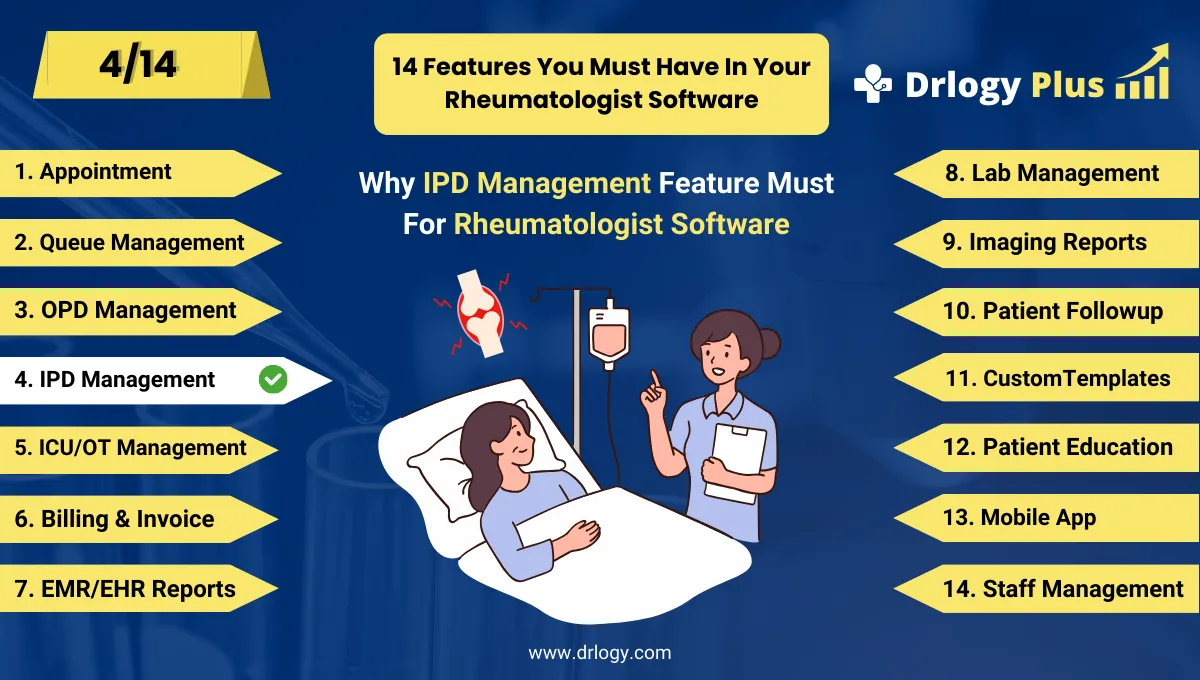
Here are 14 basic features for Drlogy Rheumatologist Software.
Summary
Overall, IPD features in rheumatologist software ensure detailed inpatient care, from admission to discharge, while improving documentation, collaboration, billing, and treatment efficiency for chronic autoimmune diseases.
Check Drlogy Rheumatologist Software Features Guide helps in Rheumatology clinic management, improve managing chronic pain, joint care, and autoimmune treatment and enhance overall efficiency in Rheumatology practice.