Drlogy
Healthcare organization
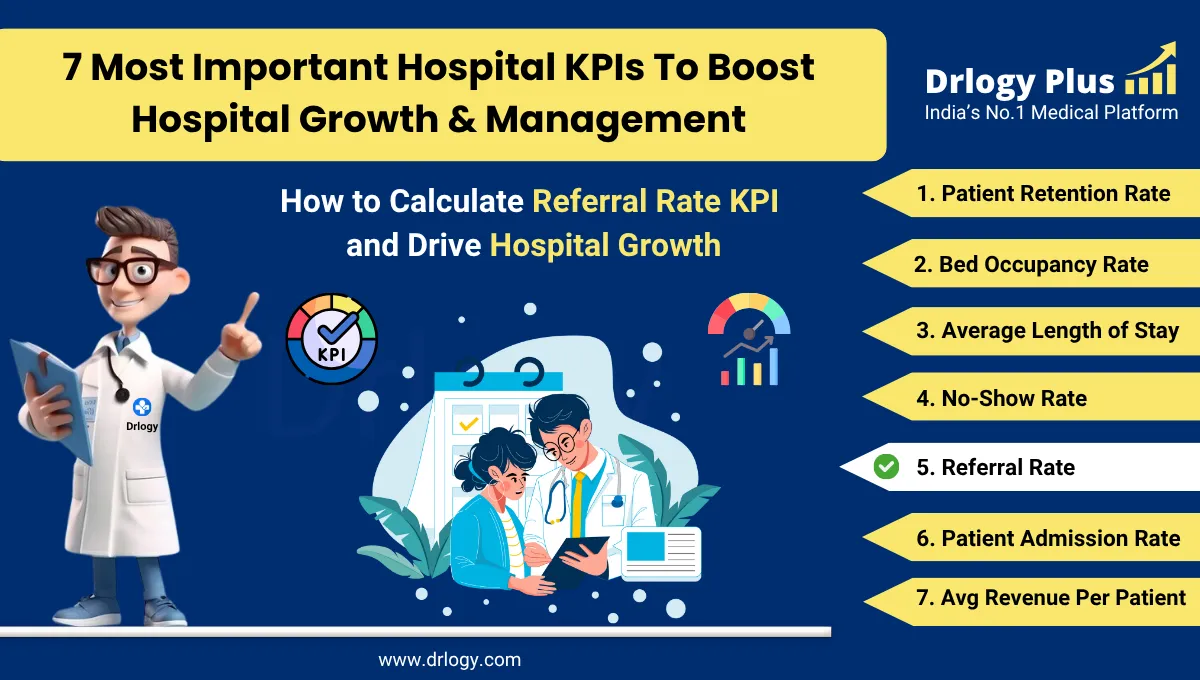
How to Calculate Referral Rate KPI and Drive Hospital Growth
Patient referrals play a crucial in hospital growth and sustainability. A strong Patient Referral Rate KPI indicates that patients trust the hospital’s services enough to recommend them to others.
Check:
Hospitals with high referral rates benefit from increased patient inflow, enhanced reputation, and better financial stability.
What is Patient Referral Rate KPI
The Patient Referral Rate KPI measures the percentage of new patients who visit a hospital based on referrals from existing patients.
- A higher referral rate signifies patient satisfaction, quality healthcare, and strong hospital credibility.
- Hospitals that focus on delivering exceptional patient care and building strong doctor-patient relationships tend to have higher referral rates.
- Patients who receive excellent treatment are more likely to recommend the hospital to friends, family, or colleagues.
How Patient Referral Rate KPI Scientifically Works
- Patient Satisfaction Drives Referrals: Satisfied patients are more likely to recommend the hospital to others, increasing referral rates.
- Trust & Reputation Impact Referral Growth: A hospital with a positive reputation attracts more referrals from existing patients and external doctors.
- Word-of-Mouth Marketing Reduces Acquisition Costs: High referral rates mean hospitals spend less on advertising while maintaining a steady influx of new patients.
Patient Referral Rate KPI Formula
Here is the basic formula to calculate Patient Referral Rate:
Patient Referral Rate (%) = (Number of Referrals / Total Number of Patients) × 100
Patient Referral Rate KPI Result
| Patient Referral Rate (%) | Interpretation |
|---|---|
| Above 40% | Excellent; high patient satisfaction and trust in the healthcare facility. |
| 30% - 39% | Good; indicates a decent level of patient loyalty and word-of-mouth marketing. |
| 20% - 29% | Moderate; room for improvement in patient satisfaction or engagement. |
| Below 20% | Poor; likely indicates dissatisfaction, requiring attention to patient care quality. |
How to Calculate Patient Referral Rate KPI
Use the simple formula:
Patient Referral Rate (%) = (Number of Referrals / Total Number of Patients) × 100
Steps to Calculate:
- Identify Number of Referrals – Count the total number of new patients referred by existing patients.
- Determine Total Number of Patients – Count the total number of patients who visited the hospital or clinic in the same period.
- Apply the Formula – Divide Number of Referrals by Total Number of Patients and multiply by 100 to get the Patient Referral Rate.
Example:
A hospital saw 2,000 patients in a month and received 300 referrals from existing patients.
Patient Referral Rate = (300 / 2,000) × 100 = 15%
This means the hospital has a 15% Patient Referral Rate, suggesting there may be room for improvement in patient satisfaction or engagement strategies.
Bonus Tools For Hospital Marketing:
Why Patient Referral Rate KPI is a Crucial Metric for Hospitals
- Cost-Effective Growth: Referral patients require less marketing spend than acquiring patients through paid advertising.
- Stronger Community Trust: High referral rates indicate that patients and doctors trust the hospital's services.
- Better Patient Retention: Patients who refer others often stay loyal to the hospital for long-term care.
- Competitive Advantage: A high referral rate differentiates the hospital from competitors by showcasing superior care.
Patient Referral Rate KPI Benefits
- Increased Patient Volume: More referrals bring in new patients consistently, reducing dependency on paid marketing.
- Higher Revenue: Referral patients tend to seek multiple services, increasing hospital profitability.
- Stronger Doctor-Patient Relationships: A high referral rate indicates positive doctor-patient interactions and trust.
- Improved Reputation & Brand Awareness: Satisfied patients help the hospital gain organic word-of-mouth publicity.
Improving Patient Referral Rate KPI in Hospitals: Actionable Strategies
- Enhance Patient Experience & Satisfaction: Provide high-quality care, minimize wait times, and ensure seamless appointment booking to encourage organic referrals.
- Develop a Strong Referral Program: Offer incentives, discounts, or loyalty benefits for referred patients while actively requesting testimonials and online reviews.
- Strengthen Doctor & Community Networks: Build partnerships with local physicians, specialists, and clinics to increase professional referrals and expand patient reach.
How Hospitals Can Use Patient Referral Rate KPI to Boost Overall Growth
- Optimize Services Based on Feedback: A higher referral rate means services are satisfactory. Hospitals can use patient feedback to fine-tune treatment plans and facilities.
- Expand Reach with Digital Tools: Online patient engagement tools, hospital listing platforms, and telemedicine can further enhance referrals.
- Strengthen Marketing Strategies: Tracking referral trends helps in targeting high-value patients and investing in the most effective marketing channels.
Key Performance Indicators (KPIs) Linked to Patient Retention
- Net Promoter Score (NPS): Measures how likely patients are to recommend the hospital.
- Patient Satisfaction Score: Reflects overall experience and service quality.
- New vs Returning Patients Ratio: Helps assess the loyalty and engagement of existing patients.
Benchmarking Patient Referral Rate KPI: What Hospitals Should Aim For
A referral rate of 30% or higher iseal for sustained hospital growth.
- However, continuous improvement in patient experience, marketing strategies, and doctor-patient relationships can help hospitals exceed industry benchmarks.
The Future of Patient Referral Rate KPI: Trends to Watch
- AI & Predictive Analytics: Advanced AI tools will help hospitals identify high-potential referral sources and improve patient retention.
- Telemedicine Referrals: Digital healthcare platforms will enable cross-hospital and telehealth referrals, increasing patient inflow.
- Personalized Patient Engagement: Automated personalized patient communication will strengthen trust and referral rates.
Drlogy Hospital KPIs Guide
Here are 7 important Drlogy Hospital KPIs Guide.
| Hospital KPI |
|---|
| 1. Patient Retention Rate |
| 2. Bed Occupancy Rate |
| 3. Average Length of Stay (ALOS) |
| 4. Appoinment No-Show Rate |
| 5. Referral Rate |
| 6. Patient Admission Rate |
| 7. Average Revenur Per Patient (ARPP) |
Summary
Overall, Tracking and optimizing the Patient Referral Rate KPI is vital for hospital growth and long-term sustainability. A strong referral program leads to higher patient volumes, increased revenue, and a better reputation.
Check Drlogy Hospital KPIs Guide to unlock key metrics that drive hospital growth, enhance patient care, and improve overall hospital performance.