Drlogy
Healthcare organization
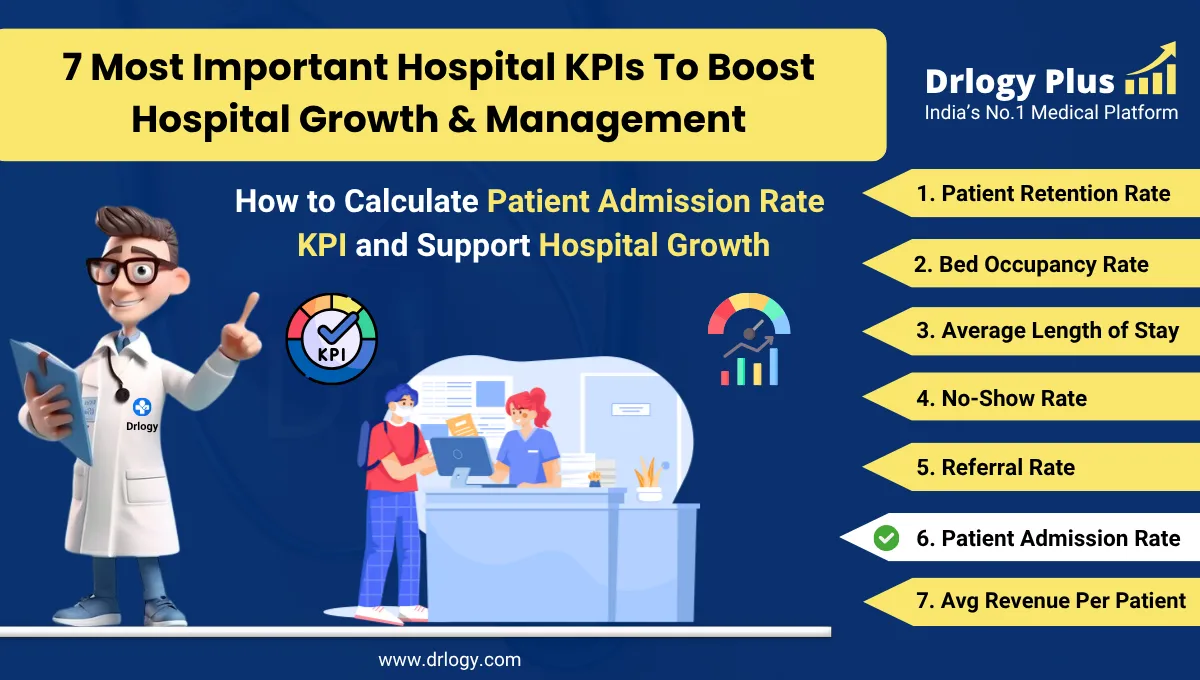
How to Calculate Patient Admission Rate KPI and Support Hospital Growth
Patient Admission Rate KPI is a critical metric for hospitals, measuring the percentage of patients admitted for inpatient care.
Check:
By tracking and optimizing this KPI, hospitals can improve resource allocation, enhance patient care, and boost overall growth.
What is Patient Admission Rate KPI
Patient Admission Rate KPI measures how effectively a hospital converts patient visits into inpatient admissions.
- It reflects the hospital’s ability to diagnose, manage, and treat conditions requiring hospitalization.
- A high admission rate may indicate a strong demand for inpatient services, while a low rate might suggest inefficiencies in diagnosis, referral systems, or treatment pathways.
How Patient Admission Rate KPI Scientifically Works
- Healthcare Demand & Capacity – Measures how well the hospital accommodates patients requiring inpatient care.
- Treatment Efficiency – Tracks how accurately hospital staff assess and admit patients based on medical necessity.
- Resource Utilization – Ensures optimal use of hospital beds, staff, and facilities to prevent overcrowding or underutilization.
Patient Admission Rate KPI Formula
Here is the basic formula to calculate Patient Admission Rate:
Patient Admission Rate (%) = (Number of Admissions / Total Number of Patients) × 100
Patient Admission Rate KPI Result
| Patient Admission Rate (%) | Interpretation |
|---|---|
| Above 60% | Excellent; high patient admission, indicating strong patient trust and demand. |
| 50% - 60% | Good; indicates steady admission rates, but there may be room for growth. |
| 30% - 49% | Moderate; could suggest the need for improved services, marketing, or referral management. |
| Below 30% | Poor; may indicate low patient flow or lack of necessary services, requiring significant improvements. |
How to Calculate Patient Admission Rate KPI
Use the simple formula:
Patient Admission Rate (%) = (Number of Admissions / Total Number of Patients) × 100
Steps to Calculate:
- Identify Number of Admissions – Count the total number of patients admitted to the hospital during a given period.
- Determine Total Number of Patients – Count the total number of patients who visited the hospital or clinic during the same period (both admitted and non-admitted).
- Apply the Formula – Divide Number of Admissions by Total Number of Patients and multiply by 100 to get the Patient Admission Rate.
Example:
A hospital had 1,000 patients in a month, out of which 300 patients were admitted.
Patient Admission Rate = (300 / 1,000) × 100 = 30%
This means the hospital has a 30% Patient Admission Rate, which indicates that while some patients are admitted, there could be opportunities to improve services or marketing efforts.
Bonus Tools For Hospital Marketing:
Why Patient Admission Rate KPI is a Crucial Metric for Hospitals
- Indicates Hospital Demand – Helps assess whether the hospital is attracting and serving enough patients.
- Improves Bed & Resource Management – Ensures hospital resources are effectively utilized.
- Enhances Patient Care Efficiency – Tracks how well hospitals diagnose and admit patients needing inpatient care.
Patient Admission Rate KPI Benefits
- Optimized Resource Allocation – Helps balance patient flow and staff workload.
- Better Financial Performance – Increased admissions contribute to higher revenue and profitability.
- Improved Patient Satisfaction – Efficient admission processes lead to better patient experiences and trust.
Improving Patient Admission Rate KPI in Hospitals: Actionable Strategies
- Streamline Admission & Triage Processes – Ensure quick and accurate diagnosis to admit patients efficiently.
- Enhance Emergency & Outpatient Services – Improve referral pathways to inpatient departments when necessary.
- Invest in Hospital Management Software – Automate patient tracking, bed availability, and admission workflows.
How Hospitals Can Use Patient Admission Rate KPI to Boost Overall Growth
Hospitals can leverage this KPI to refine patient intake processes, optimize resource utilization, and improve financial stability. By continuously tracking and optimizing admission rates, hospitals can enhance service quality and drive long-term growth.
Key Performance Indicators (KPIs) Linked to Patient Retention
- Bed Occupancy Rate – Measures how hospital beds are utilized.
- Average Length of Stay (ALOS) – Tracks how long admitted patients stay in the hospital.
- Patient Discharge Rate – Measures the efficiency of patient recovery and hospital turnover.
Benchmarking Patient Admission Rate KPI: What Hospitals Should Aim For
- Ideal Target: 60% - 80% admission rate for balanced resource utilization and patient care.
- Lower than 40%: Requires evaluation of diagnostic accuracy and admission protocols.
- Higher than 90%: May indicate overcrowding or inadequate outpatient care.
The Future of Patient Admission Rate KPI: Trends to Watch
- AI & Predictive Analytics – Hospitals are using AI to predict patient admission trends and improve resource planning.
- Telemedicine Integration – Digital health solutions help optimize referrals and streamline admission processes.
- Automated Patient Flow Systems – Advanced hospital management software enhances efficiency in admissions.
Drlogy Hospital KPIs Guide
Here are 7 important Drlogy Hospital KPIs Guide.
| Hospital KPI |
|---|
| 1. Patient Retention Rate |
| 2. Bed Occupancy Rate |
| 3. Average Length of Stay (ALOS) |
| 4. Appoinment No-Show Rate |
| 5. Referral Rate |
| 6. Patient Admission Rate |
| 7. Average Revenur Per Patient (ARPP) |
Summary
Overall, Tracking and improving the Patient Admission Rate KPI is essential for hospitals aiming for higher efficiency, better patient care, and sustainable growth.
Check Drlogy Hospital KPIs Guide to unlock key metrics that drive hospital growth, enhance patient care, and improve overall hospital performance.