Drlogy
Healthcare organization
How OT Management Empowers Orthopedist Surgical Workflow
Orthopedic surgeries—from fracture fixations to joint replacements and spinal procedures—require high precision, coordination, and resource planning.
Check:
Best Orthopedist Software For Orthopedic Clinics & Hospitals
The OT Management feature in orthopedist software ensures that surgical procedures are well-scheduled, safely documented, and efficiently executed. It plays a vital in improving patient safety, surgical outcomes, and clinical efficiency.
10 Ways OT Management Feature Supports Orthopedist Software
Here are 10 Ways OT Management Feature Supports Orthopedist Software.
1. Streamlines Surgery Scheduling
- Allows orthopedic surgeons to book OT slots with preferred dates and times.
- Prevents conflicts by showing OT availability in real-time.
- Helps prioritize emergency, elective, or revision surgeries.
- Enables better surgical planning and resource allocation.
- Reduces scheduling errors and delays.
Smarter OT booking minimizes conflicts and improves surgical throughput.
2. Improves Surgical Team Coordination
- Notifies anesthetists, nurses, and assistants about scheduled surgeries.
- Ensures everyone is prepared with requireds and timing.
- Reduces miscommunication during critical procedures.
- Centralizes all surgical-related updates and status.
- Builds team efficiency.
Well-coordinated teams ensure safer and more successful orthopedic surgeries.
3. Tracks Pre-Op and Post-Op Processes
- Records patient preparation steps, consent forms, and anesthesia notes.
- Monitors recovery metrics such as vitals, pain, and mobility post-surgery.
- Connects seamlessly with IPD and EMR modules.
- Ensures that all surgical milestones are documented.
- Enhances safety and follow-through.
From admission to recovery, OT tracking supports comprehensive care.
4. Supports Inventory and Implant Management
- Tracks surgical tools, implants, prosthetics, and consumables used in procedures.
- Alerts on stock levels and usage per surgery.
- Ensures proper billing and reordering of orthopedic implants.
- Reduces waste and improves cost control.
- Maintains traceability of surgical materials.
Effective inventory tracking reduces costs and ensures compliance.
5. Captures Detailed Surgical Notes
- Allows surgeons to record intraoperative findings, steps, and techniques.
- Includes checklists for orthopedic procedures like ACL repair, ORIF, or arthroscopy.
- Supports voice-to-text or templates for faster documentation.
- Stores notes securely in patient EMR.
- Improves post-op analysis and medico-legal protection.
Well-documented surgeries enhance safety, clarity, and record-keeping.
6. Enables OT Billing Automation
- Automatically logs OT charges, surgeon fees, implant costs, and anesthesia.
- Integrates with the billing module to create accurate surgical invoices.
- Supports insurance and package-based billing models.
- Reduces manual errors.
- Ensures complete financial documentation.
Automated OT billing improves transparency and revenue tracking.
7. Improves Infection Control and Safety Compliance
- Tracks sterilization cycles, OT cleanliness status, and equipment checks.
- Maintains checklists to prevent surgical site infections (SSIs).
- Helps comply with NABH or other regulatory standards.
- Logs environment safety and hygiene audits.
- Enhances patient trust.
Built-in safety protocols ensure surgical compliance and reduce complications.
8. Provides Performance and Outcome Reports
- Generates data on surgery volume, success rates, complications, and team performance.
- Helps surgeons track case history and improve techniques.
- Assists hospital admins in optimizing OT utilization.
- Supports training and research.
- Enhances quality improvement efforts.
Data-driven insights help improve outcomes and surgical efficiency.
9. Integrates with Patient Consent and Documentation
- Collects and stores pre-surgery consent digitally.
- Tracks legal forms, anesthesia clearance, and risk acknowledgment.
- Ensures medico-legal safety in orthopedic surgeries.
- Makes documentation audit-ready.
- Builds patient confidence and safety.
Compliant documentation minimizes legal risk and supports transparency.
10. Enhances Patient Experience and Trust
- Reduces OT waiting times and surgical delays.
- Keeps patients and families informed about surgical timelines.
- Improves overall coordination and post-op care.
- Promotes faster recovery and follow-up engagement.
- Increases satisfaction and referrals.
Smooth OT experiences lead to better outcomes and stronger patient relationships.
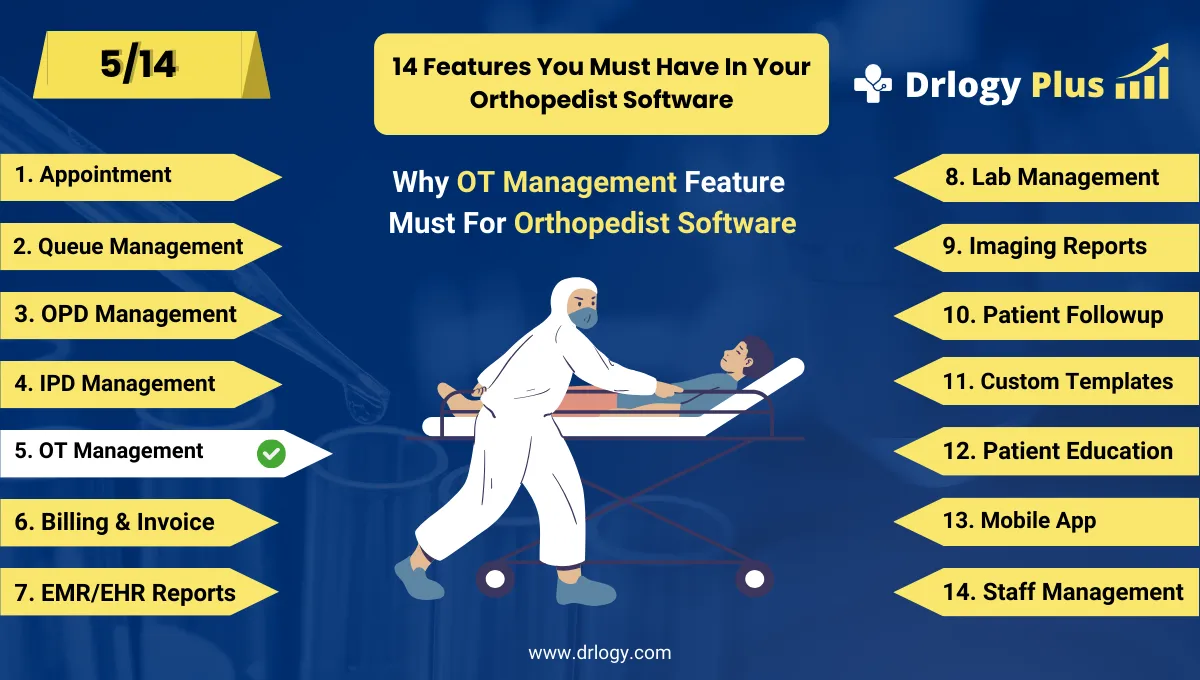
Drlogy Orthopedist Software Features
Here are 14 basic features for Drlogy Orthopedist Software.
Summary
Overall, OT Management feature in orthopedist software is essential for delivering efficient, safe, and well-coordinated surgical care. From scheduling and inventory to billing and documentation, it enables orthopedic clinics and hospitals to manage surgeries with precision—enhancing outcomes, team performance, and patient trus
Check Drlogy Orthopedist Software Features Guide streamline Orthopedic clinic management, improve managing bone, joint, and trauma care, and enhance overall efficiency in Orthopedic practice.