Drlogy
Healthcare organization
How EMR/EHR Feature Strengthens Orthopedist Software
Orthopedic practice requires managing complex patient histories, imaging reports, surgical details, and long-term treatment plans.
Check:
Best Orthopedist Software For Orthopedic Clinics & Hospitals
An integrated EMR/EHR (Electronic Medical Record/Electronic Health Record) feature in orthopedist software streamlines clinical documentation, enhances treatment accuracy, and enables continuity of care—making it indispensable for modern orthopedic clinics and hospitals.
10 Ways EMR/EHR Feature Boosts Orthopedist Software
Here are 10 Ways EMR/EHR Feature Boosts Orthopedist Software.
1. Centralizes Patient History and Records
- Stores complete orthopedic patient data—injury details, joint complaints, surgeries, allergies, and more.
- Consolidates past visits, investigations, prescriptions, and follow-up notes.
- Allows quick reference to clinical progress across episodes.
- Reduces the need for manual files or repeated history-taking.
- Improves diagnostic accuracy.
Centralized records make every consultation faster and more informed.
2. Supports Orthopedic-Specific Templates
- Offers ready-to-use templates for common conditions like fractures, arthritis, dislocations, and spinal issues.
- Enables quick, structured note entry during busy OPD hours.
- Reduces repetition for recurring cases.
- Maintains consistency in documentation.
- Saves time while improving quality of care.
Specialized templates simplify orthopedic documentation without compromising detail.
3. Integrates Imaging and Lab Reports
- Stores X-rays, MRIs, CT scans, and lab results in patient records.
- Enables side-by-side comparison with clinical notes.
- Supports image annotations and findings.
- Improves diagnostic and surgical planning.
- Saves time spent retrieving files.
EMR with imaging integration strengthens case evaluation and precision.
4. Improves Surgical Planning and Documentation
- Logs pre-op evaluations, surgical notes, implant details, and recovery progress.
- Captures post-op care instructions and rehab plans.
- Helps track multiple surgeries or staged treatments.
- Provides legal documentation for surgical history.
- Ensures traceability for implants and procedures.
Accurate EMR ensures safe and compliant surgical record-keeping.
5. Enhances Follow-Up Management
- Flags patients due for physiotherapy, review visits, or suture removal.
- Tracks healing progress in fracture or post-op care.
- Allows comparison of past and current assessments.
- Improves continuity in long-term care (e.g., arthritis or joint replacements).
- Strengthens patient satisfaction.
Follow-up success depends on well-maintained and accessible clinical records.
6. Boosts Clinical Decision-Making
- Provides access to complete records at the point of care.
- Reduces missed history, drug interactions, or duplicated diagnostics.
- Offers insights for complex or recurring orthopedic conditions.
- Supports evidence-based treatment planning.
- Increases diagnostic confidence.
EMR-driven decisions lead to safer and more accurate treatments.
7. Improves Legal and Regulatory Compliance
- Time-stamped documentation of all patient encounters.
- Stores consent forms, surgical approvals, and discharge notes.
- Assists in medico-legal audits and insurance verifications.
- Helps meet NABH or HIPAA compliance standards.
- Reduces risk of legal disputes.
Secure, audit-ready records protect both patients and providers.
8. Enables Multi-Device and Remote Access
- Doctors can access records via tablet, desktop, or mobile securely.
- Supports remote consultations or second opinions.
- Improves responsiveness for emergency or trauma follow-ups.
- Enhances accessibility for traveling specialists or surgeons.
- Ensures care continuity even outside clinic hours.
Mobile EMR access keeps orthopedic care connected and flexible.
9. Generates Clinical Reports and Insights
- Tracks treatment outcomes, surgical success rates, and patient recovery data.
- Helps analyze trends for common injuries or orthopedic conditions.
- Supports academic publishing, audits, or research efforts.
- Aids in practice improvement.
- Empowers growth.
Clinical analytics from EMR drives smarter orthopedic practice strategies.
10. Strengthens Patient Communication and Engagement
- Shares visit summaries, test results, and exercise plans digitally.
- Keeps patients informed about their condition and progress.
- Encourages better treatment adherence.
- Builds patient trust and loyalty.
- Enhances overall experience.
Engaged patients are more satisfied and committed to their treatment.
Drlogy Orthopedist Software Features
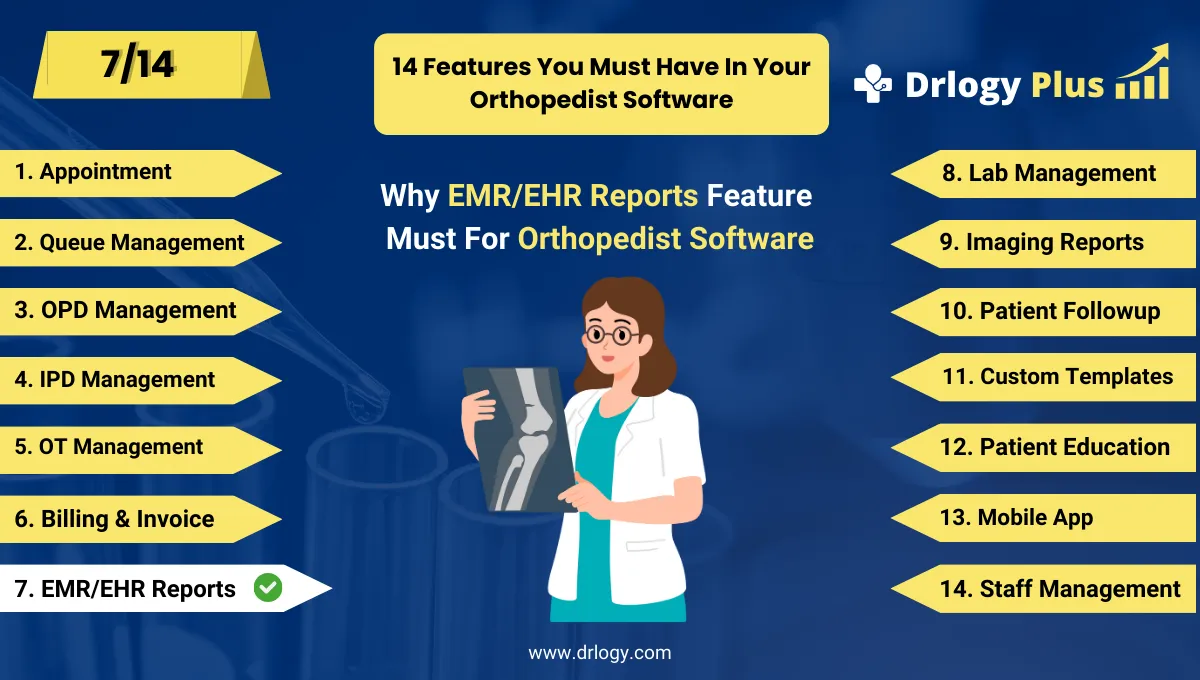
Here are 14 basic features for Drlogy Orthopedist Software.
Summary
Overall, EMR/EHR feature in orthopedist software empowers orthopedic clinics with complete, structured, and accessible patient records. From improving diagnostics and surgical documentation to boosting legal safety and patient engagement, it’s the digital backbone of efficient and modern orthopedic care.
Check Drlogy Orthopedist Software Features Guide streamline Orthopedic clinic management, improve managing bone, joint, and trauma care, and enhance overall efficiency in Orthopedic practice.